
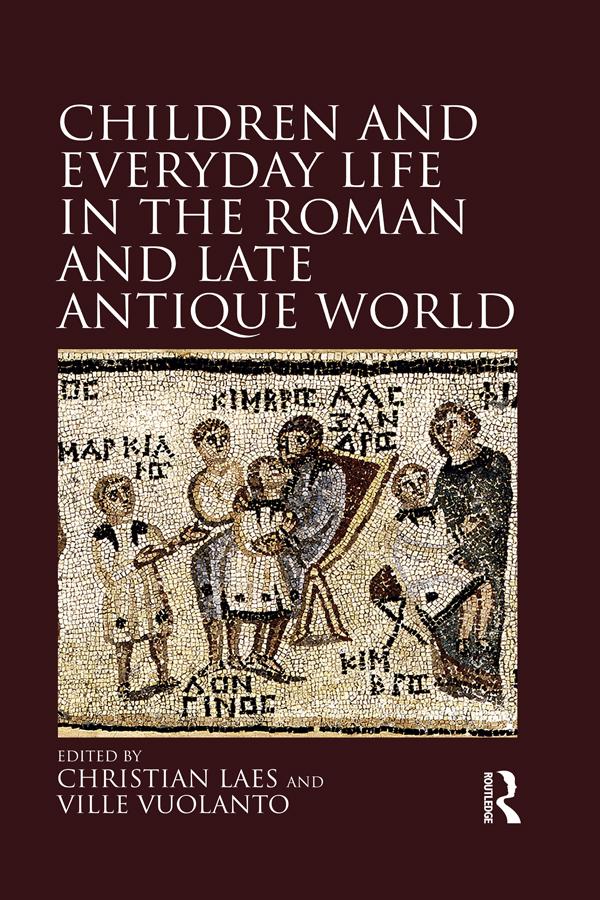
Children and Everyday Life in the Roman and Late Antique World explores what it meant to be a child in the Roman world - what were children’s concerns, interests and beliefs - and whether we can find traces of children’s own cultures. By combining different theoretical approaches and source materials, the contributors explore the environments in which children lived, their experience of everyday life, and what the limits were for their agency. The volume brings together scholars of archaeology and material culture, classicists, ancient historians, theologians, and scholars of early Christianity and Judaism, all of whom have long been involved in the study of the social and cultural history of children.
The topics discussed include children's living environments; clothing; childhood care; social relations; leisure and play; health and disability; upbringing and schooling; and children's experiences of death. While the main focus of the volume is on Late Antiquity its coverage begins with the early Roman Empire, and extends to the early ninth century CE. The result is the first book-length scrutiny of the agency and experience of pre-modern children.
Betal enkelt med kort, Klarna, Apple Pay eller Google Pay. Ikke fornøyd? Du har alltid 14 dagers angrerett. Les mer i våre vilkår. Har du spørsmål, send oss en e-post på hello@memmo.org.
Memmo gjør det enklere å studere – uansett hvor du er i verden. Hos oss samler du pensumbøker og smarte studieverktøy på ett og samme sted: sammendrag, quizer, podkaster og flashcards. Og så Ted, din studiekompis som svarer på alt du lurer på. Over 50 000 studenter studerer allerede her – bygget for at du skal lære raskere og stresse mindre.