
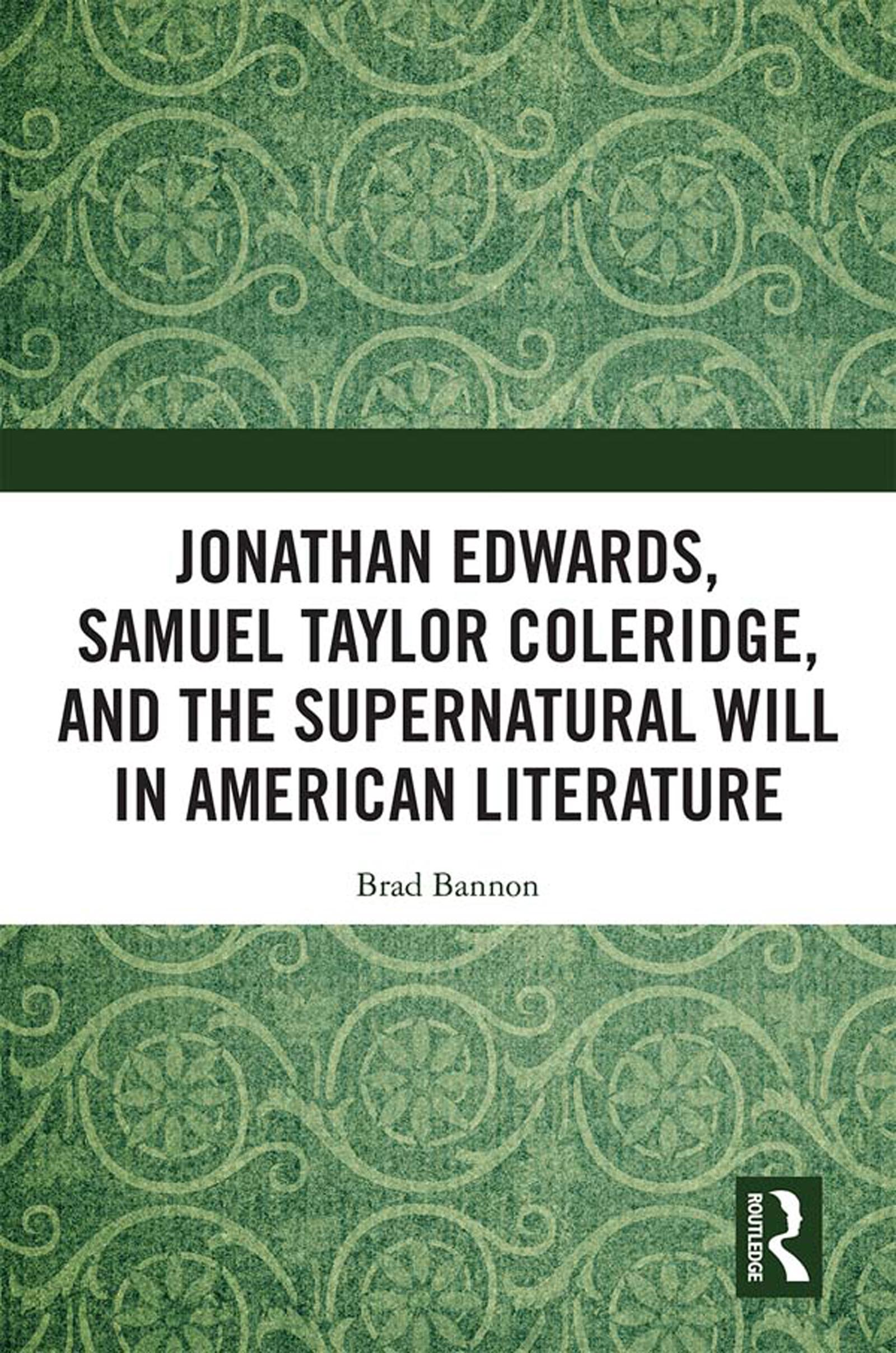
In a work that will be of interest to students and scholars of American Literature, Romanticism, Transcendentalism, the History of Ideas,and Religious Studies, Brad Bannon examines Samuel Taylor Coleridge’s engagement with the philosophical theology of Jonathan Edwards. A closer look at Coleridge’s response to Edwards clarifies the important influence that both thinkers had on seminal works of the nineteenth century, ranging from the antebellum period to the aftermath of the American Civil War—from Poe’s fiction and Emerson’s essays to Melville’s Billy Budd and Crane’s The Red Badge of Courage. Similarly, Coleridge’s early espousal of an abolitionist theology that had evolved from Edwards and been shaped by John Woolman and Olaudah Equiano sheds light on the way that American Romantics later worked to affirm a philosophy of supernatural self-determination.
Ultimately, what Coleridge offered the American Romantics was a supernatural modification of Edwards’ theological determinism, a compromise that provided Emerson and other nineteenth-century thinkers with an acceptable extension of an essentially Calvinist theology. Indeed, a thoroughgoing skepticism with respect to salvation, as well as a faith in the absolute inscrutability of Providence, led both the Transcendentalists and the Dark Romantics to speculate freely on the possibility of supernatural self-determination while doubting that anything other than God, or nature, could harness the power of causation.
Betal enkelt med kort, Klarna, Apple Pay eller Google Pay. Ikke fornøyd? Du har alltid 14 dagers angrerett. Les mer i våre vilkår. Har du spørsmål, send oss en e-post på hello@memmo.org.
Memmo gjør det enklere å studere – uansett hvor du er i verden. Hos oss samler du pensumbøker og smarte studieverktøy på ett og samme sted: sammendrag, quizer, podkaster og flashcards. Og så Ted, din studiekompis som svarer på alt du lurer på. Over 50 000 studenter studerer allerede her – bygget for at du skal lære raskere og stresse mindre.