
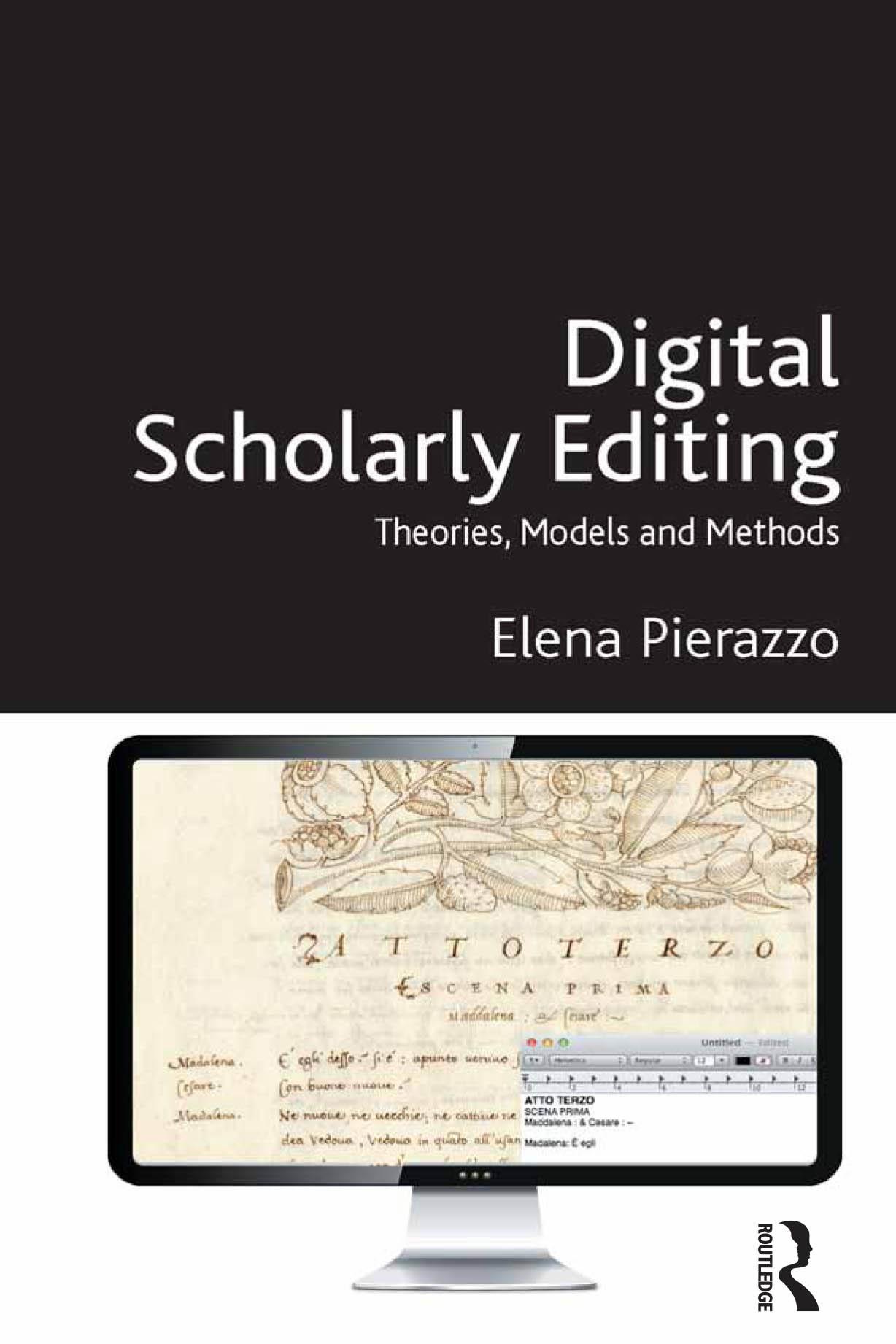
This book provides an up-to-date, coherent and comprehensive treatment of digital scholarly editing, organized according to the typical timeline and workflow of the preparation of an edition: from the choice of the object to edit, the editorial work, post-production and publication, the use of the published edition, to long-term issues and the ultimate significance of the published work. The author also examines from a theoretical and methodological point of view the issues and problems that emerge during these stages with the application of computational techniques and methods. Building on previous publications on the topic, the book discusses the most significant developments in digital textual scholarship, claiming that the alterations in traditional editorial practices necessitated by the use of computers impose radical changes in the way we think and manage texts, documents, editions and the public. It is of interest not only to scholarly editors, but to all involved in publishing and readership in a digital environment in the humanities.
Betal enkelt med kort, Klarna, Apple Pay eller Google Pay. Ikke fornøyd? Du har alltid 14 dagers angrerett. Les mer i våre vilkår. Har du spørsmål, send oss en e-post på hello@memmo.org.
Memmo gjør det enklere å studere – uansett hvor du er i verden. Hos oss samler du pensumbøker og smarte studieverktøy på ett og samme sted: sammendrag, quizer, podkaster og flashcards. Og så Ted, din studiekompis som svarer på alt du lurer på. Over 50 000 studenter studerer allerede her – bygget for at du skal lære raskere og stresse mindre.
Du vil kanskje også like
Kjøp boken0