
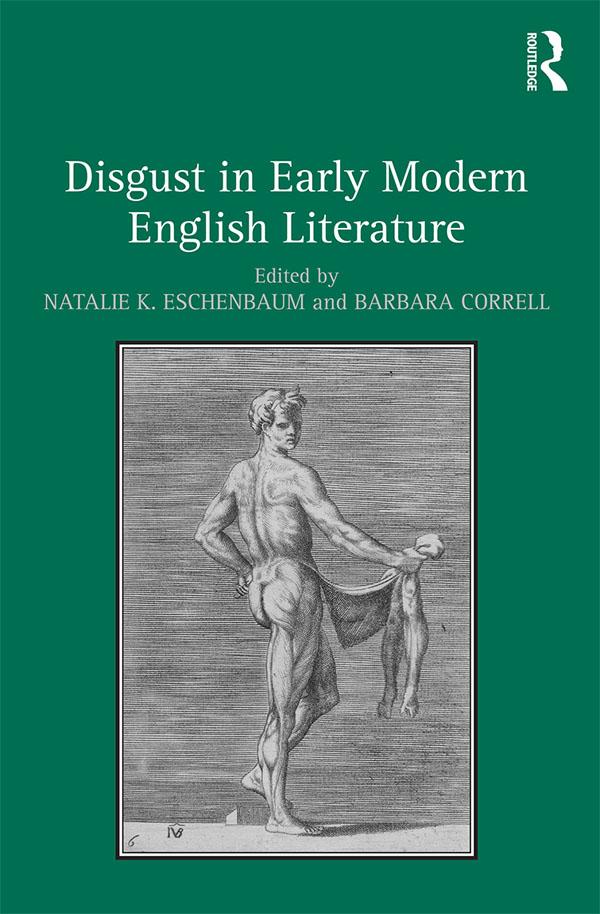
What is the role of disgust or revulsion in early modern English literature? How did early modern English subjects experience revulsion and how did writers represent it in poetry, plays, and prose? What does it mean when literature instructs, delights, and disgusts? This collection of essays looks at the treatment of disgust in texts by Spenser, Shakespeare, Donne, Jonson, Herrick, and others to demonstrate how disgust, perhaps more than other affects, gives us a more complex understanding of early modern culture. Dealing with descriptions of coagulated eye drainage, stinky leeks, and blood-filled fleas, among other sensational things, the essays focus on three kinds of disgusting encounters: sexual, cultural, and textual. Early modern English writers used disgust to explore sexual mores, describe encounters with foreign cultures, and manipulate their readers' responses. The essays in this collection show how writers deployed disgust to draw, and sometimes to upset, the boundaries that had previously defined acceptable and unacceptable behaviors, people, and literatures. Together they present the compelling argument that a critical understanding of early modern cultural perspectives requires careful attention to disgust.
Sider: 232
Kategori: Litteraturvetenskap & Teori
e-ISBN: 9781317149613
Fraktvekt: 1.2 kg
Sendes innen: 1-2 dager
Betal enkelt med kort, Klarna, Apple Pay eller Google Pay. Ikke fornøyd? Du har alltid 14 dagers angrerett. Les mer i våre vilkår. Har du spørsmål, send oss en e-post på hello@memmo.org.
Memmo gjør det enklere å studere – uansett hvor du er i verden. Hos oss samler du pensumbøker og smarte studieverktøy på ett og samme sted: sammendrag, quizer, podkaster og flashcards. Og så Ted, din studiekompis som svarer på alt du lurer på. Over 50 000 studenter studerer allerede her – bygget for at du skal lære raskere og stresse mindre.
Du vil kanskje også like
Kjøp boken0