
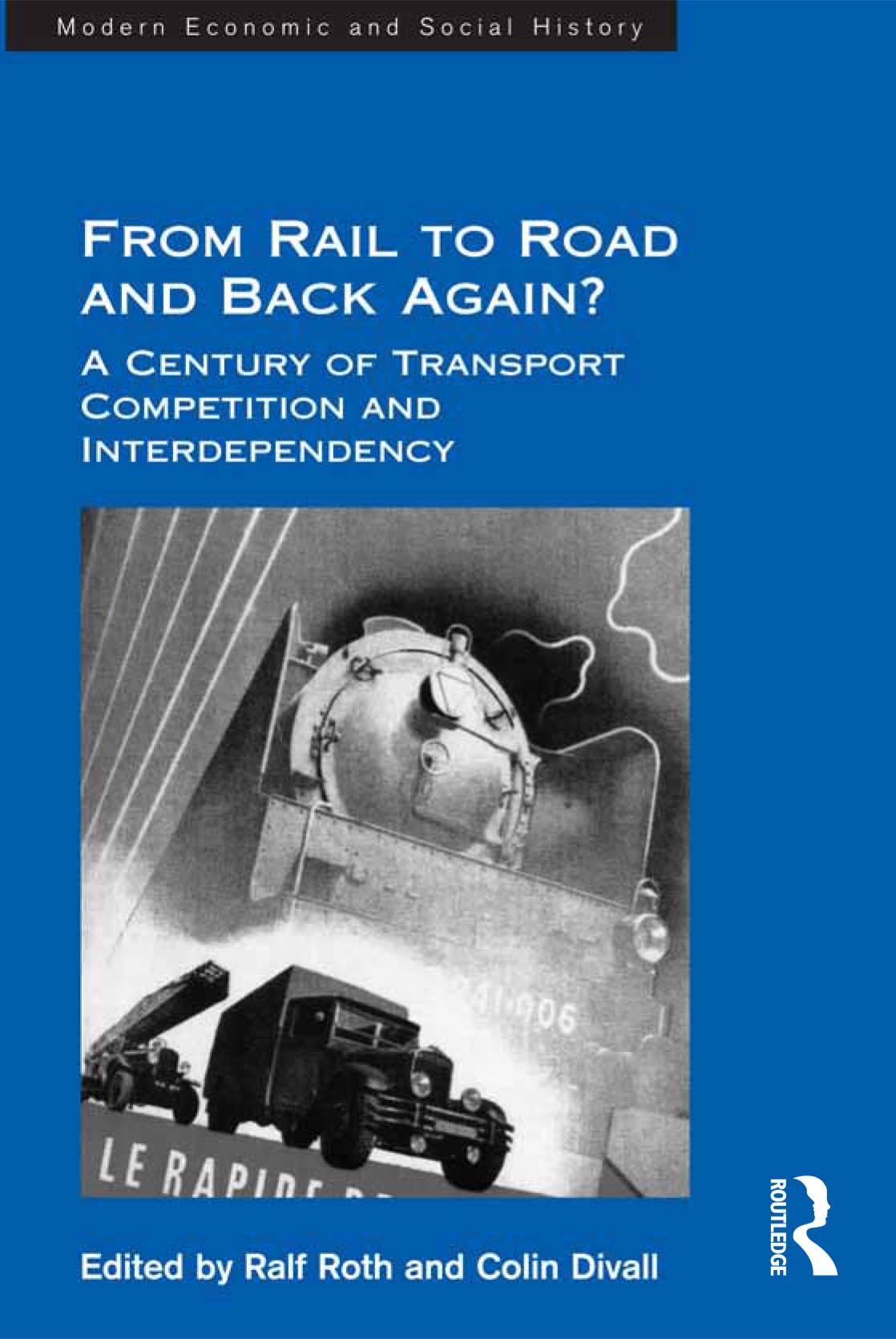
The coming of the railways signalled the transformation of European society, allowing the quick and cheap mass transportation of people and goods on a previously unimaginable scale. By the early decades of the twentieth century, however, the domination of rail transport was threatened by increased motorised road transport which would quickly surpass and eclipse the trains, only itself to be challenged in the twenty-first century by a renewal of interest in railways. Yet, as the studies in this volume make clear, to view the relationship between road and rail as a simple competition between two rival forms of transportation, is a mistake. Rail transport did not vanish in the twentieth century any more than road transport vanished in the nineteenth with the appearance of the railways. Instead a mutual interdependence has always existed, balancing the strengths and weaknesses of each system. It is that interdependence that forms the major theme of this collection. Divided into two main sections, the first part of the book offers a series of chapters examining how railway companies reacted to increasing competition from road transport, and exploring the degree to which railways depended on road transportation at different times and places. Part two focuses on road mobility, interpreting it as the innovative success story of the twentieth century. Taken together, these essays provide a fascinating reappraisal of the complex and shifting nature of European transportation over the last one hundred years.
Betal enkelt med kort, Klarna, Apple Pay eller Google Pay. Ikke fornøyd? Du har alltid 14 dagers angrerett. Les mer i våre vilkår. Har du spørsmål, send oss en e-post på hello@memmo.org.
Memmo gjør det enklere å studere – uansett hvor du er i verden. Hos oss samler du pensumbøker og smarte studieverktøy på ett og samme sted: sammendrag, quizer, podkaster og flashcards. Og så Ted, din studiekompis som svarer på alt du lurer på. Over 50 000 studenter studerer allerede her – bygget for at du skal lære raskere og stresse mindre.
Du vil kanskje også like
Kjøp boken0