
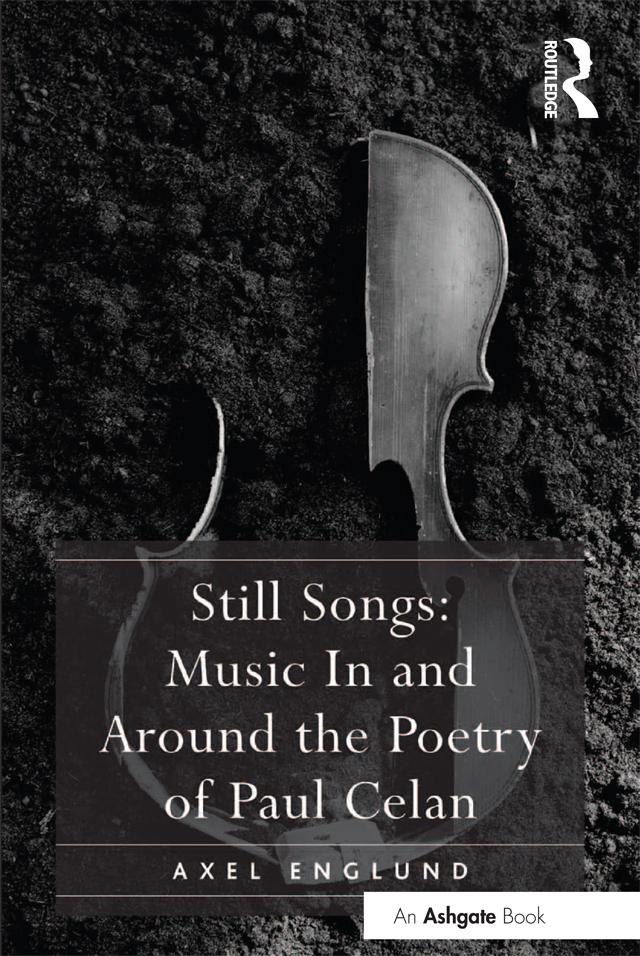
What does it mean for poetry and music to turn to each other, in the shadow of the Holocaust, as a means of aesthetic self-reflection? How can their mutual mirroring, of such paramount importance to German Romanticism, be reconfigured to retain its validity after the Second World War? These are the core questions of Axel Englund's book, which is the first to address the topic of Paul Celan and music. Celan, a Jewish Holocaust survivor who has long been recognized as one of the most important poets of the German language, persistently evoked music and song in his oeuvre, from the juvenilia to the posthumous collections. Conversely, few post-war writers have inspired as large a body of contemporary music, including works by Harrison Birtwistle, György Kurtág, Wolfgang Rihm, Peter Ruzicka and many others. Through rich close readings of poems and musical compositions, Englund's book engages the artistic media in a critical dialogue about the conditions of their existence. In so doing, it reveals their intersection as a site of profound conflict, where the very possibility of musical and poetic meaning is at stake, and confrontations of aesthetic transcendentality and historical remembrance are played out in the wake of twentieth-century trauma.
Sider: 256
Kategori: Litteraturvetenskap & Teori
e-ISBN: 9781317049951
Fraktvekt: 1.2 kg
Sendes innen: 1-2 dager
Betal enkelt med kort, Klarna, Apple Pay eller Google Pay. Ikke fornøyd? Du har alltid 14 dagers angrerett. Les mer i våre vilkår. Har du spørsmål, send oss en e-post på hello@memmo.org.
Memmo gjør det enklere å studere – uansett hvor du er i verden. Hos oss samler du pensumbøker og smarte studieverktøy på ett og samme sted: sammendrag, quizer, podkaster og flashcards. Og så Ted, din studiekompis som svarer på alt du lurer på. Over 50 000 studenter studerer allerede her – bygget for at du skal lære raskere og stresse mindre.
Du vil kanskje også like
Kjøp boken0