
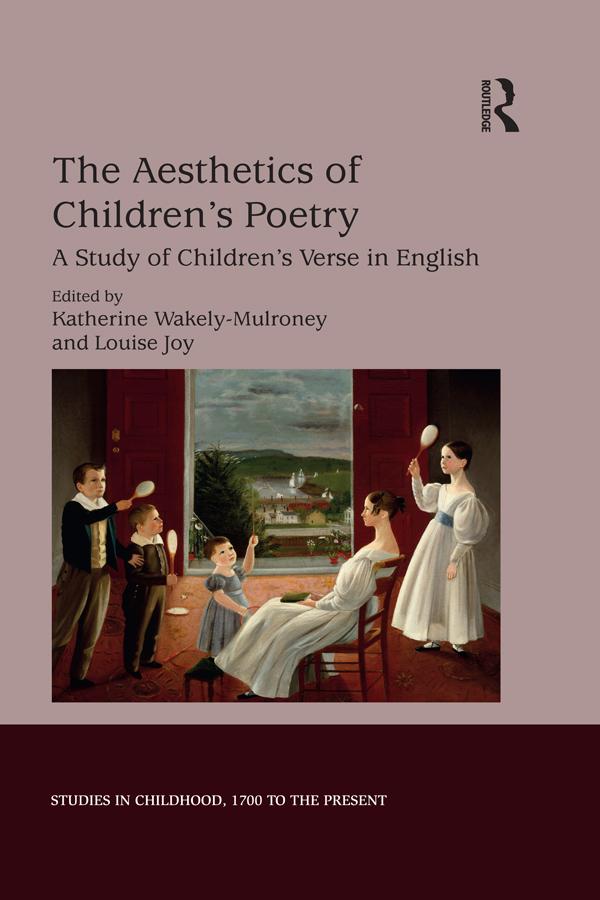
This collection gives sustained attention to the literary dimensions of children’s poetry from the eighteenth century to the present. While reasserting the importance of well-known voices, such as those of Isaac Watts, William Blake, Lewis Carroll, Christina Rossetti, A. A. Milne, and Carol Ann Duffy, the contributors also reflect on the aesthetic significance of landmark works by less frequently celebrated figures such as Richard Johnson, Ann and Jane Taylor, Cecil Frances Alexander and Michael Rosen. Scholarly treatment of children’s poetry has tended to focus on its publication history rather than to explore what comprises – and why we delight in – its idiosyncratic pleasures. And yet arguments about how and why poetic language might appeal to the child are embroiled in the history of children’s poetry, whether in Isaac Watts emphasising the didactic efficacy of “like sounds,” William Blake and the Taylor sisters revelling in the beauty of semantic ambiguity, or the authors of nonsense verse jettisoning sense to thrill their readers with the sheer music of poetry. Alive to the ways in which recent debates both echo and repudiate those conducted in earlier periods, The Aesthetics of Children’s Poetry investigates the stylistic and formal means through which children’s poetry, in theory and in practice, negotiates the complicated demands we have made of it through the ages.
Betal enkelt med kort, Klarna, Apple Pay eller Google Pay. Ikke fornøyd? Du har alltid 14 dagers angrerett. Les mer i våre vilkår. Har du spørsmål, send oss en e-post på hello@memmo.org.
Memmo gjør det enklere å studere – uansett hvor du er i verden. Hos oss samler du pensumbøker og smarte studieverktøy på ett og samme sted: sammendrag, quizer, podkaster og flashcards. Og så Ted, din studiekompis som svarer på alt du lurer på. Over 50 000 studenter studerer allerede her – bygget for at du skal lære raskere og stresse mindre.