
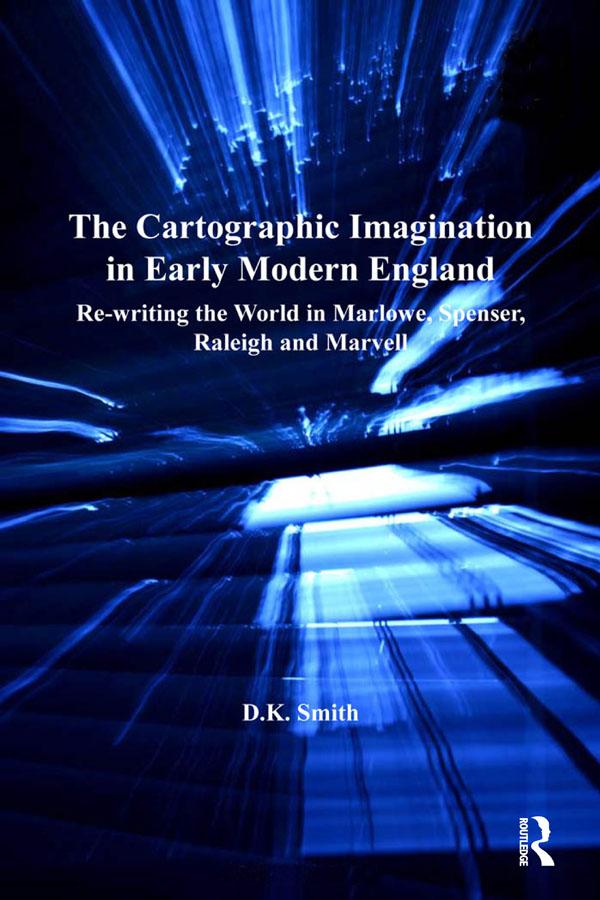
Working from a cultural studies perspective, author D. K. Smith here examines a broad range of medieval and Renaissance maps and literary texts to explore the effects of geography on Tudor-Stuart cultural perceptions. He argues that the literary representation of cartographically-related material from the late fifteenth to the early seventeenth century demonstrates a new strain, not just of geographical understanding, but of cartographic manipulation, which he terms, "the cartographic imagination." Rather than considering the effects of maps themselves on early modern epistemologies, Smith considers the effects of the activity of mapping-the new techniques, the new expectations of accuracy and precision which developed in the sixteenth century-on the ways people thought and wrote. Looking at works by Spenser, Marlowe, Raleigh, and Marvell among other authors, he analyzes how the growing ability to represent physical space accurately brought with it not just a wealth of new maps, but a new array of rhetorical techniques, metaphors, and associations which allowed the manipulation of texts and ideas in ways never before possible.
Sider: 214
Kategori: Litteraturvetenskap & Teori
e-ISBN: 9781317039334
Fraktvekt: 1.2 kg
Sendes innen: 1-2 dager
Betal enkelt med kort, Klarna, Apple Pay eller Google Pay. Ikke fornøyd? Du har alltid 14 dagers angrerett. Les mer i våre vilkår. Har du spørsmål, send oss en e-post på hello@memmo.org.
Memmo gjør det enklere å studere – uansett hvor du er i verden. Hos oss samler du pensumbøker og smarte studieverktøy på ett og samme sted: sammendrag, quizer, podkaster og flashcards. Og så Ted, din studiekompis som svarer på alt du lurer på. Over 50 000 studenter studerer allerede her – bygget for at du skal lære raskere og stresse mindre.
Du vil kanskje også like
Kjøp boken0