
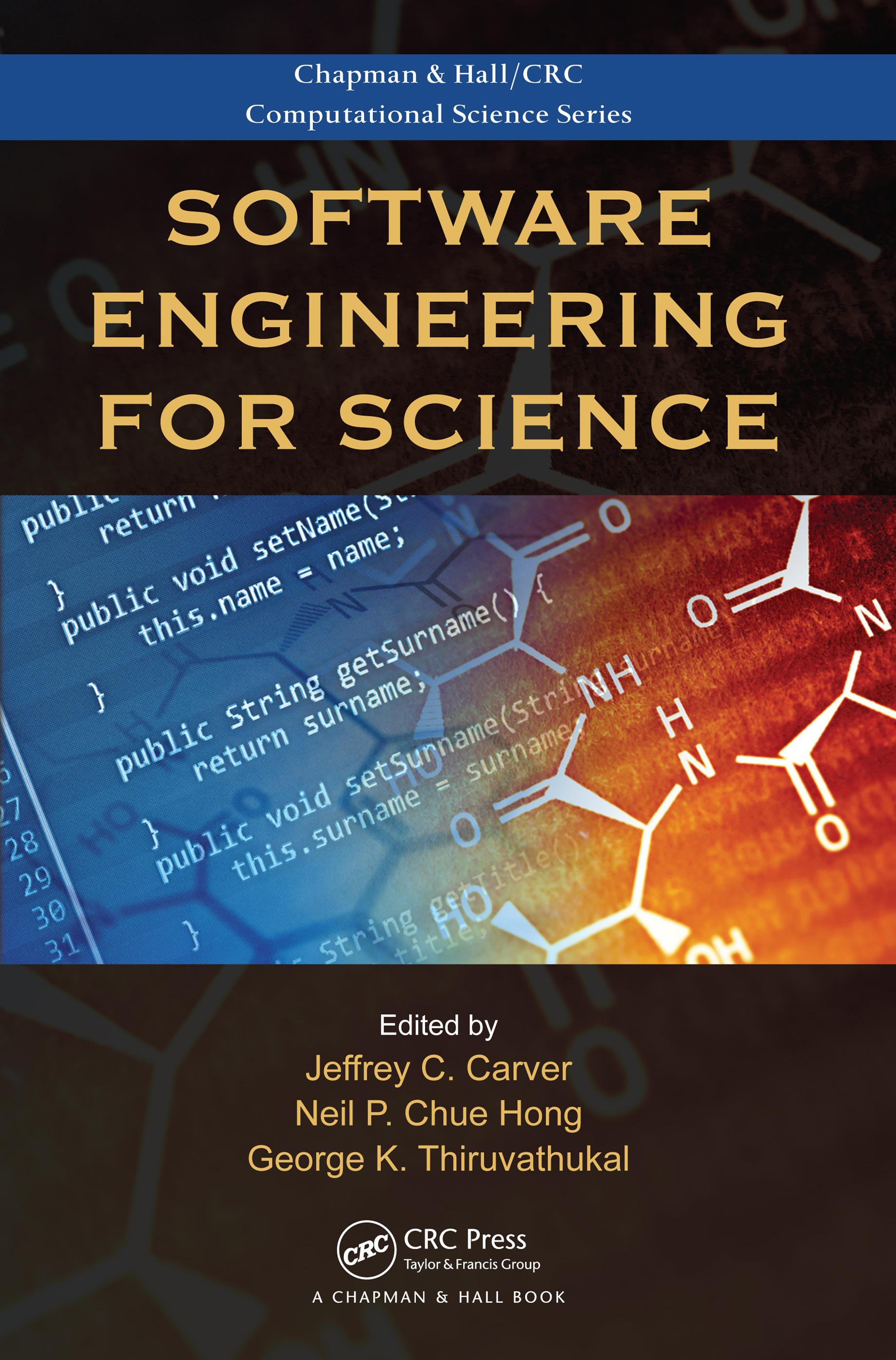
Software Engineering for Science provides an in-depth collection of peer-reviewed chapters that describe experiences with applying software engineering practices to the development of scientific software. It provides a better understanding of how software engineering is and should be practiced, and which software engineering practices are effective for scientific software.
The book starts with a detailed overview of the Scientific Software Lifecycle, and a general overview of the scientific software development process. It highlights key issues commonly arising during scientific software development, as well as solutions to these problems.
The second part of the book provides examples of the use of testing in scientific software development, including key issues and challenges. The chapters then describe solutions and case studies aimed at applying testing to scientific software development efforts.
The final part of the book provides examples of applying software engineering techniques to scientific software, including not only computational modeling, but also software for data management and analysis. The authors describe their experiences and lessons learned from developing complex scientific software in different domains.
About the Editors
Jeffrey Carver is an Associate Professor in the Department of Computer Science at the University of Alabama. He is one of the primary organizers of the workshop series on Software Engineering for Science (http://www.SE4Science.org/workshops).
Neil P. Chue Hong is Director of the Software Sustainability Institute at the University of Edinburgh. His research interests include barriers and incentives in research software ecosystems and the role of software as a research object.
George K. Thiruvathukal is Professor of Computer Science at Loyola University Chicago and Visiting Faculty at Argonne National Laboratory. His current research is focused on software metrics in open source mathematical and scientific software.
Betal enkelt med kort, Klarna, Apple Pay eller Google Pay. Ikke fornøyd? Du har alltid 14 dagers angrerett. Les mer i våre vilkår. Har du spørsmål, send oss en e-post på hello@memmo.org.
Memmo gjør det enklere å studere – uansett hvor du er i verden. Hos oss samler du pensumbøker og smarte studieverktøy på ett og samme sted: sammendrag, quizer, podkaster og flashcards. Og så Ted, din studiekompis som svarer på alt du lurer på. Over 50 000 studenter studerer allerede her – bygget for at du skal lære raskere og stresse mindre.