
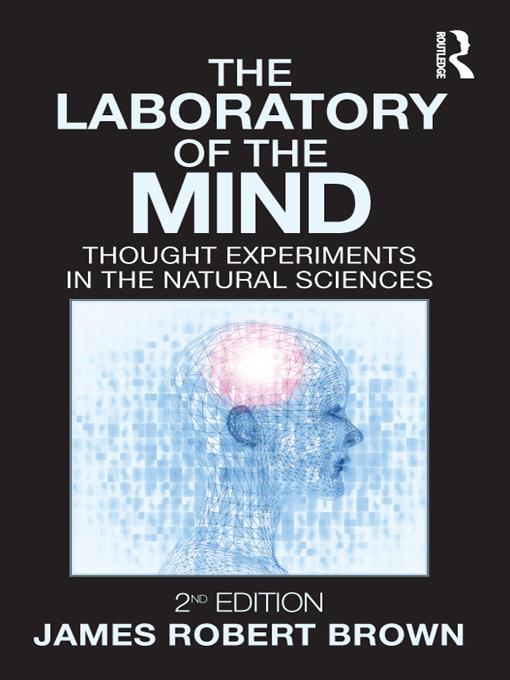
Newton's bucket, Einstein's elevator, Schrödinger's cat – these are some of the best-known examples of thought experiments in the natural sciences. But what function do these experiments perform? Are they really experiments at all? Can they help us gain a greater understanding of the natural world? How is it possible that we can learn new things just by thinking?
In this revised and updated new edition of his classic text The Laboratory of the Mind, James Robert Brown continues to defend apriorism in the physical world. This edition features two new chapters, one on “counter thought experiments” and another on the development of inertial motion. With plenty of illustrations and updated coverage of the debate between Platonic rationalism and classic empiricism, this is a lively and engaging contribution to the field of philosophy of science.
Betal enkelt med kort, Klarna, Apple Pay eller Google Pay. Ikke fornøyd? Du har alltid 14 dagers angrerett. Les mer i våre vilkår. Har du spørsmål, send oss en e-post på hello@memmo.org.
Memmo gjør det enklere å studere – uansett hvor du er i verden. Hos oss samler du pensumbøker og smarte studieverktøy på ett og samme sted: sammendrag, quizer, podkaster og flashcards. Og så Ted, din studiekompis som svarer på alt du lurer på. Over 50 000 studenter studerer allerede her – bygget for at du skal lære raskere og stresse mindre.