
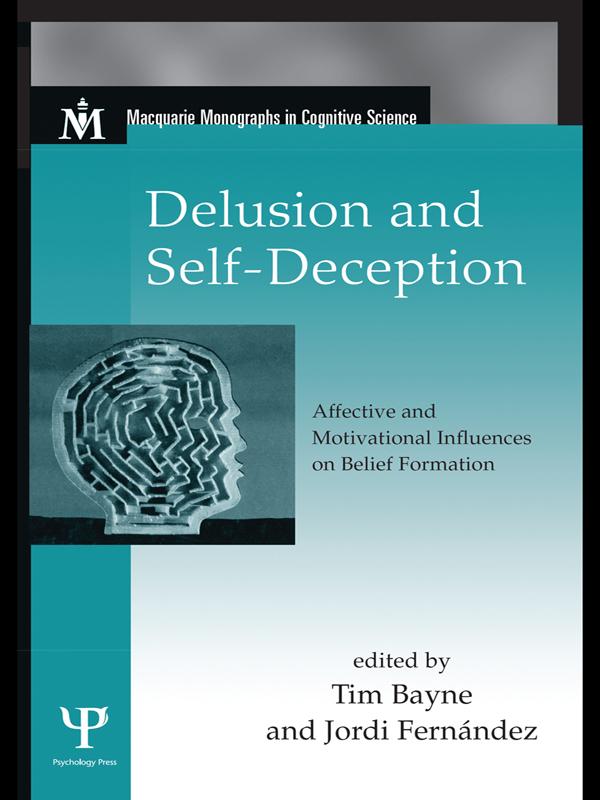
This collection of essays focuses on the interface between delusions and self-deception. As pathologies of belief, delusions and self-deception raise many of the same challenges for those seeking to understand them. Are delusions and self-deception entirely distinct phenomena, or might some forms of self-deception also qualify as delusional? To what extent might models of self-deception and delusion share common factors? In what ways do affect and motivation enter into normal belief-formation, and how might they be implicated in self-deception and delusion? The essays in this volume tackle these questions from both empirical and conceptual perspectives. Some contributors focus on the general question of how to locate self-deception and delusion within our taxonomy of psychological states. Some contributors ask whether particular delusions - such as the Capgras delusion or anosognosia for hemiplegia - might be explained by appeal to motivational and affective factors. And some contributors provide general models of motivated reasoning, against which theories of pathological belief-formation might be measured.
The volume will be of interest to cognitive scientists, clinicians, and philosophers interested in the nature of belief and the disturbances to which it is subject.
Betal enkelt med kort, Klarna, Apple Pay eller Google Pay. Ikke fornøyd? Du har alltid 14 dagers angrerett. Les mer i våre vilkår. Har du spørsmål, send oss en e-post på hello@memmo.org.
Memmo gjør det enklere å studere – uansett hvor du er i verden. Hos oss samler du pensumbøker og smarte studieverktøy på ett og samme sted: sammendrag, quizer, podkaster og flashcards. Og så Ted, din studiekompis som svarer på alt du lurer på. Over 50 000 studenter studerer allerede her – bygget for at du skal lære raskere og stresse mindre.