
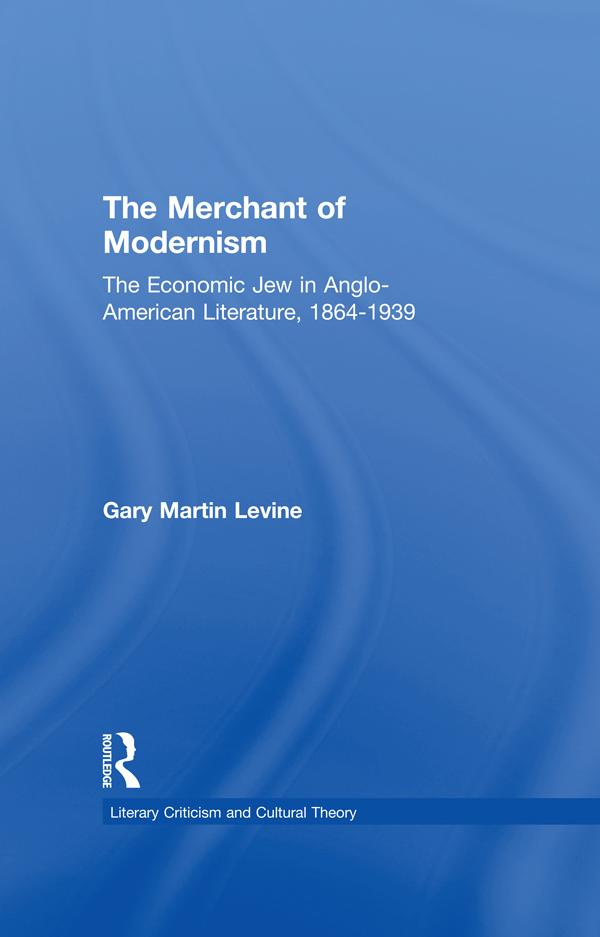
The Merchant of Modernism examines how the figure of the economic Jew symbolizes the struggle of authors from Dickens to Pound to reconcile their critique of capitalism with their own literary practices and how the shifting of the representations of this figure parallels the development of literary Modernism. From the sudden rise of the Victorian stock market to the Great Depression, the prominence of economic Jews in the writings of Charles Dickens, George Eliot, Edith Wharton, Frank Norris, Mark Twain, Henry James, Abraham Cahan, F. Scott Fitzgerald, Ernest Hemingway, Willa Cather, T.S. Eliot, D.H. Lawrence, Wyndham Lewis, Ezra Pound, and James Joyce documents major shifts and events in capitalism, their impact on literature, and advances in economic thought. The Merchant of Modernism provides a sophisticated analysis of the role of economic history and economic thought in shaping both literary Modernism and modern anti-Semitism.
Betal enkelt med kort, Klarna, Apple Pay eller Google Pay. Ikke fornøyd? Du har alltid 14 dagers angrerett. Les mer i våre vilkår. Har du spørsmål, send oss en e-post på hello@memmo.org.
Memmo gjør det enklere å studere – uansett hvor du er i verden. Hos oss samler du pensumbøker og smarte studieverktøy på ett og samme sted: sammendrag, quizer, podkaster og flashcards. Og så Ted, din studiekompis som svarer på alt du lurer på. Over 50 000 studenter studerer allerede her – bygget for at du skal lære raskere og stresse mindre.