
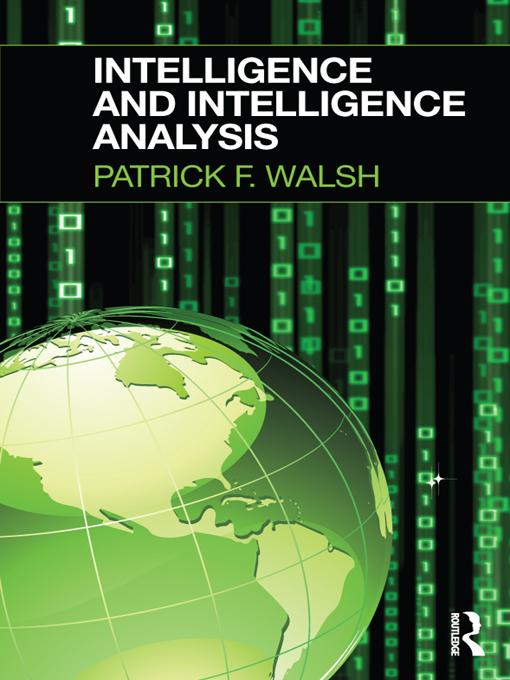
This book tracks post 9/11 developments in national security and policing intelligence and their relevance to new emerging areas of intelligence practice such as: corrections, biosecurity, private industry and regulatory environments. Developments are explored thematically across three broad sections:
- applying intelligence
- understanding structures
- developing a discipline.
Issues explored include: understanding intelligence models; the strategic management challenges of intelligence; intelligence capacity building; and the ethical dimensions of intelligence practice. Using case studies collected from wide-ranging interviews with leaders, managers and intelligence practitioners from a range of practice areas in Australia, Canada, New Zealand, the UK and US, the book indentifies examples of good practice across countries and agencies that may be relevant to other settings.
Uniquely bringing together significant theoretical and practical developments in a sample of traditional and emerging areas of intelligence, this book provides readers with a more holistic and inter-disciplinary perspective on the evolving intelligence field across several different practice contexts.
Intelligence and Intelligence Analysis will be relevant to a broad audience including intelligence practitioners and managers working across all fields of intelligence (national security, policing, private industry and emerging areas) as well as students taking courses in policing and intelligence analysis.
Betal enkelt med kort, Klarna, Apple Pay eller Google Pay. Ikke fornøyd? Du har alltid 14 dagers angrerett. Les mer i våre vilkår. Har du spørsmål, send oss en e-post på hello@memmo.org.
Memmo gjør det enklere å studere – uansett hvor du er i verden. Hos oss samler du pensumbøker og smarte studieverktøy på ett og samme sted: sammendrag, quizer, podkaster og flashcards. Og så Ted, din studiekompis som svarer på alt du lurer på. Over 50 000 studenter studerer allerede her – bygget for at du skal lære raskere og stresse mindre.