
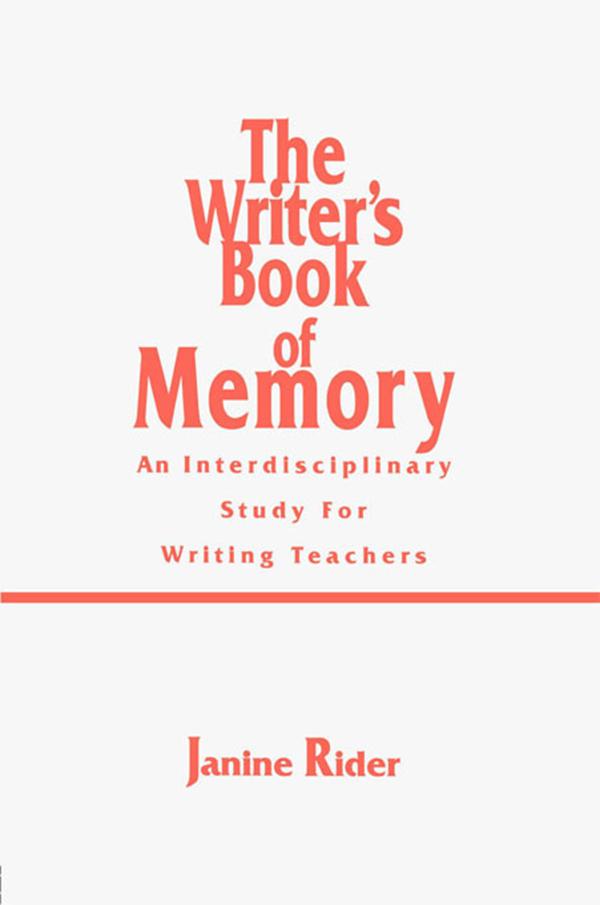
Memory has long been ignored by rhetoricians because the written word has made memorization virtually obsolete. Recently however, as part of a revival of interest in classical rhetoric, scholars have begun to realize that memory offers vast possibilities for today's writers. Synthesizing research from rhetoric, psychology, philosophy, and literary and composition studies, this volume brings together many historical and contemporary theories of memory. Yet its focus is clear: memory is a generator of knowledge and a creative force which deserves attention at the beginning of and throughout the writing process.
This volume emphasizes the importance of recognizing memory's powers in an age in which mass media influence us all and electronic communication changes the way we think and write. It also addresses the importance of the individual memory and voice in an age which promotes conformity. Written in a strong, lively personal manner, the book covers a great deal of scholarly material. It is never overbearing, and the extensive bibliography offers rich vistas for further study.
Betal enkelt med kort, Klarna, Apple Pay eller Google Pay. Ikke fornøyd? Du har alltid 14 dagers angrerett. Les mer i våre vilkår. Har du spørsmål, send oss en e-post på hello@memmo.org.
Memmo gjør det enklere å studere – uansett hvor du er i verden. Hos oss samler du pensumbøker og smarte studieverktøy på ett og samme sted: sammendrag, quizer, podkaster og flashcards. Og så Ted, din studiekompis som svarer på alt du lurer på. Over 50 000 studenter studerer allerede her – bygget for at du skal lære raskere og stresse mindre.