
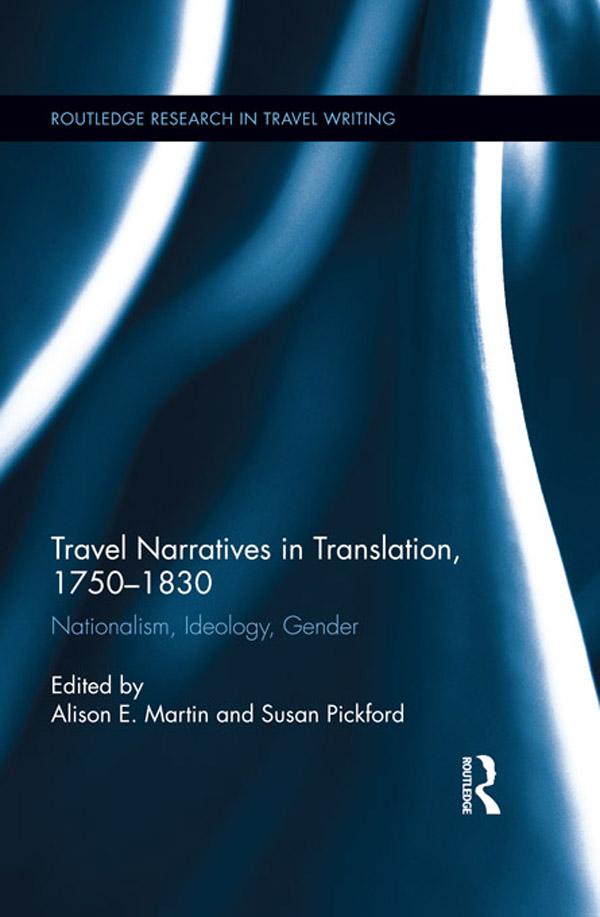
This book examines how non-fictional travel accounts were rewritten, reshaped, and reoriented in translation between 1750 and 1850, a period that saw a sudden surge in the genre's popularity. It explores how these translations played a vital role in the transmission and circulation of knowledge about foreign peoples, lands, and customs in the Enlightenment and Romantic periods. The collection makes an important contribution to travel writing studies by looking beyond metaphors of mobility and cultural transfer to focus specifically on what happens to travelogues in translation. Chapters range from discussing essential differences between the original and translated text to relations between authors and translators, from intra-European narratives of Grand Tour travel to scientific voyages round the world, and from established male travellers and translators to their historically less visible female counterparts. Drawing on European travel writing in English, French, German, Spanish, and Portuguese, the book charts how travelogues were selected for translation; how they were reworked to acquire new aesthetic, political, or gendered identities; and how they sometimes acquired a radically different character and content to meet the needs and expectations of an emergent international readership. The contributors address aesthetic, political, and gendered aspects of travel writing in translation, drawing productively on other disciplines and research areas that encompass aesthetics, the history of science, literary geography, and the history of the book.
Betal enkelt med kort, Klarna, Apple Pay eller Google Pay. Ikke fornøyd? Du har alltid 14 dagers angrerett. Les mer i våre vilkår. Har du spørsmål, send oss en e-post på hello@memmo.org.
Memmo gjør det enklere å studere – uansett hvor du er i verden. Hos oss samler du pensumbøker og smarte studieverktøy på ett og samme sted: sammendrag, quizer, podkaster og flashcards. Og så Ted, din studiekompis som svarer på alt du lurer på. Over 50 000 studenter studerer allerede her – bygget for at du skal lære raskere og stresse mindre.