
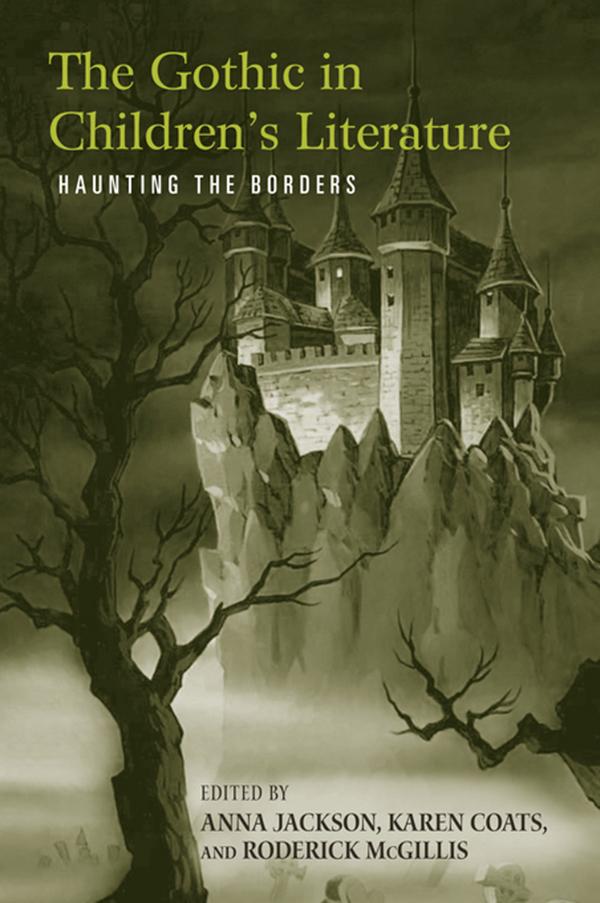
From creepy picture books to Harry Potter, Lemony Snicket, the Spiderwick Chronicles, and countless vampire series for young adult readers, fear has become a dominant mode of entertainment for young readers. The last two decades have seen an enormous growth in the critical study of two very different genres, the Gothic and children’s literature.
The Gothic, concerned with the perverse and the forbidden, with adult sexuality and religious or metaphysical doubts and heresies, seems to represent everything that children’s literature, as a genre, was designed to keep out. Indeed, this does seem to be very much the way that children’s literature was marketed in the late eighteenth century, at exactly the same time that the Gothic was really taking off, written by the same women novelists who were responsible for the promotion of a safe and segregated children’s literature.
This collection examines the early intersection of the Gothic and children’s literature and the contemporary manifestations of the gothic impulse, revealing that Gothic elements can, in fact, be traced in children’s literature for as long as children have been reading.
Betal enkelt med kort, Klarna, Apple Pay eller Google Pay. Ikke fornøyd? Du har alltid 14 dagers angrerett. Les mer i våre vilkår. Har du spørsmål, send oss en e-post på hello@memmo.org.
Memmo gjør det enklere å studere – uansett hvor du er i verden. Hos oss samler du pensumbøker og smarte studieverktøy på ett og samme sted: sammendrag, quizer, podkaster og flashcards. Og så Ted, din studiekompis som svarer på alt du lurer på. Over 50 000 studenter studerer allerede her – bygget for at du skal lære raskere og stresse mindre.