
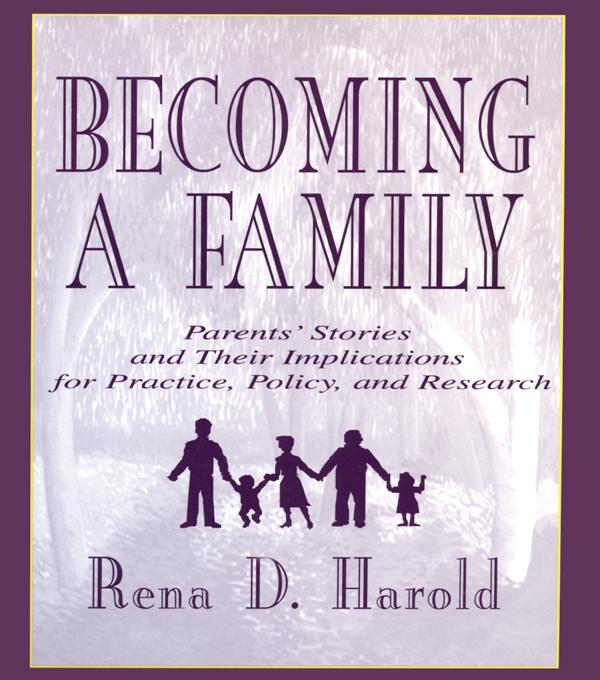
The movement from young adulthood through coupling and the transition to parenthood may be among the most universal adult developmental transitions. These passages hold interest for all of us, but especially for those who study the psychological, familial, and sociocultural components of development, all of which interact and influence each other. This book enhances understanding of family-life development by shedding light on the meanings that family members ascribe to the developmental process of becoming a family. This is achieved through qualitative analysis of narratives through which individuals and families explain themselves, their thinking, and their behavior. These family narratives are windows into individual and family identity, as well as descriptions of connections to others. The book addresses issues including identity, child characteristics, social support, and work. Each chapter includes a review of seminal literature, parents' comments and ideas about the topic, and a discussion of practice, policy, and research implications.
Betal enkelt med kort, Klarna, Apple Pay eller Google Pay. Ikke fornøyd? Du har alltid 14 dagers angrerett. Les mer i våre vilkår. Har du spørsmål, send oss en e-post på hello@memmo.org.
Memmo gjør det enklere å studere – uansett hvor du er i verden. Hos oss samler du pensumbøker og smarte studieverktøy på ett og samme sted: sammendrag, quizer, podkaster og flashcards. Og så Ted, din studiekompis som svarer på alt du lurer på. Over 50 000 studenter studerer allerede her – bygget for at du skal lære raskere og stresse mindre.