
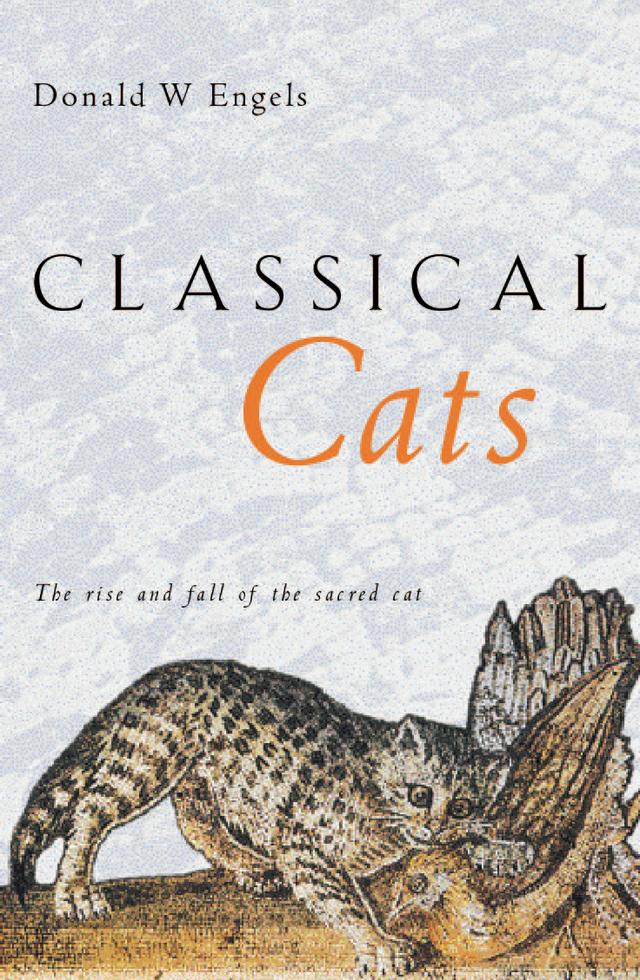
This is the definitive book on classical cats. The cat has played a significant role in history from the earliest times. Well known is its role in the religion and art of ancient Egypt, no less than its association with witchcraft in the Middle Ages. But when did the cat become a domestic companion and worker as well?
There has been much debate about the position of the cat in ancient Greece and Rome. Artistic representations are sometimes ambiguous, and its role as a mouse-catcher seems often to have been carried out by weasels. Yet other evidence clearly suggests that the cat was as important to Greeks and Romans as it is to many modern people.
This book is the first comprehensive survey of the evidence for cats in Greece and Rome, and of their functions and representations in art. Donald Engels draws on authors from Aesop to Aristotle; on vase-painting, inscriptions and the plastic arts; and on a thorough knowledge of zoology of the cat. He also sets the ancient evidence in the wider context of the Egyptian period that preceded it, as well as the views of the Church fathers who ushered antiquity into the Middle Ages.
Betal enkelt med kort, Klarna, Apple Pay eller Google Pay. Ikke fornøyd? Du har alltid 14 dagers angrerett. Les mer i våre vilkår. Har du spørsmål, send oss en e-post på hello@memmo.org.
Memmo gjør det enklere å studere – uansett hvor du er i verden. Hos oss samler du pensumbøker og smarte studieverktøy på ett og samme sted: sammendrag, quizer, podkaster og flashcards. Og så Ted, din studiekompis som svarer på alt du lurer på. Over 50 000 studenter studerer allerede her – bygget for at du skal lære raskere og stresse mindre.
Du vil kanskje også like
Kjøp boken0