
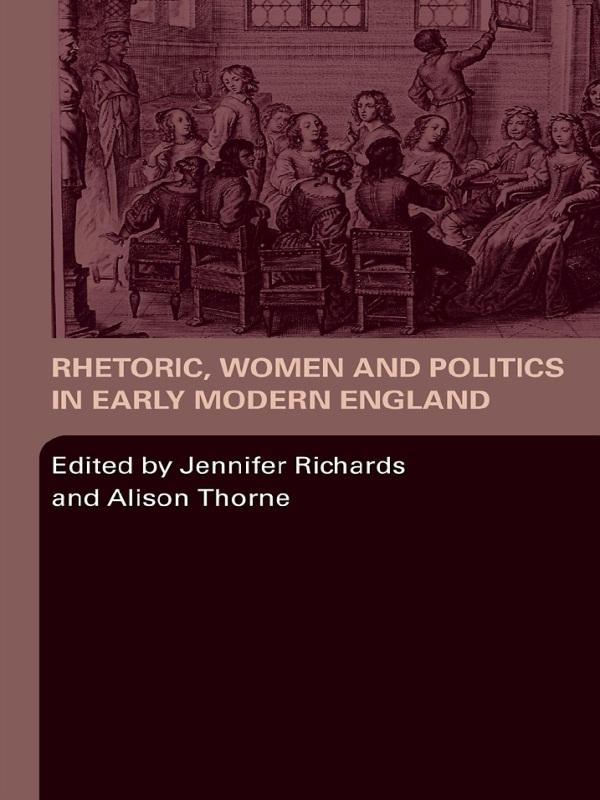
Rhetoric has long been a powerful and pervasive force in political and cultural life, yet in the early modern period, rhetorical training was generally reserved as a masculine privilege. This volume argues, however, that women found a variety of ways to represent their interests persuasively, and that by looking more closely at the importance of rhetoric for early modern women, and their representation within rhetorical culture, we also gain a better understanding of their capacity for political action.
Offering a fascinating overview of women and rhetoric in early modern culture, the contributors to this book:
- examine constructions of female speech in a range of male-authored texts, from Shakespeare to Milton and Marvell
- trace how women interceded on behalf of clients or family members, proclaimed their spiritual beliefs and sought to influence public opinion
- explore the most significant forms of female rhetorical self-representation in the period, including supplication, complaint and preaching
- demonstrate how these forms enabled women from across the social spectrum, from Elizabeth I to the Quaker Dorothy Waugh, to intervene in political life.
Drawing upon incisive analysis of a wide range of literary texts including poetry, drama, prose polemics, letters and speeches, Rhetoric, Women and Politics in Early Modern England presents an important new perspective on the early modern world, forms of rhetoric, and the role of women in the culture and politics of the time.
Betal enkelt med kort, Klarna, Apple Pay eller Google Pay. Ikke fornøyd? Du har alltid 14 dagers angrerett. Les mer i våre vilkår. Har du spørsmål, send oss en e-post på hello@memmo.org.
Memmo gjør det enklere å studere – uansett hvor du er i verden. Hos oss samler du pensumbøker og smarte studieverktøy på ett og samme sted: sammendrag, quizer, podkaster og flashcards. Og så Ted, din studiekompis som svarer på alt du lurer på. Over 50 000 studenter studerer allerede her – bygget for at du skal lære raskere og stresse mindre.