
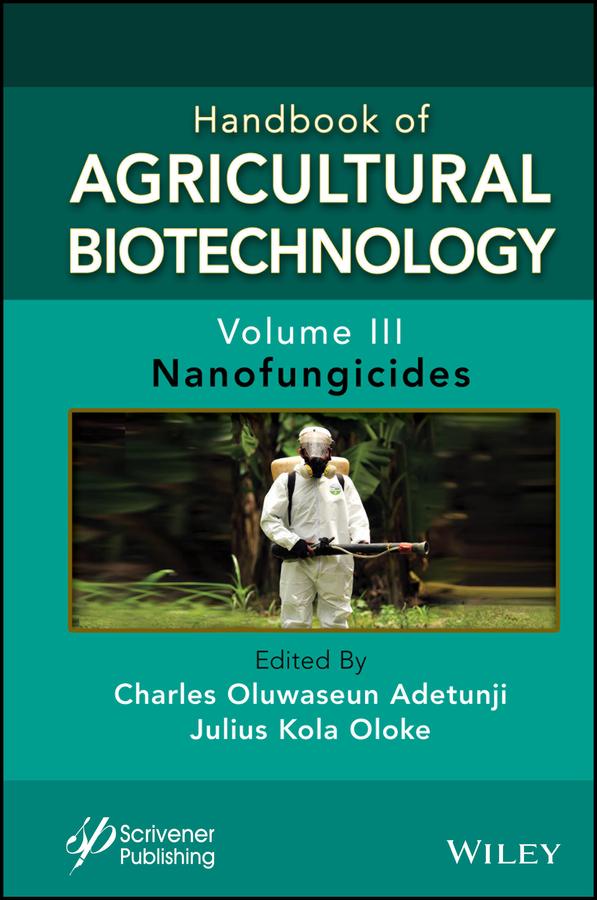
This book provides state-of-the-art information about recent advancements in the application of nanobiofungicides for effective management of post-harvest diseases and agricultural fungal diseases, including blights, mildews, molds, and rusts.
The book details the formulation and standardization of nanobiofungicides, as well as their application in the management of biotic and abiotic stress. It provides relevant information on the isolation, characterization, purification, and structural characterization of active constituents, using spectroscopic techniques and explains the quarantine and regulatory issues that are associated with nanobiofungicides (derived from plants and other biogenic sources), as well as various regulatory bodies that manage the control of pesticides on agricultural products.
Readers will learn about the application of nanobiofungicides when applied as a biocontrol agent against soil-borne and root-borne plant pathogens; the management of mycotoxin; the non-target effect of plant-based nanobiofungicides when applied in the greenhouse and field (such as rate of CO2 evolution, organic carbon content, enzymatic activity, acidic and alkaline phosphatase, dehydrogenases, urease, and protease); and the effect on soil microorganisms using different assay techniques. Furthermore, the book provides information on several plant materials that could serve as nanobiofungicdes, and explains the procedure involved in the characterization of plant-based nanobiofungicides (using TEM, SEM, XRD, EDX, UV, zeta potential, dynamic light-scattering). Finally, it offers a specific illustration on the application of microencapsulation and nanoformulation technology in the synthesis of plant-based nanobiofungicides.
Audience
The book is a useful resource for a diverse audience, including industrialists, food industry professionals, agriculturists, agricultural microbiologists, plant pathologists, botanists, microbiologists, biotechnologists, nanotechnologists, microbial biotechnologists, farmers, policymakers, and extension workers.
Betal enkelt med kort, Klarna, Apple Pay eller Google Pay. Ikke fornøyd? Du har alltid 14 dagers angrerett. Les mer i våre vilkår. Har du spørsmål, send oss en e-post på hello@memmo.org.
Memmo gjør det enklere å studere – uansett hvor du er i verden. Hos oss samler du pensumbøker og smarte studieverktøy på ett og samme sted: sammendrag, quizer, podkaster og flashcards. Og så Ted, din studiekompis som svarer på alt du lurer på. Over 50 000 studenter studerer allerede her – bygget for at du skal lære raskere og stresse mindre.