
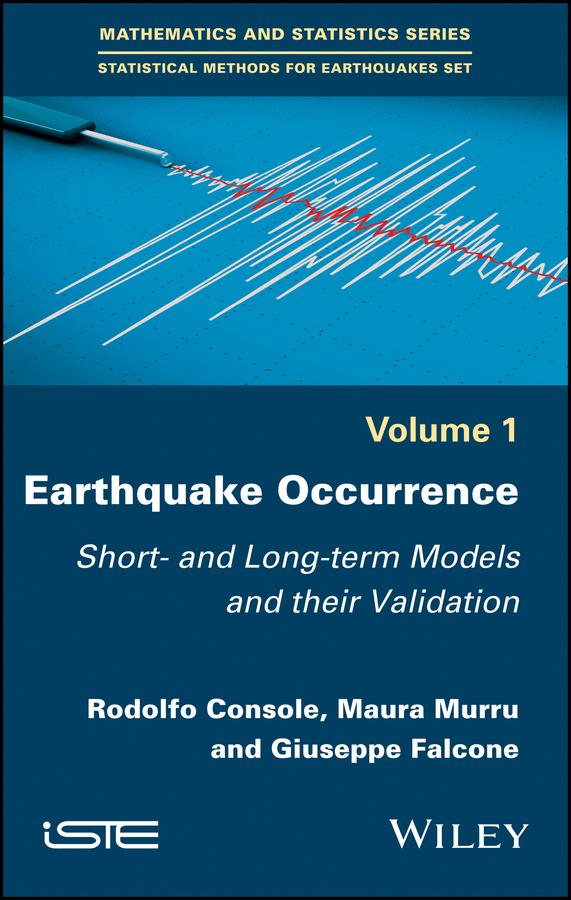
Earthquake Occurrence provides the reader with a review of algorithms applicable for modeling seismicity, such as short-term earthquake clustering and pseudo-periodic long-term behavior of major earthquakes. The concept of the likelihood ratio of a set of observations under different hypotheses is applied for comparison among various models.
In short-term models, known by the term ETAS, the occurrence space and time rate density of earthquakes is modeled as the sum of two terms, one representing the independent or spontaneous events, and the other representing the activity triggered by previous earthquakes. Examples of the application of such algorithms in real cases are also reported.
Dealing with long-term recurrence models, renewal time-dependent models, implying a pseudo-periodicity of earthquake occurrence, are compared with the simple time-independent Poisson model, in which every event occurs regardless of what has occurred in the past.
The book also introduces a number of computer codes developed by the authors over decades of seismological research.
Betal enkelt med kort, Klarna, Apple Pay eller Google Pay. Ikke fornøyd? Du har alltid 14 dagers angrerett. Les mer i våre vilkår. Har du spørsmål, send oss en e-post på hello@memmo.org.
Memmo gjør det enklere å studere – uansett hvor du er i verden. Hos oss samler du pensumbøker og smarte studieverktøy på ett og samme sted: sammendrag, quizer, podkaster og flashcards. Og så Ted, din studiekompis som svarer på alt du lurer på. Over 50 000 studenter studerer allerede her – bygget for at du skal lære raskere og stresse mindre.