
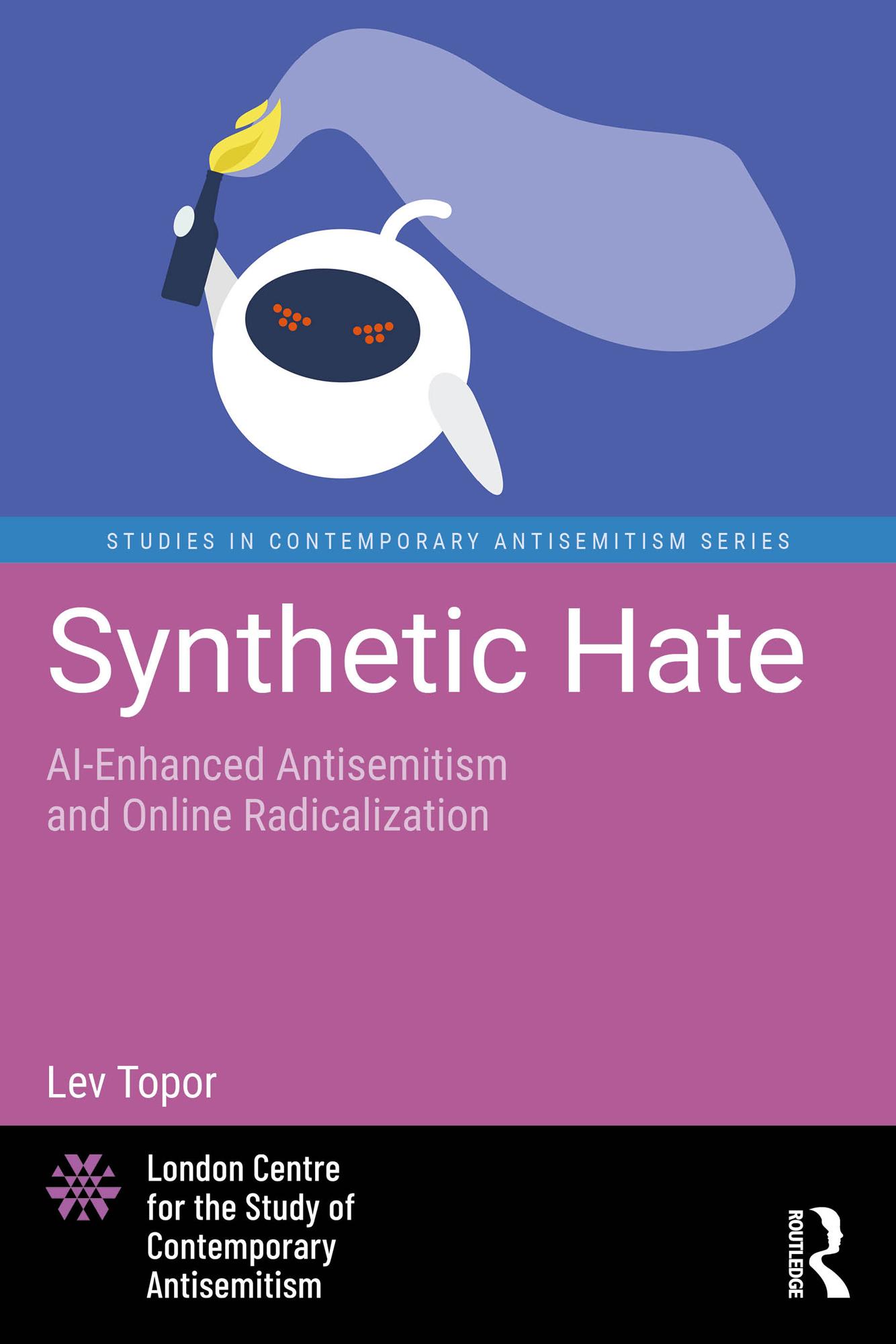
Synthetic Hate investigates how extremists exploit artificial intelligence (AI) to modernize the world’s oldest hatred. Antisemitism – rooted in religious discrimination, medieval blood libels, Nazi propaganda, and contemporary Islamist and far-right conspiracies – has found new life through generative tools that can produce persuasive text, images, audio, and video at scale.
Drawing on documented cases and controlled demonstrations, the book shows how large language models (LLMs), deepfakes, bots, and recommendation systems enable cheap, rapid, and adaptive propaganda – memes that evade moderation, fabricated “evidence,” synthetic voices, and narrative laundering that spreads across platforms and into mainstream feeds. The result is not “new” hate, but hate that is faster, more convincing, and harder to police.
Crucially, Synthetic Hate goes beyond diagnosis, and it lays out a practical counterstrategy of technical safeguards, platform accountability and regulation, and education and resilience, so policymakers, researchers, and practitioners can blunt AI-amplified antisemitism and hate without sacrificing democratic values.
Betal enkelt med kort, Klarna, Apple Pay eller Google Pay. Ikke fornøyd? Du har alltid 14 dagers angrerett. Les mer i våre vilkår. Har du spørsmål, send oss en e-post på hello@memmo.org.
Memmo gjør det enklere å studere – uansett hvor du er i verden. Hos oss samler du pensumbøker og smarte studieverktøy på ett og samme sted: sammendrag, quizer, podkaster og flashcards. Og så Ted, din studiekompis som svarer på alt du lurer på. Over 50 000 studenter studerer allerede her – bygget for at du skal lære raskere og stresse mindre.