
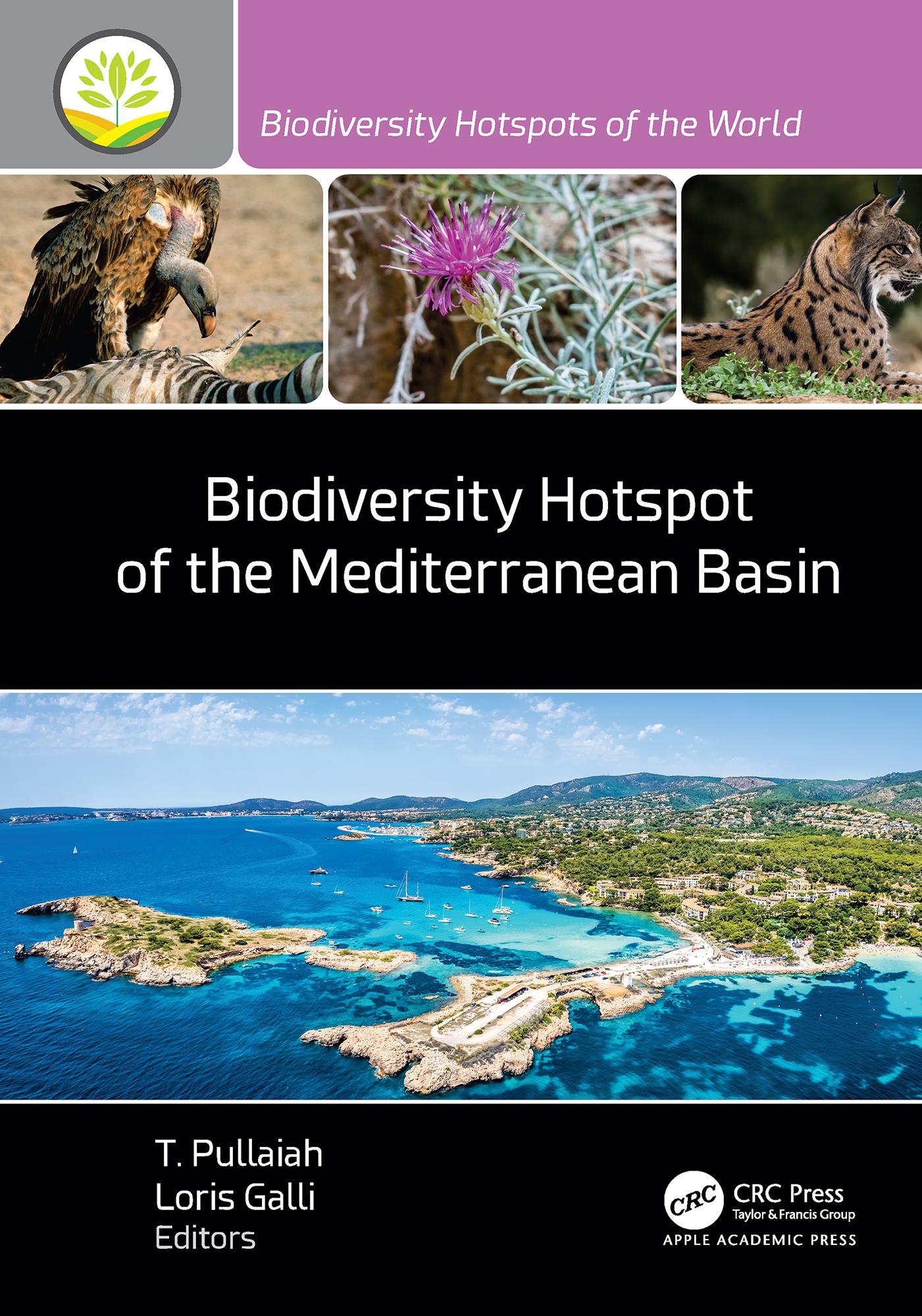
This new volume focuses on the biodiversity of the Mediterranean Basin, a very heterogeneous area with an extremely complex geological history where, within a few kilometers, there is a gradient of microhabitats that goes from the coasts with a Mediterranean climate to high altitude mesophilic areas.
Stretching from the archipelago of Cabo Verde in the west to Jordan and Turkey in the east, the region is well known for its exceptional richness in biodiversity and its high rate of endemicity. The region flora diversity is significant, with 15,000 to 25,000 species, 60% of which are unique to the region. The anthropogenic activities of the region, however, which include deforestation, fragmentation of habitats, pollution, high population density (with nearly 500 million human inhabitants and another 250 million tourists visiting each year), climate change, and poaching of wildlife, pose serious threats to the biodiversity of the region. The Mediterranean Basin hosts over 1,300 threatened species (extinct in the wild, critically endangered, endangered, and vulnerable), such as the dragonfly (Urothemis edwardsii), the dung beetle (Thorectes colon), the Rüppell Vulture (Gyps rueppelli), and the Iberian lynx (Lynx pardinus).
The volumes of Biodiversity Hotspots of the World book series are essential resources for researchers and professionals in the fields of conservation biology, ecology and evolution, concisely illustrating existing biodiversity in hotspots around the world.
Betal enkelt med kort, Klarna, Apple Pay eller Google Pay. Ikke fornøyd? Du har alltid 14 dagers angrerett. Les mer i våre vilkår. Har du spørsmål, send oss en e-post på hello@memmo.org.
Memmo gjør det enklere å studere – uansett hvor du er i verden. Hos oss samler du pensumbøker og smarte studieverktøy på ett og samme sted: sammendrag, quizer, podkaster og flashcards. Og så Ted, din studiekompis som svarer på alt du lurer på. Over 50 000 studenter studerer allerede her – bygget for at du skal lære raskere og stresse mindre.