
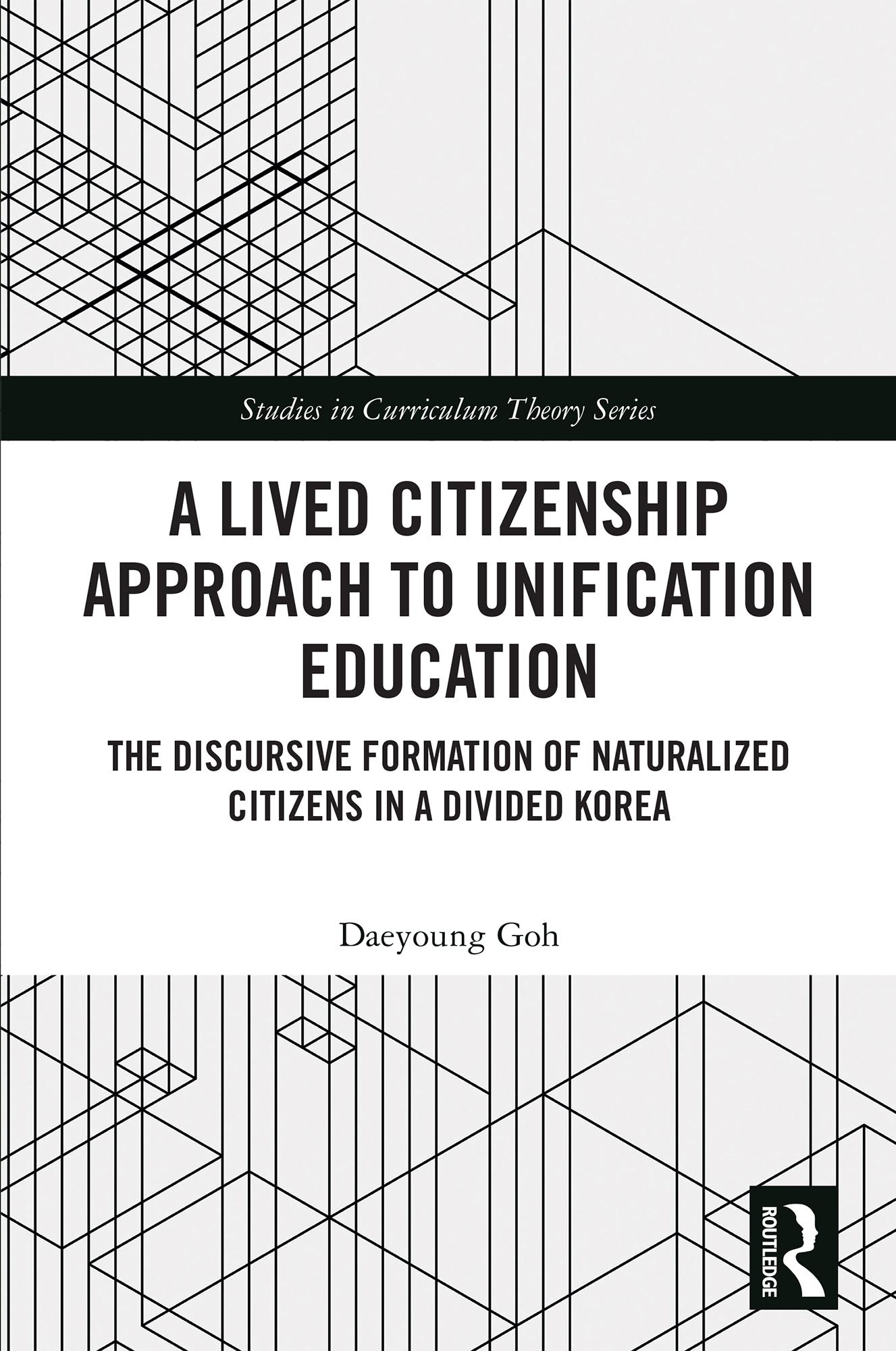
In South Korea, unification education (UE) aims to help students develop values and attitudes for Korean unification, anchored in democratic principles, national community consciousness, and national security awareness. Yet within this framework, the experiences of international immigrants remain largely absent from UE discourses.
Drawing on in-depth interviews, this book highlights the experiences and thoughts of naturalized citizens to reimagine the concept of citizenship in UE. It examines how citizenship is conceptualized in national UE policies, reference materials, and textbooks; explores how naturalized Koreans understand their own citizenship and the prospects of unification; and proposes what an alternative, more inclusive UE curriculum might look like. This book reveals naturalized citizens’ unrecognized, democratic, and in-between citizenship, through which they navigate the contested, expanding, and spatial- affective dimensions of Korean citizenship. Moving beyond critique, the book closes with a proposal for a transformative nonviolent approach to UE curriculum, grounded in principles of openness, loose solidarity, and inter-living.
Essential reading for researchers in citizenship education, Korean studies, migration studies, curriculum theory, and comparative education.
Betal enkelt med kort, Klarna, Apple Pay eller Google Pay. Ikke fornøyd? Du har alltid 14 dagers angrerett. Les mer i våre vilkår. Har du spørsmål, send oss en e-post på hello@memmo.org.
Memmo gjør det enklere å studere – uansett hvor du er i verden. Hos oss samler du pensumbøker og smarte studieverktøy på ett og samme sted: sammendrag, quizer, podkaster og flashcards. Og så Ted, din studiekompis som svarer på alt du lurer på. Over 50 000 studenter studerer allerede her – bygget for at du skal lære raskere og stresse mindre.