
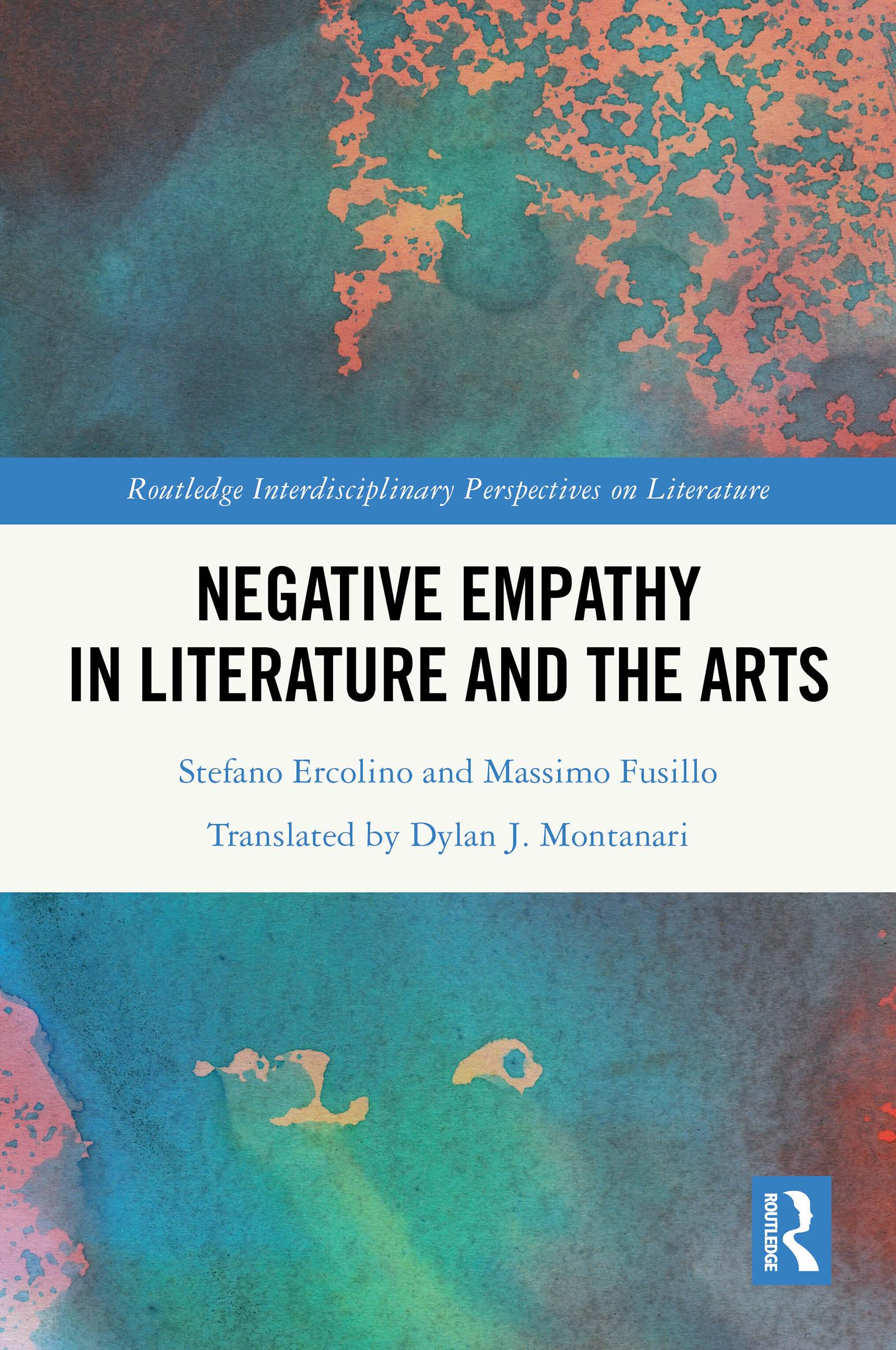
Negative Empathy in Literature and the Arts explores how readers and viewers engage cognitively and affectively with ethically troubling artworks across literature, the visual and performing arts, and screen media. Drawing on aesthetics, cultural history and theory, psychology, and neuroscience, Stefano Ercolino and Massimo Fusillo introduce the concept of “negative empathy” to describe the ambivalent and destabilizing emotional responses elicited by representations of negativity in art. Rather than dismissing empathy as naïve, the authors argue for a more nuanced understanding of its darker forms and their cognitive and ethical value. Through a comparative and intermedial approach, the book analyzes case studies from Littell’s The Kindly Ones to Wilson’s Deafman Glance; from Verdi’s Macbeth and Nitsch’s Theatre of Orgies and Mysteries to Caravaggio’s Martyrdom of Saint Matthew, Mapplethorpe’s “X” Portfolio, Kiefer’s The Seven Heavenly Palaces, Haneke’s The White Ribbon, and Gilligan’s Breaking Bad—offering a compelling new theory of aesthetic engagement.
Betal enkelt med kort, Klarna, Apple Pay eller Google Pay. Ikke fornøyd? Du har alltid 14 dagers angrerett. Les mer i våre vilkår. Har du spørsmål, send oss en e-post på hello@memmo.org.
Memmo gjør det enklere å studere – uansett hvor du er i verden. Hos oss samler du pensumbøker og smarte studieverktøy på ett og samme sted: sammendrag, quizer, podkaster og flashcards. Og så Ted, din studiekompis som svarer på alt du lurer på. Over 50 000 studenter studerer allerede her – bygget for at du skal lære raskere og stresse mindre.