
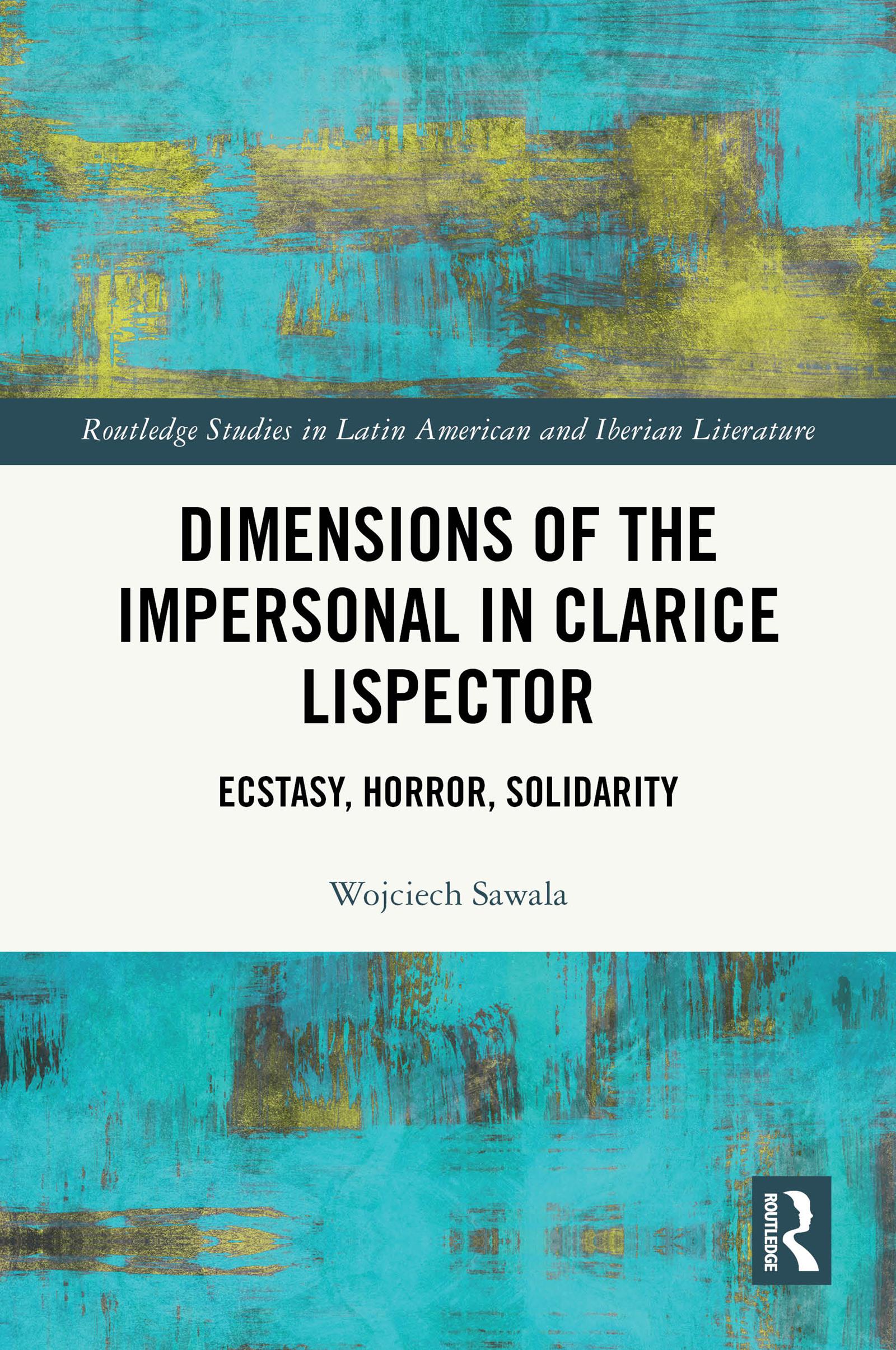
This book explores the fictional work of Clarice Lispector (1920–1977), the eminent twentieth-century Brazilian writer. It employs the theoretical framework of "affirmative biopolitics" by Roberto Esposito, engaging with Michel Foucault and Giorgio Agamben, alongside voices like Mircea Eliade, Anthony Giddens, and Agata Bielik-Robson. The focus is on rethinking and valuing “impersonality,” crucial for understanding the anthropological, metaphysical, ethical, and political implications in Lispector's works. The main thesis posits that Lispector’s writings, from journalistic chronicles to significant books like The Passion According to G.H., present a complex anthropological vision marked by an ontological and ethical “deadlock” between personality and impersonality. This vision suggests that humans are trapped in a personal mode of existence, separated from their ontological essence, leading to a metaphysical guilt. The book analyzes this deadlock both in individual and communal-political contexts, highlighting the cryptotheological dimension in Lispector’s mystical and messianic themes rooted in Jewish tradition.
Betal enkelt med kort, Klarna, Apple Pay eller Google Pay. Ikke fornøyd? Du har alltid 14 dagers angrerett. Les mer i våre vilkår. Har du spørsmål, send oss en e-post på hello@memmo.org.
Memmo gjør det enklere å studere – uansett hvor du er i verden. Hos oss samler du pensumbøker og smarte studieverktøy på ett og samme sted: sammendrag, quizer, podkaster og flashcards. Og så Ted, din studiekompis som svarer på alt du lurer på. Over 50 000 studenter studerer allerede her – bygget for at du skal lære raskere og stresse mindre.