
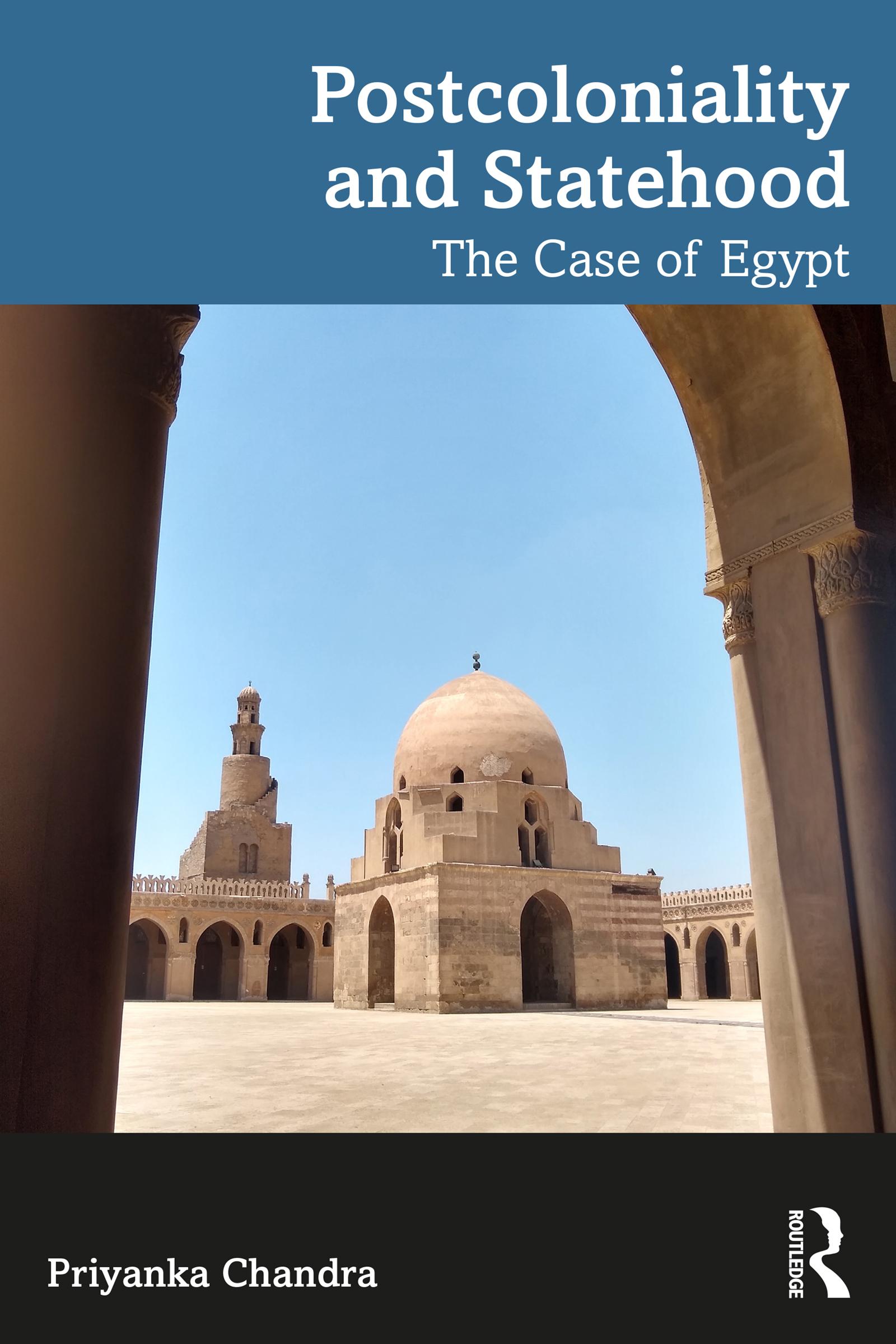
This book traces the evolution of the postcolonial state and the social contract in Egypt. It problematises two of the most ubiquitous and contentious terms: democratisation and development, within the context of Egypt and the larger Global South. It also subverts western-centric ideas of global politics to examine why certain aspects of Egypt’s history and policies have received more attention than others.
This volume presents a study of state-society relations, the shift to Infitah, the impact of neoliberalisation from 1970 to 2011, and social responses to it. It argues that the Arab Uprisings of 2011 were not isolated events, but a result of a longue durée political-economic history. Through the prism of postcoloniality, it shows how citizenship is constantly renegotiated in view of the ongoing neoliberalisation and the impact of such social transformations on the nature of the postcolonial state. It juxtaposes the role of the state and society against global political and economic landscapes to address the larger question: what is the nature of the postcolonial state?
This book will be of interest to a wide array of scholars and researchers from politics and international relations, sociology and social anthropology, social theory, political theory, postcolonialism and Global South studies.
Betal enkelt med kort, Klarna, Apple Pay eller Google Pay. Ikke fornøyd? Du har alltid 14 dagers angrerett. Les mer i våre vilkår. Har du spørsmål, send oss en e-post på hello@memmo.org.
Memmo gjør det enklere å studere – uansett hvor du er i verden. Hos oss samler du pensumbøker og smarte studieverktøy på ett og samme sted: sammendrag, quizer, podkaster og flashcards. Og så Ted, din studiekompis som svarer på alt du lurer på. Over 50 000 studenter studerer allerede her – bygget for at du skal lære raskere og stresse mindre.