
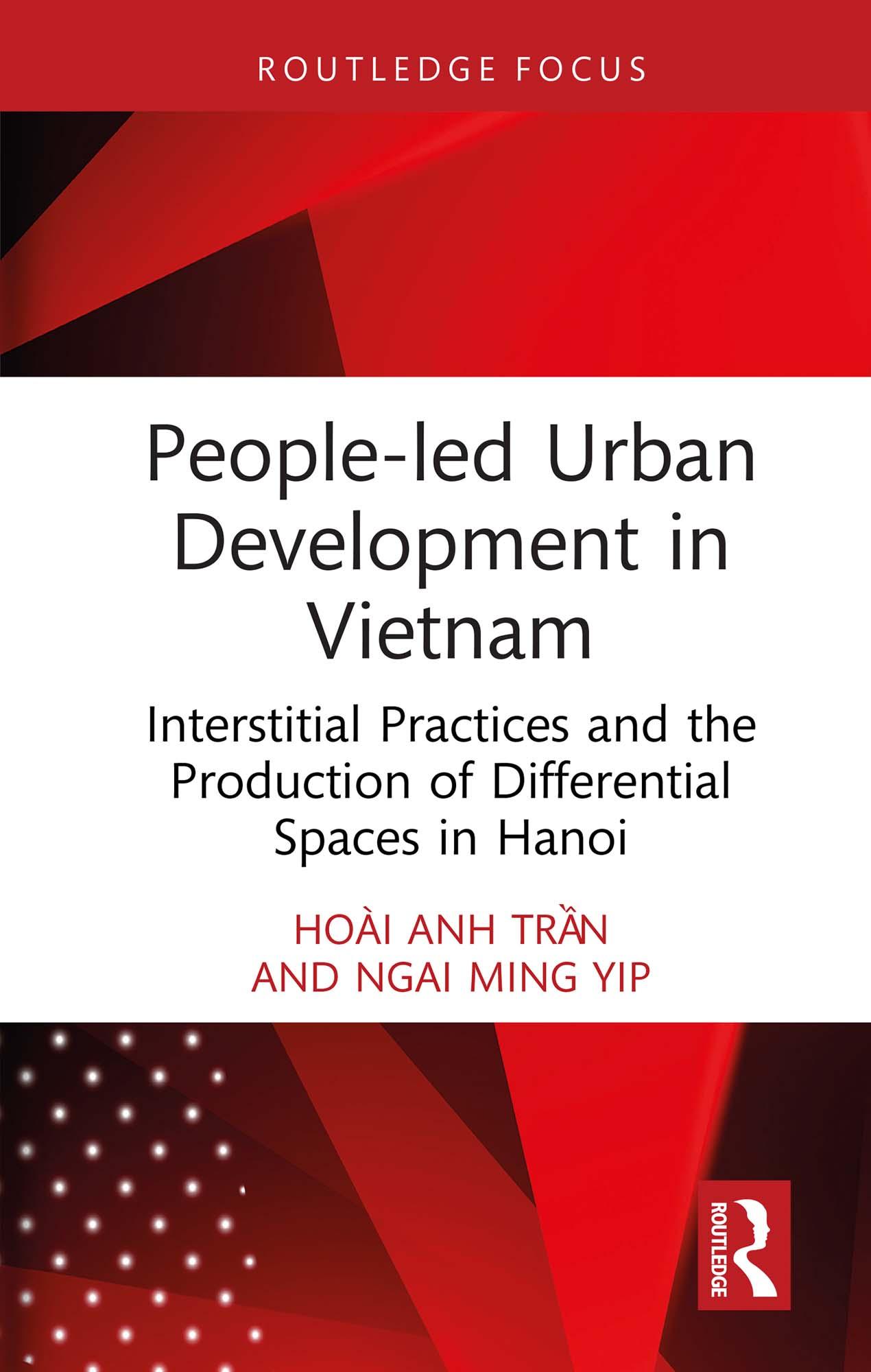
This book provides an analysis of urban development in Vietnam with a focus on activities carried out by ordinary people. Using Hanoi as a case study, this book offers a rich ethnographic account of people‑led development emphasising spatial practices of the emerging middle/lower‑middle and small entrepreneurial classes.
In this book, the concept practice is integrated with Lefebvre’s framework of the production of differential space to conceptualise the diverse and seemingly ad‑hoc space‑making activities of urban residents, situating these in relation to the state’s disciplining projects through housing and urban planning. Moving beyond a simplistic, dichotomised discussion of informality and formality, temporality and permanence, this book highlights the tensions between the state visions of modernised urbanisation and the everyday space‑making practices of ordinary people. It offers a substantive narrative and an in‑depth analysis of the power relations, social hierarchies and complex interactions that are embedded within the differential spaces created by diverse interstitial practices in Hanoi.
As a novel contribution to the literature highlighting the entrepreneurialism of the subaltern and the role of ordinary people in urban development, this book will be of interest to researchers of Vietnam’s urban development, Southeast Asian Studies, Urban Studies and the Global South.
Betal enkelt med kort, Klarna, Apple Pay eller Google Pay. Ikke fornøyd? Du har alltid 14 dagers angrerett. Les mer i våre vilkår. Har du spørsmål, send oss en e-post på hello@memmo.org.
Memmo gjør det enklere å studere – uansett hvor du er i verden. Hos oss samler du pensumbøker og smarte studieverktøy på ett og samme sted: sammendrag, quizer, podkaster og flashcards. Og så Ted, din studiekompis som svarer på alt du lurer på. Over 50 000 studenter studerer allerede her – bygget for at du skal lære raskere og stresse mindre.