
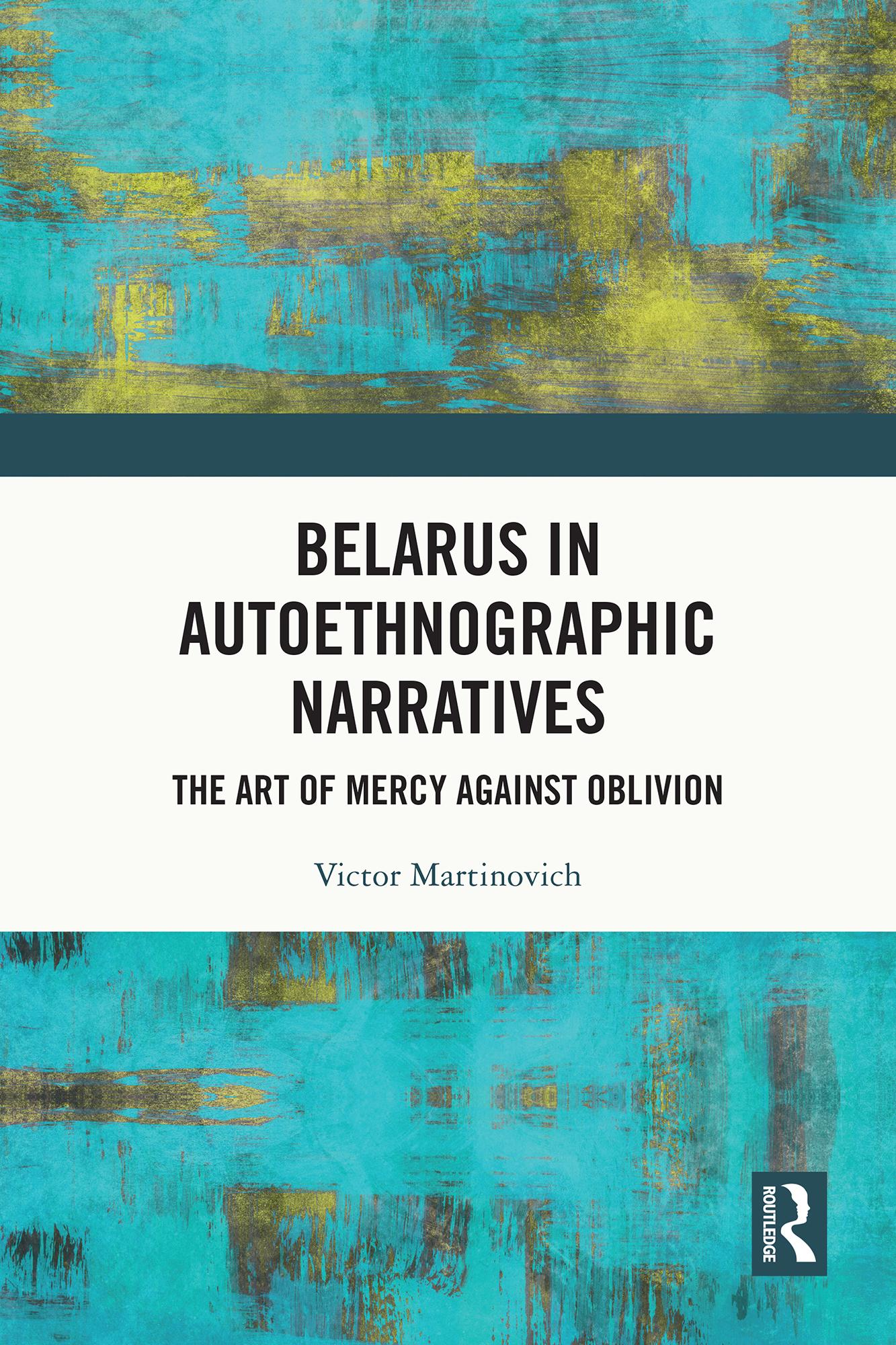
This book offers an autoethnographic exploration of the interplay of art, memory, and resilience in Eastern Europe, weaving together the personal and collective histories of Belarusians – those who survived two World Wars and their contemporaries, who are now looking for a way out of a political crisis in the region.
Set against the history of Belarus, it recounts the story of the author’s greatgrandfather Amyalyan, a Belarusian peasant executed by the Nazis after saving a Jewish man during World War II, along with reflections on artists like Chaïm Soutine and Marc Chagall, whose journeys reflect the region’s cultural endurance. Combining autoethnography and art history, this book presents art as a medium of empathy, challenging readers to engage with paintings emotionally rather than through a purely analytical lens. Each chapter functions as both a historical reflection and an invitation to see art as a means of reclaiming personal narratives, making historical traumas accessible and relatable. Themes of compassion, forgiveness, and the humanizing power of art emerge as essential elements, guiding readers through the complex intersections of personal and collective memory.
This book is a valuable addition for researchers and students interested in ethnography and autoethnography, Eastern European studies, art history, cultural studies, and memory studies.
Betal enkelt med kort, Klarna, Apple Pay eller Google Pay. Ikke fornøyd? Du har alltid 14 dagers angrerett. Les mer i våre vilkår. Har du spørsmål, send oss en e-post på hello@memmo.org.
Memmo gjør det enklere å studere – uansett hvor du er i verden. Hos oss samler du pensumbøker og smarte studieverktøy på ett og samme sted: sammendrag, quizer, podkaster og flashcards. Og så Ted, din studiekompis som svarer på alt du lurer på. Over 50 000 studenter studerer allerede her – bygget for at du skal lære raskere og stresse mindre.