
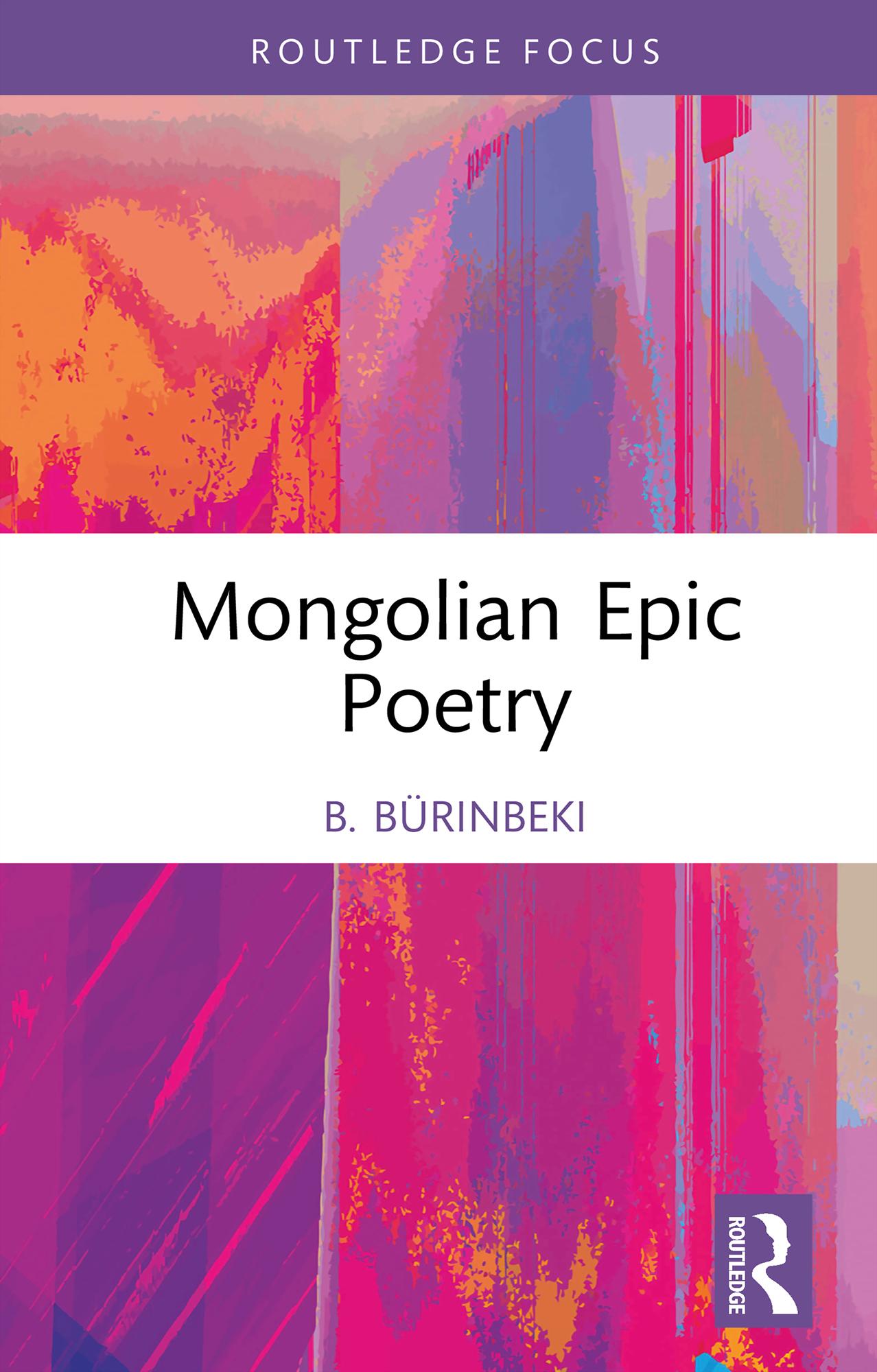
The book studies Mongolian epic poetry on the basis of Mongolian texts and Western literary theory.
The author presents a coherent aesthetic system of heroic epic, gives examples of the sacred, primitive, and paradigmatic characteristics of ancient Mongolian epic, and then shows how the exploits of heroes unfold in infinite time and space. He describes the divinity and humanity of the white heroes as an embodiment of their group spirit. Along with the black Mongol heroes, he presents their divinely wise steeds, prized by Mongol nomads, as the embodiment of a poetics of evil. In particular, the book explores the complex relationship between humans and nature in Mongolian epics and analyzes the influence of social change on the growth, development, and decline of epic. It also examines imagery, prosody, and style, focusing on lyrical factors and the formulaic units of epic composition.
The book will be valuable to scholars and graduate students of Asian literature, folklore, and anthropology.
Betal enkelt med kort, Klarna, Apple Pay eller Google Pay. Ikke fornøyd? Du har alltid 14 dagers angrerett. Les mer i våre vilkår. Har du spørsmål, send oss en e-post på hello@memmo.org.
Memmo gjør det enklere å studere – uansett hvor du er i verden. Hos oss samler du pensumbøker og smarte studieverktøy på ett og samme sted: sammendrag, quizer, podkaster og flashcards. Og så Ted, din studiekompis som svarer på alt du lurer på. Over 50 000 studenter studerer allerede her – bygget for at du skal lære raskere og stresse mindre.