
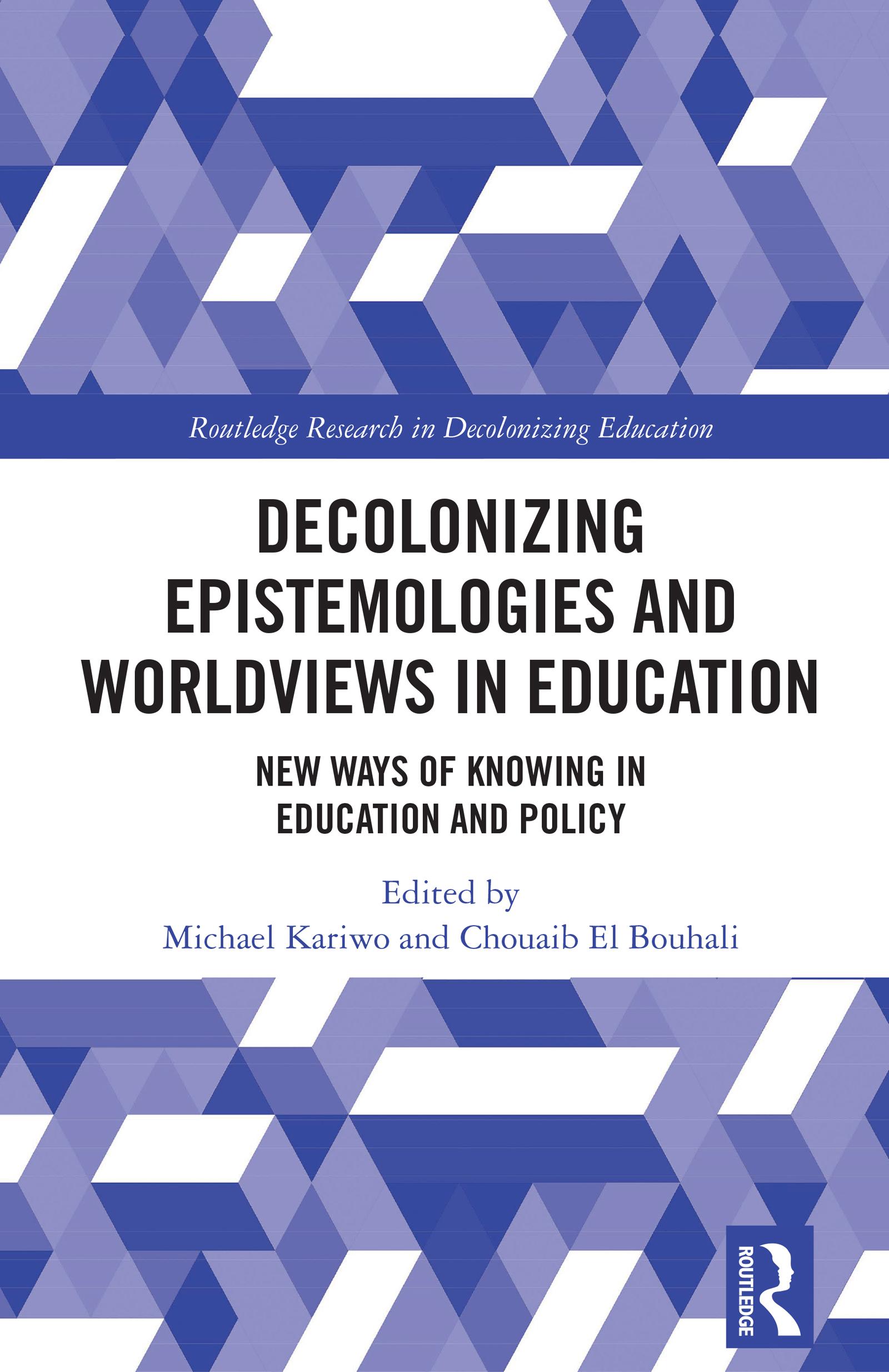
This edited volume examines the decolonization of worldviews and ways of knowing in education and educational policy. It critically challenges the Western interpretation of epistemology and ontology, providing a platform for contributors to demonstrate how concepts of decolonization, knowledge and worldviews are understood, as well as the impact of these understandings in creation of policies and practices in education and pedagogy. It also offers insight into related themes on student resilience, English language, the internationalization of western knowledge, indigenous paradigms, and curriculum transformation. Chapter authors present new understandings of decolonizing knowledge and diversity, analysis of non-Western and indigenous epistemologies and worldviews, and examples of implementation of equity in policy and education through case studies. Creating and initiating a platform for wider debate, it will ultimately appeal to scholars, researchers, policy makers and educational leaders concerned with decolonizing education and policy in North America and beyond, and with interests in indigenous education, decolonizing education, sociology of education, and philosophy of education.
Betal enkelt med kort, Klarna, Apple Pay eller Google Pay. Ikke fornøyd? Du har alltid 14 dagers angrerett. Les mer i våre vilkår. Har du spørsmål, send oss en e-post på hello@memmo.org.
Memmo gjør det enklere å studere – uansett hvor du er i verden. Hos oss samler du pensumbøker og smarte studieverktøy på ett og samme sted: sammendrag, quizer, podkaster og flashcards. Og så Ted, din studiekompis som svarer på alt du lurer på. Over 50 000 studenter studerer allerede her – bygget for at du skal lære raskere og stresse mindre.