
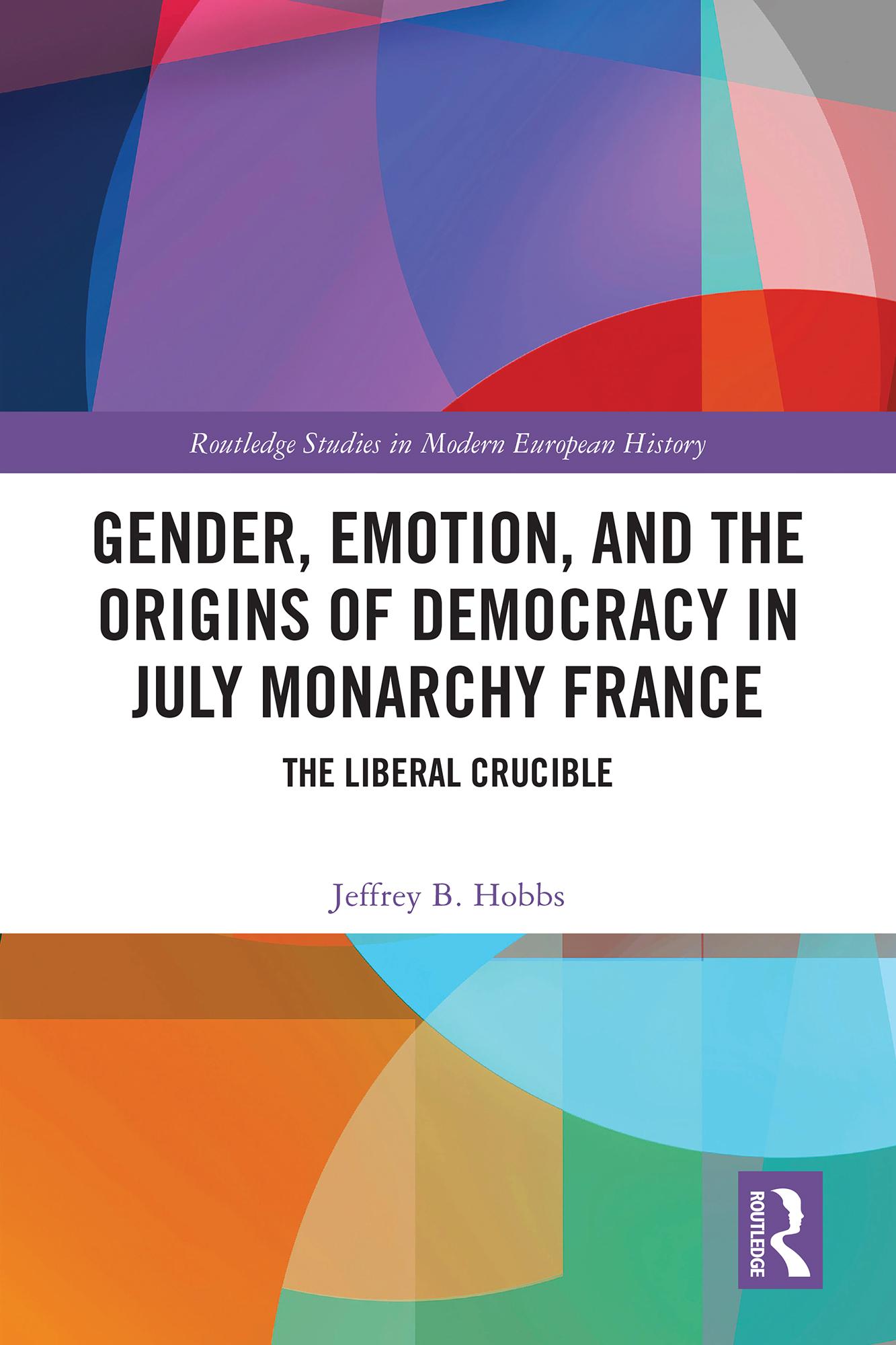
This book provides a new perspective on the historical importance of a series of provincial rebellions in France after the Revolution of 1830. It demonstrates their crucial role in the development of popular ideas about liberty and democracy in modern France.
Hobbs shows how the Duchesse de Berry’s rebellion in 1832 and the Lyon insurrections of 1831 and 1834 inspired competing visions of liberty defined through discourses about gender and emotion. In particular, he illustrates how political groups, including liberals, legitimists, and republicans, used representations of gender and emotion to justify their roles in rebellions and to contest the meaning of liberty. Rather than being directly descended from liberal or republican traditions, the book argues, modern French democracy was forged as the mutual creation of these groups as they vied for political power in the nineteenth century.
This volume will be of interest to scholars of modern France, the history of democracy, the history of emotions, the history of class, and the history of liberalism, as well as to graduate students studying modern Europe, liberalism, the history of emotions, class politics, and nineteenth-century royalism.
Betal enkelt med kort, Klarna, Apple Pay eller Google Pay. Ikke fornøyd? Du har alltid 14 dagers angrerett. Les mer i våre vilkår. Har du spørsmål, send oss en e-post på hello@memmo.org.
Memmo gjør det enklere å studere – uansett hvor du er i verden. Hos oss samler du pensumbøker og smarte studieverktøy på ett og samme sted: sammendrag, quizer, podkaster og flashcards. Og så Ted, din studiekompis som svarer på alt du lurer på. Over 50 000 studenter studerer allerede her – bygget for at du skal lære raskere og stresse mindre.