
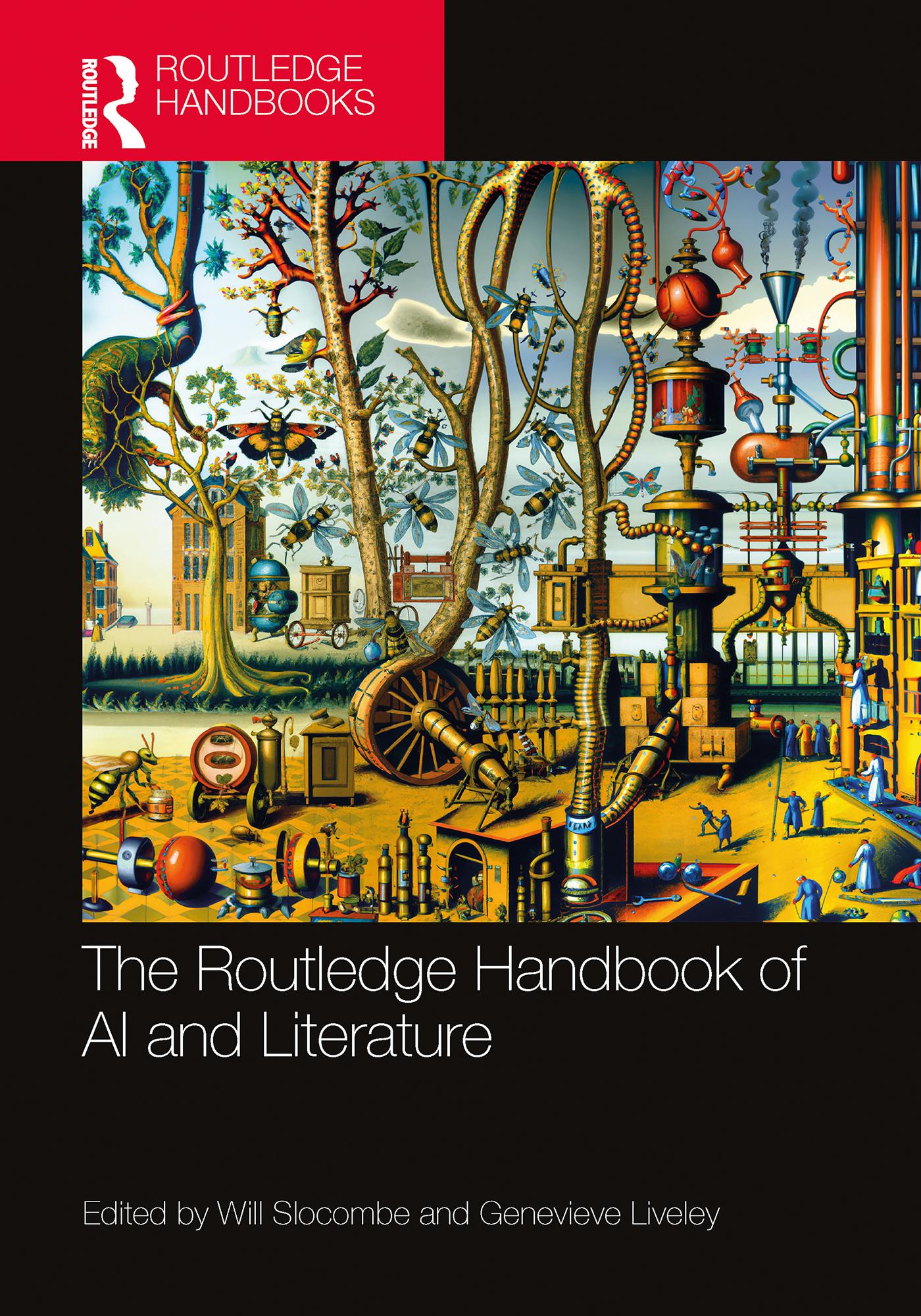
The Routledge Handbook of AI and Literature provides an invaluable resource for those interested in deepening their understanding of the variety of theories and approaches available when AI is studied or deployed in literary contexts. It also illustrates ways in which AI researchers can use literary lenses to better understand the sociotechnical dynamics and cultural imaginaries shaping human interactions with AI.
Both AI and literature are understood in their broadest senses here. The book incorporates chapters that deal with Large Language Models, Generative AI, transformer architectures, story generators, and computational analysis. Literary case studies embrace performance, poetry, comics, as well as prose, and span a wide range of historical periods, from the ancient world to contemporary science fiction and Generative AI poetry.
The Handbook brings together early career contributors, as well as some of the best-known names in the digital humanities and computational literary studies. It offers a fresh perspective on the past, present, and future of AI and literature that will appeal to students and scholars with relevant interests across a range of subjects, including AI Engineering, Classics, Computing, Digital Humanities, English, Ethics, Film and Television, Law, and Narratology.
Betal enkelt med kort, Klarna, Apple Pay eller Google Pay. Ikke fornøyd? Du har alltid 14 dagers angrerett. Les mer i våre vilkår. Har du spørsmål, send oss en e-post på hello@memmo.org.
Memmo gjør det enklere å studere – uansett hvor du er i verden. Hos oss samler du pensumbøker og smarte studieverktøy på ett og samme sted: sammendrag, quizer, podkaster og flashcards. Og så Ted, din studiekompis som svarer på alt du lurer på. Over 50 000 studenter studerer allerede her – bygget for at du skal lære raskere og stresse mindre.