
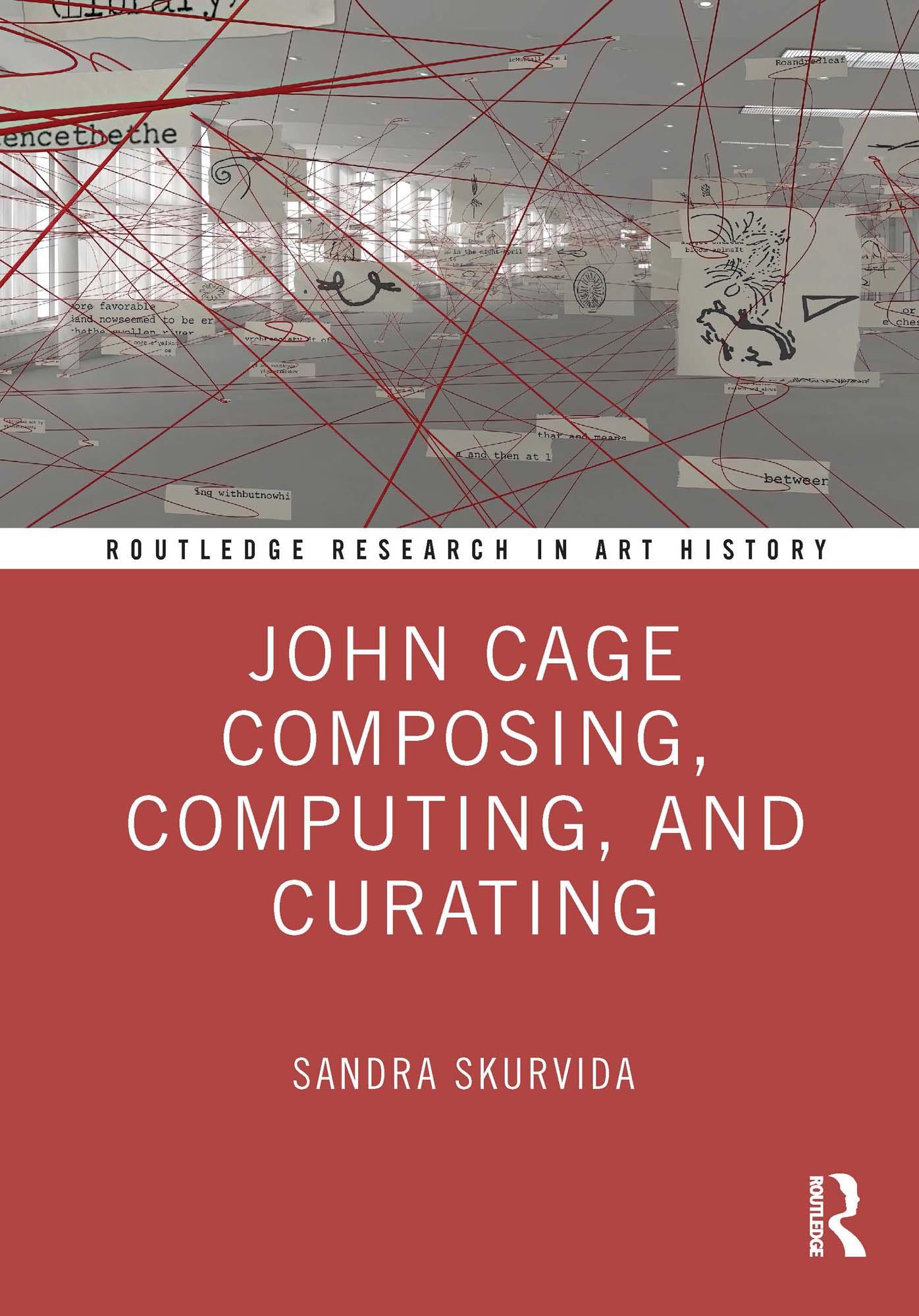
This study reassesses Cage’s multifaceted practice from a transdisciplinary perspective, using text as a premise for his musical, visual, lingual, and museal compositions.
In his compositions, John Cage opened the structures of music, language, and the museum to change perpetuated by chance operations. His correspondences across history with an extended circle of creators, including Erik Satie, Marcel Duchamp, and Henry David Thoreau, among many others, erased single-minded authorship via methodical processing of source material. Foreshadowing ecological recycling, Cage’s late compositions for museum opened perspectives for posthuman mediation in curating and contemporary art. He conceived of anarchy as the coexistence of mutually aiding yet autonomous self-determinate entities. This book introduces Cage to the twenty-first century as a composer whose work intersects different temporalities and modes of being, the past and the present, the human and the non-human, and the individual and the communal.
The book will be of interest to scholars of art history, music, curatorial studies, and museum studies.
Betal enkelt med kort, Klarna, Apple Pay eller Google Pay. Ikke fornøyd? Du har alltid 14 dagers angrerett. Les mer i våre vilkår. Har du spørsmål, send oss en e-post på hello@memmo.org.
Memmo gjør det enklere å studere – uansett hvor du er i verden. Hos oss samler du pensumbøker og smarte studieverktøy på ett og samme sted: sammendrag, quizer, podkaster og flashcards. Og så Ted, din studiekompis som svarer på alt du lurer på. Over 50 000 studenter studerer allerede her – bygget for at du skal lære raskere og stresse mindre.