
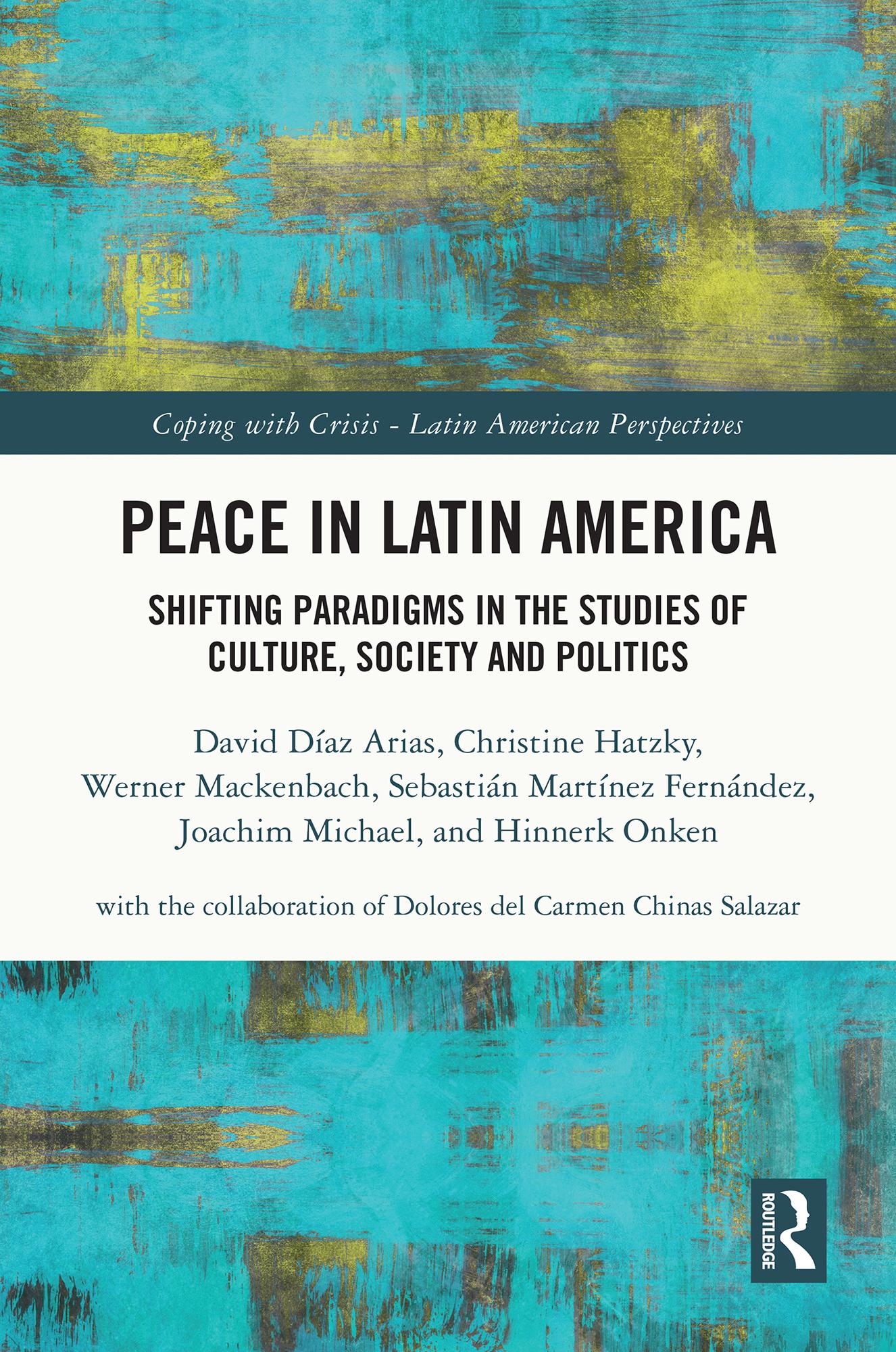
This volume shifts the focus from violence to peace studies in Latin America and sheds light on how social groups and individuals resist to violence and strive to create peaceful or at least less violent conditions of conviviality. Drawing on social sciences, history, and anthropology, but also on cultural, literary, and film studies, the book examines the role of social mobilizations, civic activism, and cultural/artistic initiatives as responses to the crisis of violence, which the state is unable or unwilling to address. In this sense, it debates what a culture of peace could mean in Latin America.
Divided into four chapters, Chapter 1 discusses peace from an epistemological and philosophical perspective. In Chapter 2, the authors discuss the contours of a culture of peace with a particular focus on literary and cinematic narratives. Chapter 3 analyses the public debate about the role of the state in peace processes in the case of Costa Rica/Central America. Chapter 4 examines the importance of civil society activities in peace processes.
Peace in Latin America is written for a wide and diverse audience that includes researchers, professors, specialists, students, civil society activists, and political actors not only from Latin America but from all over the world.
Betal enkelt med kort, Klarna, Apple Pay eller Google Pay. Ikke fornøyd? Du har alltid 14 dagers angrerett. Les mer i våre vilkår. Har du spørsmål, send oss en e-post på hello@memmo.org.
Memmo gjør det enklere å studere – uansett hvor du er i verden. Hos oss samler du pensumbøker og smarte studieverktøy på ett og samme sted: sammendrag, quizer, podkaster og flashcards. Og så Ted, din studiekompis som svarer på alt du lurer på. Over 50 000 studenter studerer allerede her – bygget for at du skal lære raskere og stresse mindre.