
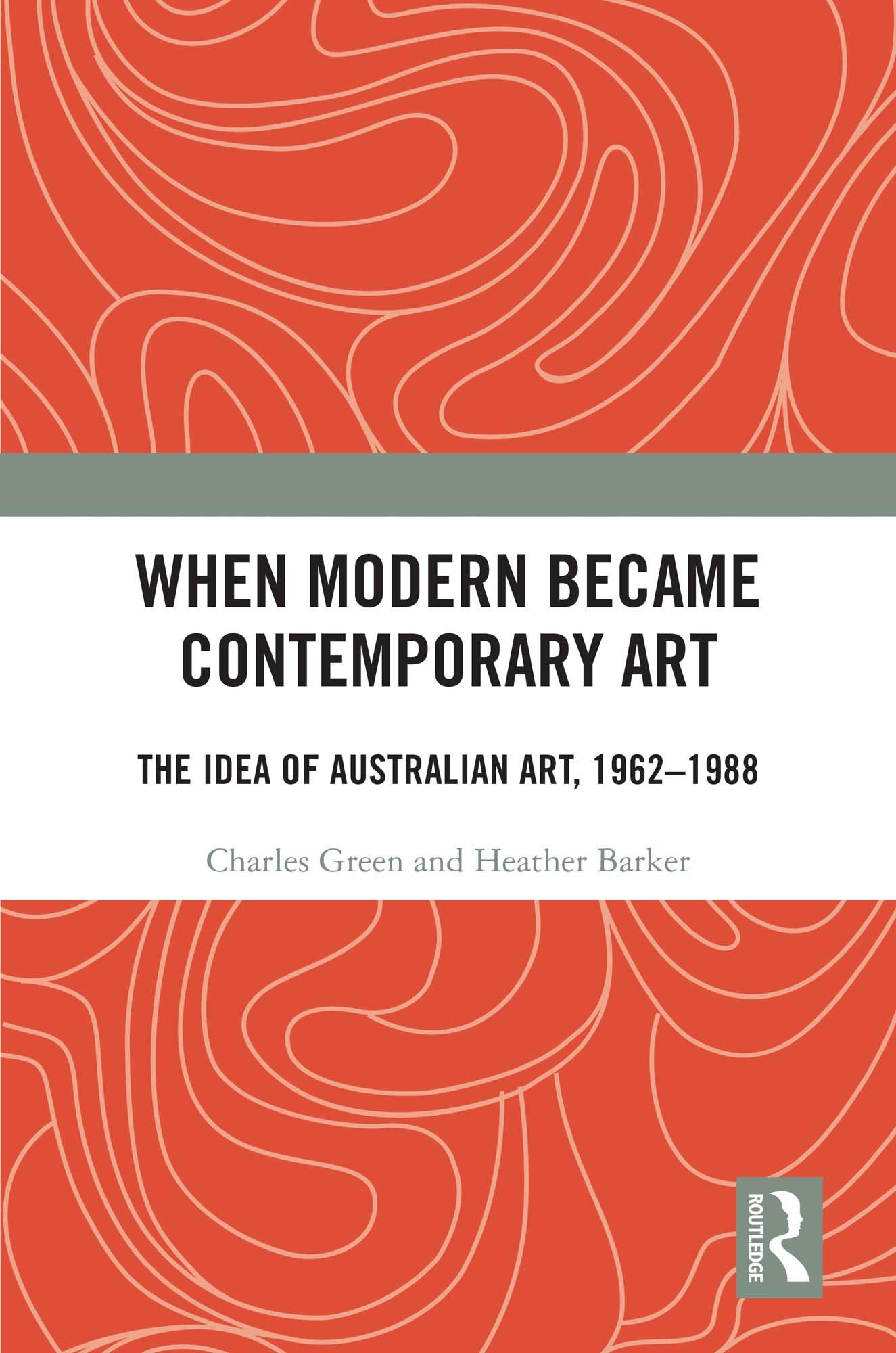
This book is a portrait of the period when modern art became contemporary art. It explores how and why writers and artists in Australia argued over the idea of a distinctively Australian modern and then postmodern art from 1962, the date of publication of a foundational book, Australian Painting 1788–1960, up to 1988, the year of the Australian Bicentennial.
Across nine chapters about art, exhibitions, curators and critics, this book describes the shift from modern art to contemporary art through the successive attempts to define a place in the world for Australian art. But by 1988, Australian art looked less and less like a viable tradition inside which to interpret ‘our’ art. Instead, vast gaps appeared, since mostly male and often older White writers had limited their horizons to White Australia alone. National stories by White men, like borders, had less and less explanatory value. Underneath this, a perplexing subject remained: the absence of Aboriginal art in understanding what Australian art was during the period that established the idea of a distinctive Australian modern and then contemporary art.
This book reflects on why the embrace of Aboriginal art was so late in art museums and histories of Australian art, arguing that this was because it was not part of a national story dominated by colonial, then neo-colonial dependency. It is important reading for all scholars of both global and Australian art, and for curators and artists.
Betal enkelt med kort, Klarna, Apple Pay eller Google Pay. Ikke fornøyd? Du har alltid 14 dagers angrerett. Les mer i våre vilkår. Har du spørsmål, send oss en e-post på hello@memmo.org.
Memmo gjør det enklere å studere – uansett hvor du er i verden. Hos oss samler du pensumbøker og smarte studieverktøy på ett og samme sted: sammendrag, quizer, podkaster og flashcards. Og så Ted, din studiekompis som svarer på alt du lurer på. Over 50 000 studenter studerer allerede her – bygget for at du skal lære raskere og stresse mindre.