
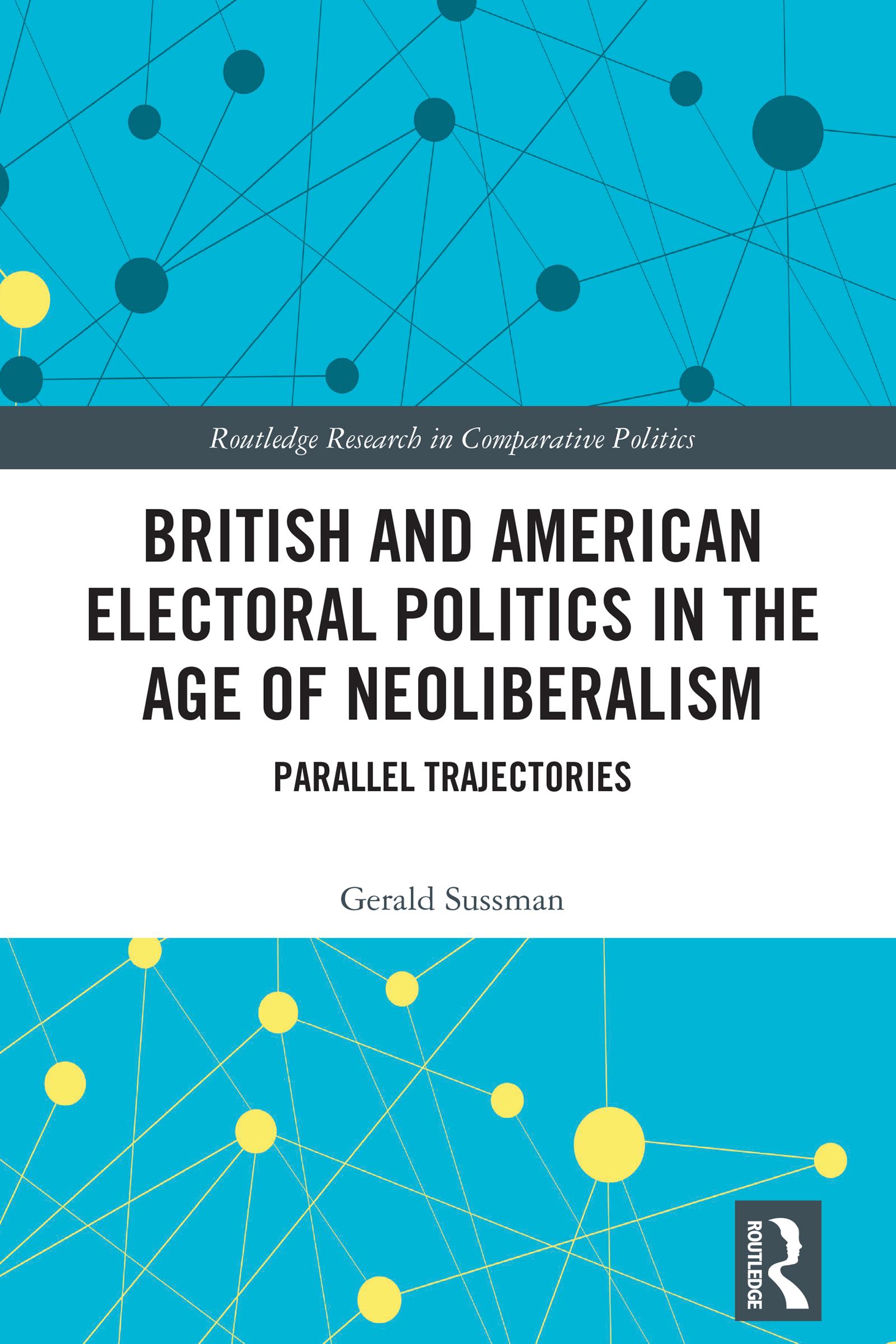
This book employs a political economic approach in exploring the underlying neoliberal foundations of politics and electioneering in both the United States and the United Kingdom that have widened the divide among voters and, over time, led to a deep distrust of state institutions, including electoral politics and system of political representation.
Covering the period of 1980 to the present, the book provides analysis of how neoliberalism applies to the electoral sphere and draws the connections between the larger forces behind the globalising political economy and the trajectory of the corporate state and the many intersections of US and UK electoral politics – with lessons for other wealthy states that follow in similar pathways. As such, it helps explain a phenomenal parallel pattern of major political upheavals and social dislocations within these two countries. Finally, it reveals through numerous social indicators that the two leading neoliberal political economic systems are producing depressing results for large sections of their citizenry and a threat to social democracy, as the concentration of wealth and well-being is largely captured by a minority class of empowered individuals.
This book will be of key interest to scholars and students of electoral politics, political parties, political behaviour, British politics, U.S. politics and more broadly to readers interested in political economy and comparative politics.
Betal enkelt med kort, Klarna, Apple Pay eller Google Pay. Ikke fornøyd? Du har alltid 14 dagers angrerett. Les mer i våre vilkår. Har du spørsmål, send oss en e-post på hello@memmo.org.
Memmo gjør det enklere å studere – uansett hvor du er i verden. Hos oss samler du pensumbøker og smarte studieverktøy på ett og samme sted: sammendrag, quizer, podkaster og flashcards. Og så Ted, din studiekompis som svarer på alt du lurer på. Over 50 000 studenter studerer allerede her – bygget for at du skal lære raskere og stresse mindre.