
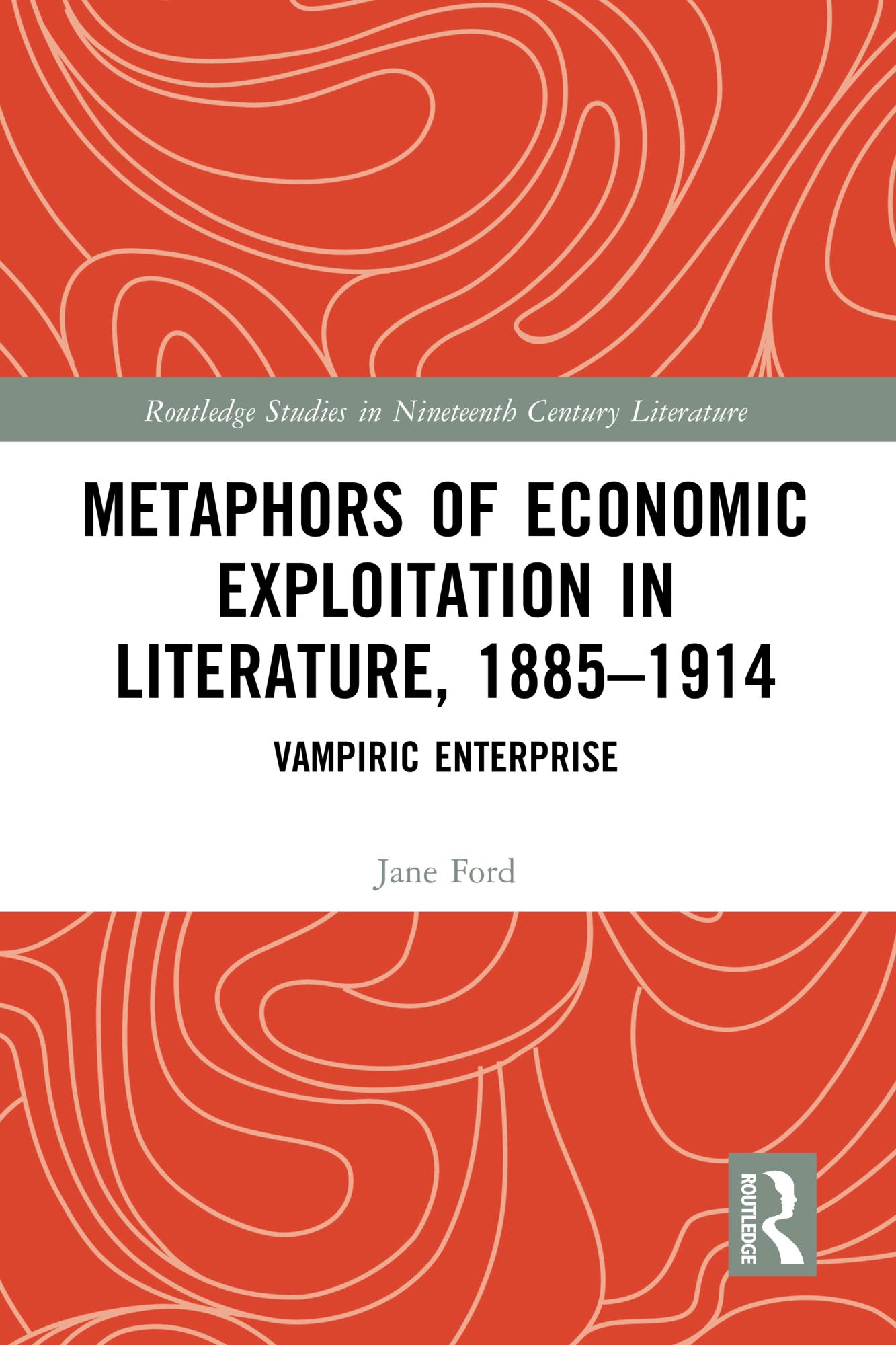
Metaphors of Economic Exploitation in Literature, 1885–1914 explores the complex network of metaphors that emerged around late nineteenth-century conceptions of economic self-interest – metaphors that dramatised the predatory, conflictual, and exploitative basis of relations between nations, institutions, sexes, and people in a fin-de-siècle economy that was perceived by many as outwardly belligerent. More specifically, this book is about the vampire, cannibal, and related genera of economic metaphor that penetrate the major discourses of the period in ways that have yet to be understood. In chapters that examine socialist fiction and newspapers; the imperial quest romance; the decadent and supernatural tales of Henry James and Vernon Lee; and the Catholic novels of Lucas Malet, Ford assesses the breadth and variety of these metaphors, and considers how they filter the long-standing philosophical ideas about self-interest and the conflictual ‘economic man’. This volume is essential reading for students and scholars of fin-de-siècle literature and culture as well as those with an interest in the relationship between literature, economics, and anti-capitalist movements.
Betal enkelt med kort, Klarna, Apple Pay eller Google Pay. Ikke fornøyd? Du har alltid 14 dagers angrerett. Les mer i våre vilkår. Har du spørsmål, send oss en e-post på hello@memmo.org.
Memmo gjør det enklere å studere – uansett hvor du er i verden. Hos oss samler du pensumbøker og smarte studieverktøy på ett og samme sted: sammendrag, quizer, podkaster og flashcards. Og så Ted, din studiekompis som svarer på alt du lurer på. Over 50 000 studenter studerer allerede her – bygget for at du skal lære raskere og stresse mindre.