
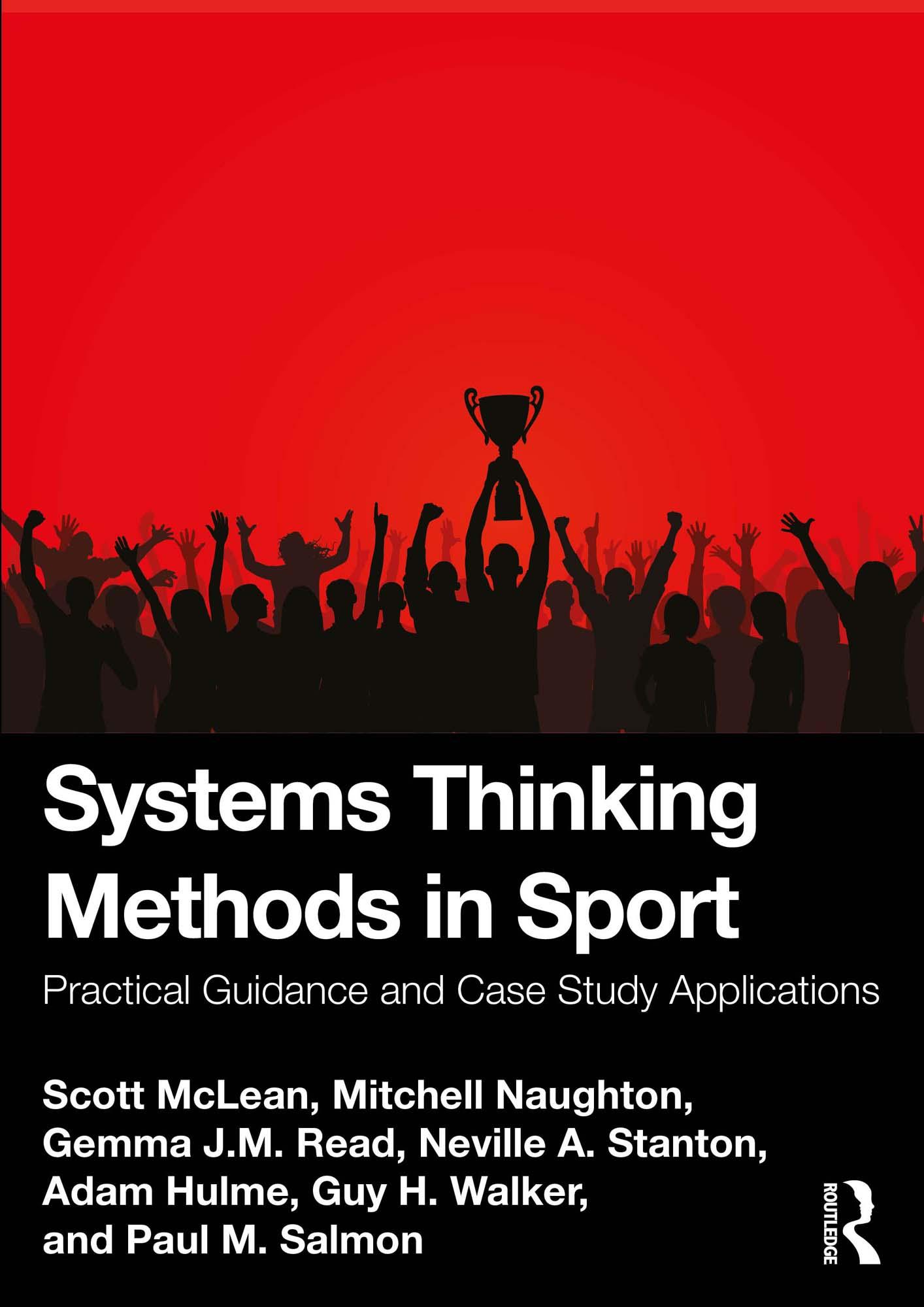
Sport is increasingly being described as a complex system. This inherent complexity cannot be understood by examining components in isolation; rather, the system as a whole should represent the unit of analysis. Systems thinking is the answer to understanding this complexity and is gaining traction in sport. Systems thinking provides a philosophy and a set of associated methods which can be used to understand and optimise the behaviour of complex systems, such as those inherent within sport.
This book presents, for the first time, a practical guide to applying contemporary systems thinking methods in sport as well as case study applications demonstrating how their outputs can be translated in practice. The methods described in this book can be used for better understanding the systemic influences in a broad range of sport contexts, including performance, injury, team functioning, decision‑making, adverse incidents, sports organisation design and redesign, technology implementation, and proactive risk assessments.
Systems Thinking Methods in Sport provides a practical step‑by‑step guide for sports practitioners and stakeholders, as well as university students and academics in applying state‑of‑the‑art systems thinking methods to sport.
Betal enkelt med kort, Klarna, Apple Pay eller Google Pay. Ikke fornøyd? Du har alltid 14 dagers angrerett. Les mer i våre vilkår. Har du spørsmål, send oss en e-post på hello@memmo.org.
Memmo gjør det enklere å studere – uansett hvor du er i verden. Hos oss samler du pensumbøker og smarte studieverktøy på ett og samme sted: sammendrag, quizer, podkaster og flashcards. Og så Ted, din studiekompis som svarer på alt du lurer på. Over 50 000 studenter studerer allerede her – bygget for at du skal lære raskere og stresse mindre.