
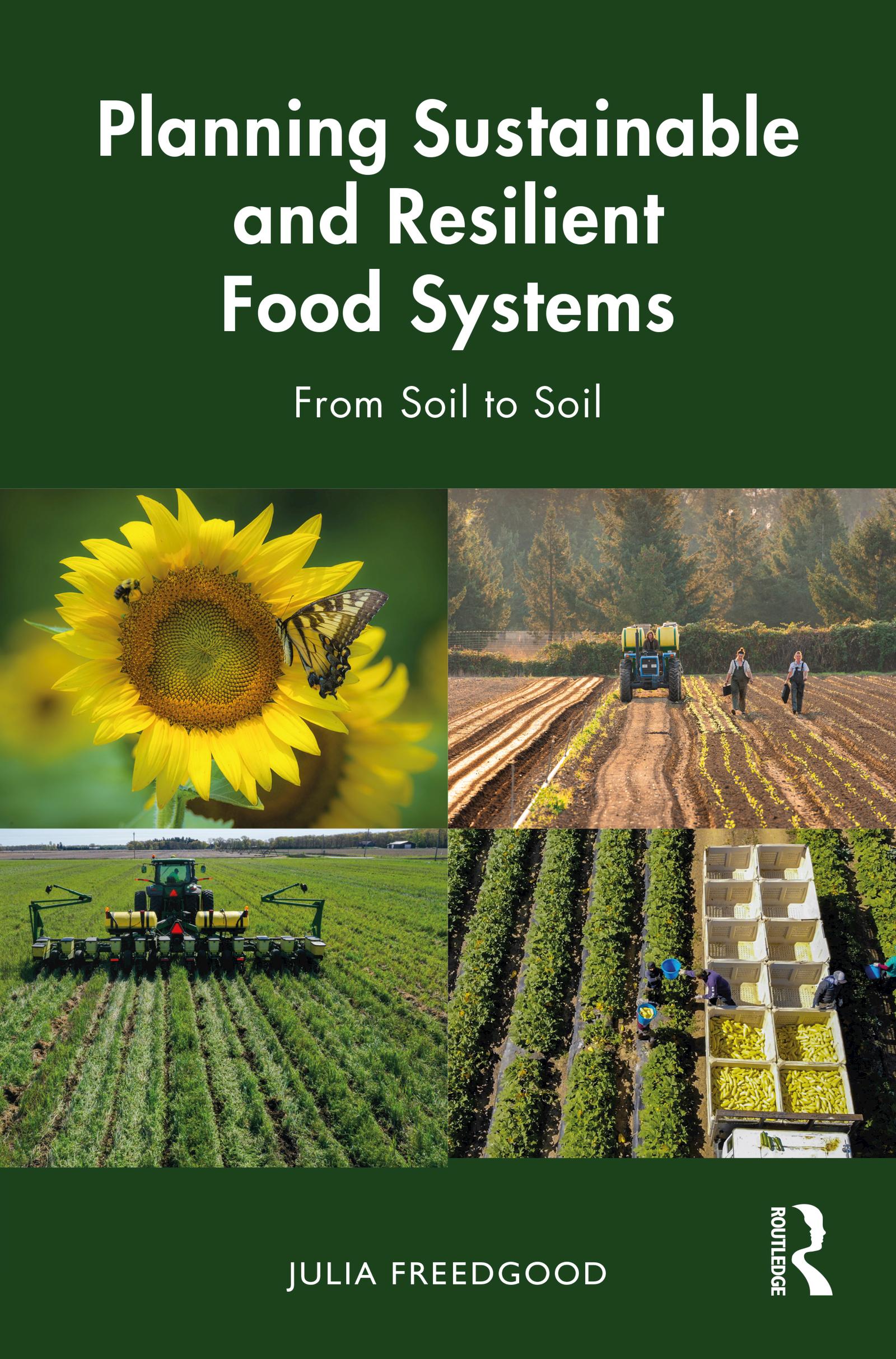
Covid-19 was a canary in a mine. It exposed the vulnerabilities of 21st-century food systems but did not create them. Since then, the world has faced a “polycrisis:” a cluster of weather-related crop failures, war-induced food and energy shortages, and import dilemmas with compounding effects. Going forward, we need to plan for more sustainable and resilient food systems that improve environmental outcomes and address economic disparities. But food systems planning is a relatively new discipline and guidance is scarce. This book fills that gap.
Where most food systems planning has focused on urban issues, this book takes a holistic view to include rural communities and production agriculture whose stewardship of the earth is so critical to public and environmental health, as well as to ensuring a varied and abundant food supply. Its goal is to inform planning practices and follow-up actions for a wide range of audiences—from professional planners, planning commissions, and boards to conservation districts and Cooperative Extension to the on-the-ground change-makers working to strengthen America’s food and farming systems. Embracing the fact that the U.S. is highly diverse in its people, places, and politics, the book lifts up principles and successful examples to help communities develop strategies based on their unique assets and the needs and preferences of their people.
Betal enkelt med kort, Klarna, Apple Pay eller Google Pay. Ikke fornøyd? Du har alltid 14 dagers angrerett. Les mer i våre vilkår. Har du spørsmål, send oss en e-post på hello@memmo.org.
Memmo gjør det enklere å studere – uansett hvor du er i verden. Hos oss samler du pensumbøker og smarte studieverktøy på ett og samme sted: sammendrag, quizer, podkaster og flashcards. Og så Ted, din studiekompis som svarer på alt du lurer på. Over 50 000 studenter studerer allerede her – bygget for at du skal lære raskere og stresse mindre.