
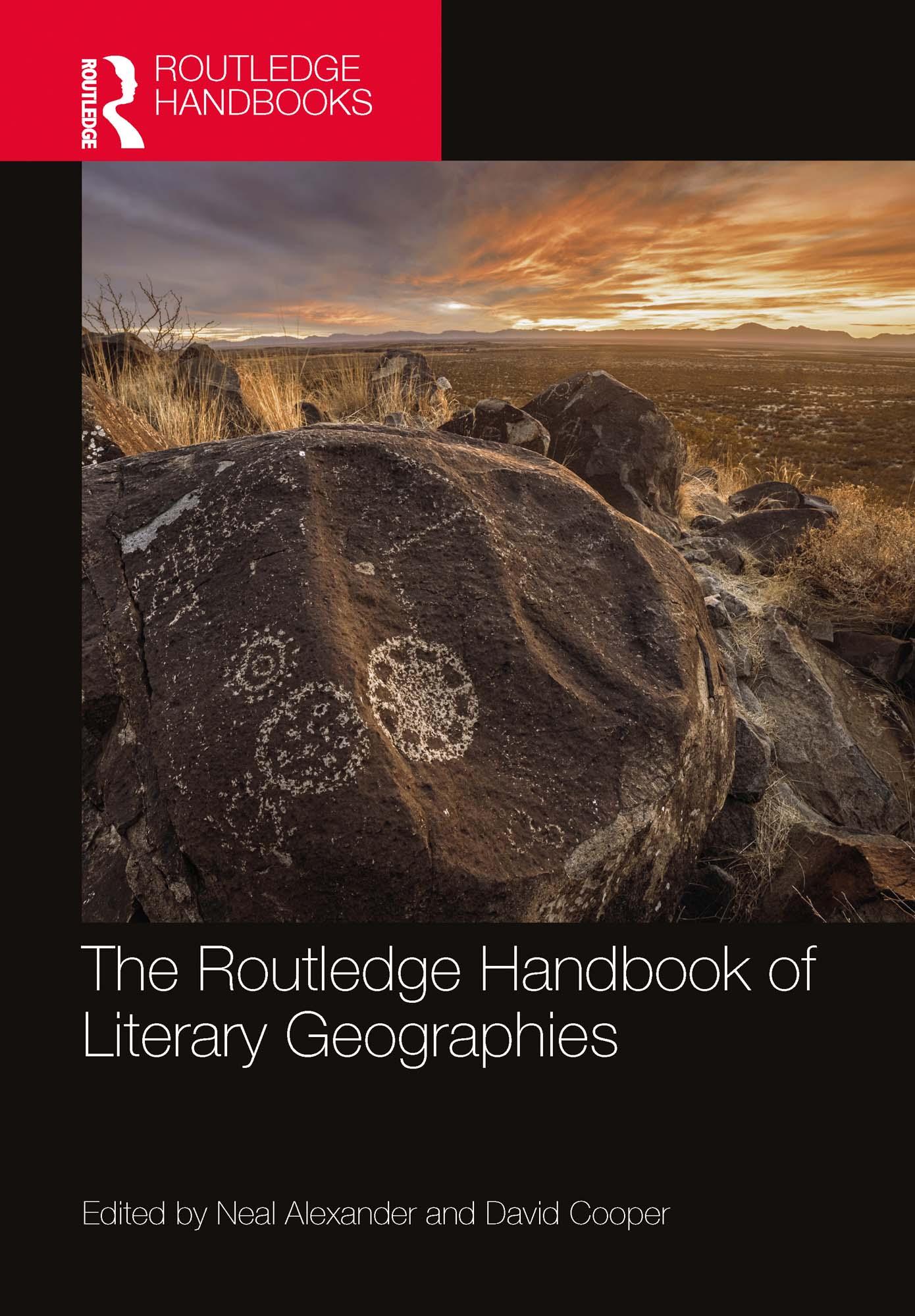
The Routledge Handbook of Literary Geographies provides a comprehensive overview of recent research and a range of innovative ways of thinking literature and geography together. It maps the history of literary geography and identifies key developments and debates in the field.
Written by leading and emerging scholars from around the world, the 38 chapters are organised into six themed sections, which consider: differing critical methodologies; keywords and concepts; literary geography in the light of literary history; a variety of places, spaces, and landforms; the significance of literary forms and genres; and the role of literary geographies beyond the academy. Presenting the work of scholars from different disciplinary backgrounds, each section offers readers new angles from which to view the convergence of literary creativity and geographical thought. Collectively, the contributors also address some of the major issues of our time including the climate emergency, movement and migration, and the politics of place.
Literary geography is a dynamic interdisciplinary field dedicated to exploring the complex relationships between geography and literature. This cutting-edge collection will be an essential resource for undergraduate and postgraduate students in both Geography and Literary Studies, and scholars interested in the evolving interface between the two disciplines.
Betal enkelt med kort, Klarna, Apple Pay eller Google Pay. Ikke fornøyd? Du har alltid 14 dagers angrerett. Les mer i våre vilkår. Har du spørsmål, send oss en e-post på hello@memmo.org.
Memmo gjør det enklere å studere – uansett hvor du er i verden. Hos oss samler du pensumbøker og smarte studieverktøy på ett og samme sted: sammendrag, quizer, podkaster og flashcards. Og så Ted, din studiekompis som svarer på alt du lurer på. Over 50 000 studenter studerer allerede her – bygget for at du skal lære raskere og stresse mindre.