
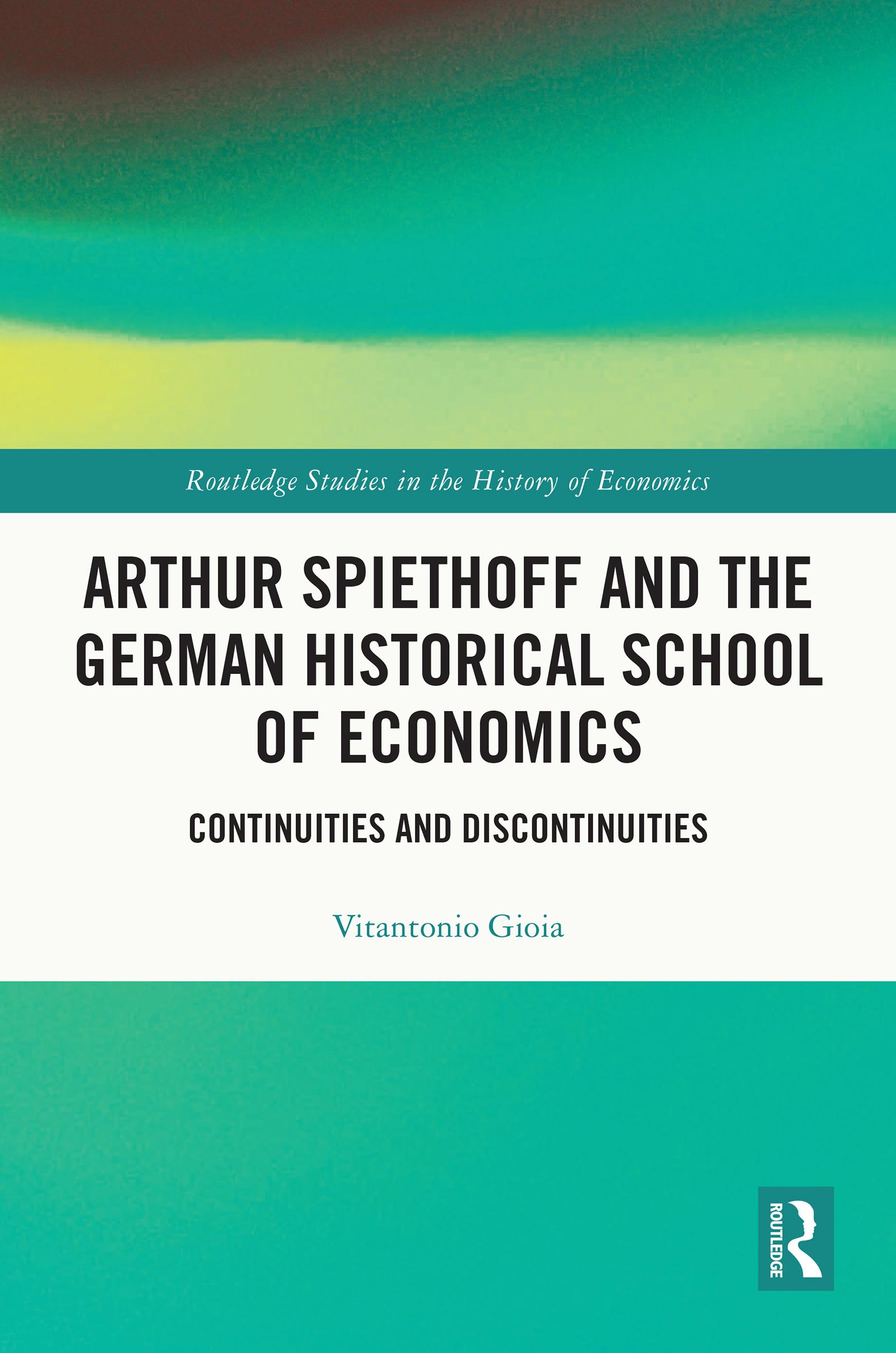
Arthur Spiethoff (1873–1957), an economist of the German Historical School of Economics, is best known for his theory of the business cycle. Despite Spiethoff calling for a unified reading of his work, his epistemological thinking has received less attention. This book addresses that gap by analysing Spiethoff’s theory of the business cycle in the light of his epistemological views. Putting Spiethoff’s work in context, the book also investigates the most significant features of the evolution of the “research programme” of the German Historical School of Economics, with particular reference to the relationships between Schmoller, Sombart, Weber and Spiethoff. In addition, Spiethoff’s work is compared with some of the scientific orientations of the current debates: on the epistemological side, the book examines the relationship between Spiethoff’s views and some contemporary thinking on scientific realism, as well as methodological pluralism in social sciences. And, more broadly, it emphasises the analytical relevance of the historical approach in explaining the economic imbalances of contemporary capitalism, questioning the idea, widespread in the neoclassical approach, that taking historical specificities into account makes it hard to achieve a theoretically effective attitude. This book is a significant addition to the literature on the German Historical School of Economics and the history of economic thought, business cycle theory and macroeconomics more broadly.
Betal enkelt med kort, Klarna, Apple Pay eller Google Pay. Ikke fornøyd? Du har alltid 14 dagers angrerett. Les mer i våre vilkår. Har du spørsmål, send oss en e-post på hello@memmo.org.
Memmo gjør det enklere å studere – uansett hvor du er i verden. Hos oss samler du pensumbøker og smarte studieverktøy på ett og samme sted: sammendrag, quizer, podkaster og flashcards. Og så Ted, din studiekompis som svarer på alt du lurer på. Over 50 000 studenter studerer allerede her – bygget for at du skal lære raskere og stresse mindre.