
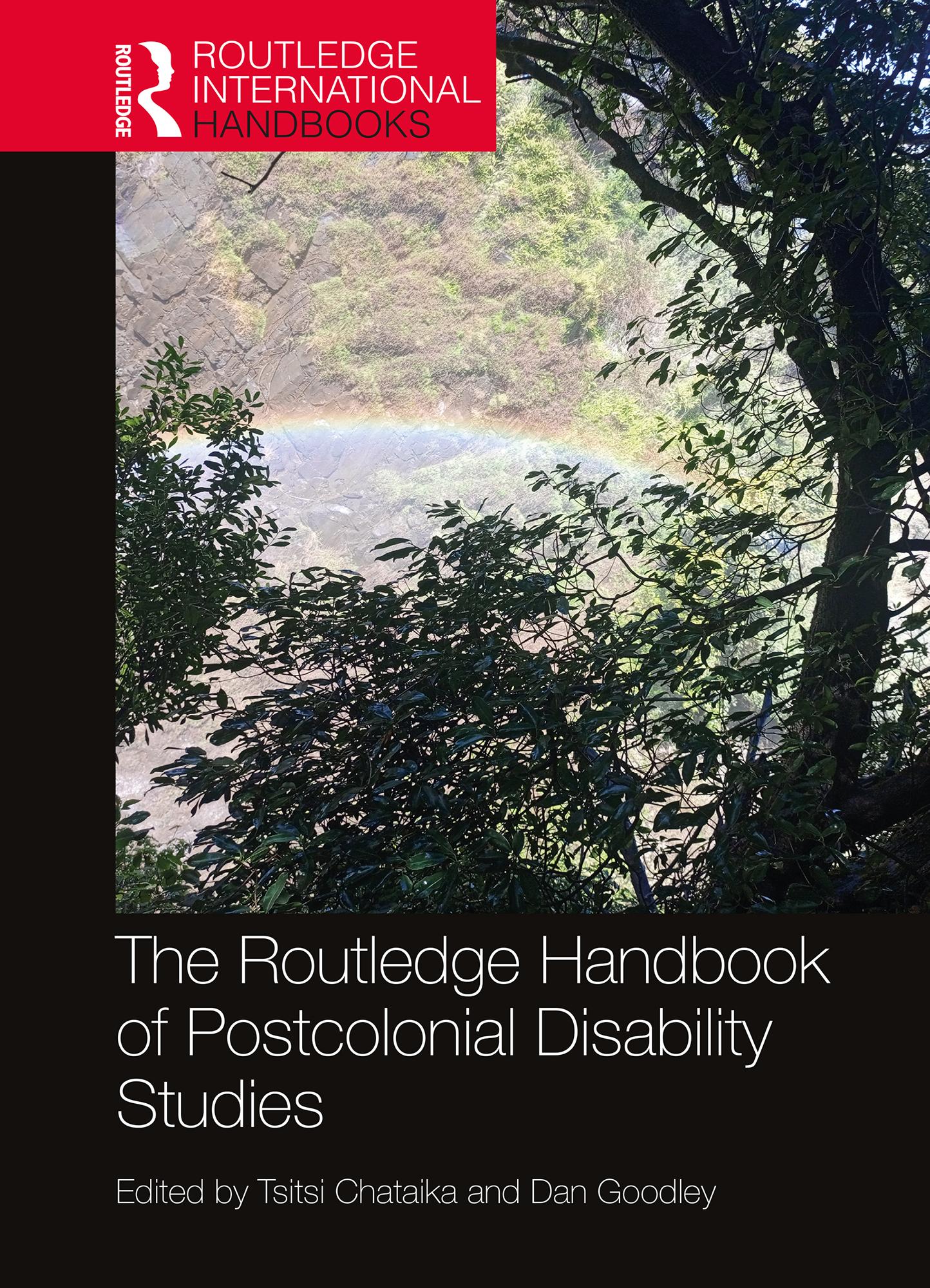
This book centres and explores postcolonial theory, which looks at issues of power, economics, politics, religion and culture and how these elements work in relation to colonial supremacy. It argues that disability is a constitutive material presence in many postcolonial societies and that progressive disability politics arise from postcolonial concerns. By drawing these two subjects together, this handbook challenges oppression, voicelessness, stereotyping, undermining, neo-colonisation and postcolonisation and bridges binary debate between global North and the global South.
The book is divided into eight sections
- Setting the Scene
- Decolonising Disability Studies
- Postcolonial Theory, Inclusive Development
- Postcolonial Disability Studies and Disability Activism
- Postcolonial Disability and Childhood Studies
- Postcolonial Disability Studies and Education
- Postcolonial Disability Studies, Gender, Race and Religion
- Conclusion
And comprised of 27 newly written chapters, this book leads with postcolonial perspectives – closely followed by an engagement with critical disability studies – with the explicit aim of foregrounding these contributions; pulling them in from the edges of empirical and theoretical work where they often reside in mainstream academic literature.
The book will be of interest to all scholars and students of disability studies and postcolonial studies as well as those working in sociology, literature and development studies.
Betal enkelt med kort, Klarna, Apple Pay eller Google Pay. Ikke fornøyd? Du har alltid 14 dagers angrerett. Les mer i våre vilkår. Har du spørsmål, send oss en e-post på hello@memmo.org.
Memmo gjør det enklere å studere – uansett hvor du er i verden. Hos oss samler du pensumbøker og smarte studieverktøy på ett og samme sted: sammendrag, quizer, podkaster og flashcards. Og så Ted, din studiekompis som svarer på alt du lurer på. Over 50 000 studenter studerer allerede her – bygget for at du skal lære raskere og stresse mindre.