
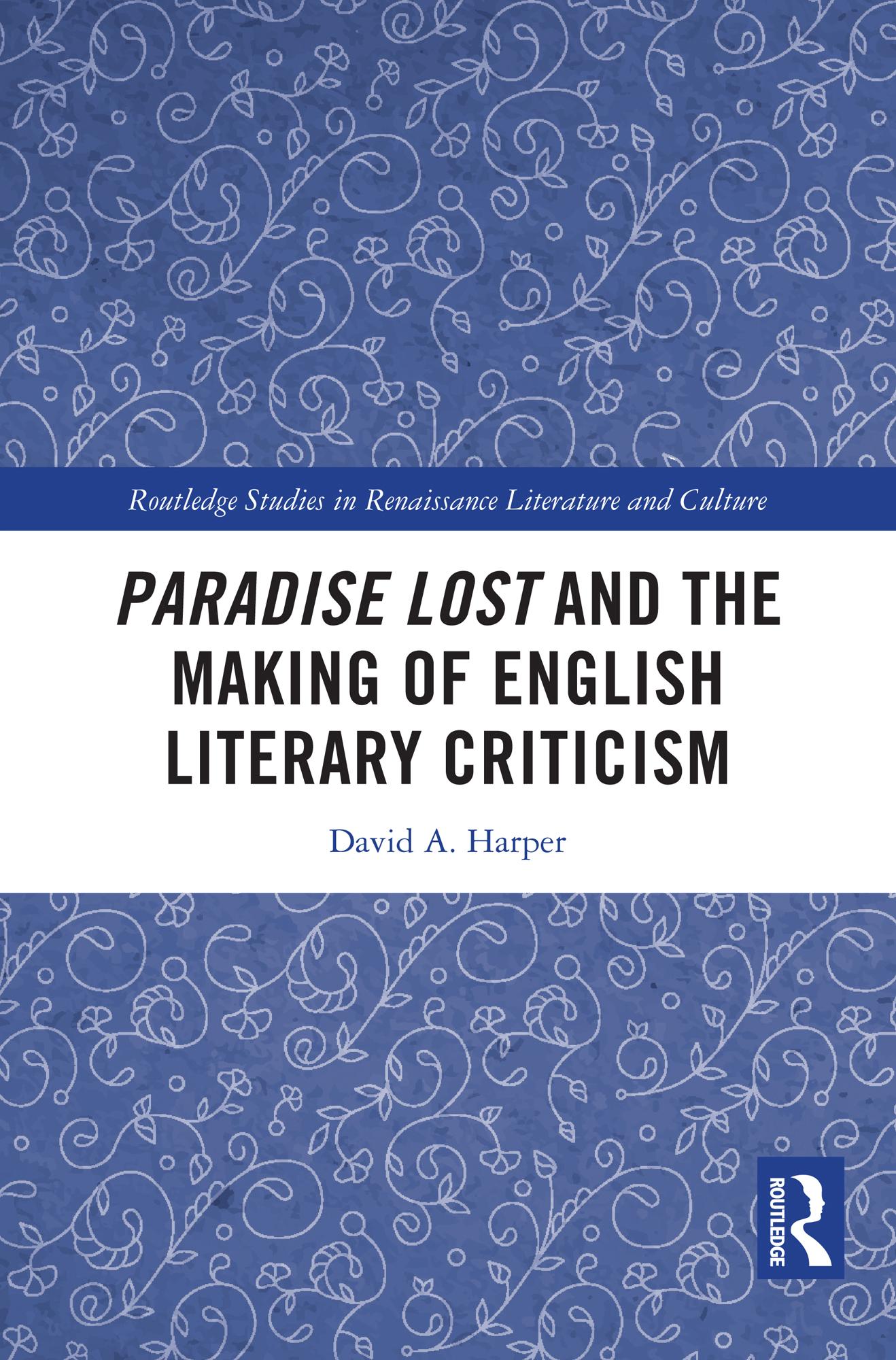
Paradise Lost and the Making of English Literary Criticism identifies the early reception of Paradise Lost as a site of contest over the place of literature in political and religious controversy. Milton’s earliest readers and critics (Dryden, Addison, Dennis, Hume, and Bentley) confronted a poem and author at odds with the prevailing culture and the revanchist conservatism of the restored monarchy. Grappling with the epic required navigating Milton’s reputation as a “fanatick” who had called in print for Charles I’s execution, inveighed openly against monarchy on the eve of Charles II’s return, and held heretical views on the trinity, baptism, and divorce. Harper argues that foundational figures in English literary criticism rose to this challenge by innovating new ways of reading: producing creative (and subversive) rewritings of Paradise Lost, articulating new theories of the sublime, explaining the poem in the first substantial body of annotations for an English vernacular text, and by pioneering early forms of textual criticism and editing.
Betal enkelt med kort, Klarna, Apple Pay eller Google Pay. Ikke fornøyd? Du har alltid 14 dagers angrerett. Les mer i våre vilkår. Har du spørsmål, send oss en e-post på hello@memmo.org.
Memmo gjør det enklere å studere – uansett hvor du er i verden. Hos oss samler du pensumbøker og smarte studieverktøy på ett og samme sted: sammendrag, quizer, podkaster og flashcards. Og så Ted, din studiekompis som svarer på alt du lurer på. Over 50 000 studenter studerer allerede her – bygget for at du skal lære raskere og stresse mindre.