
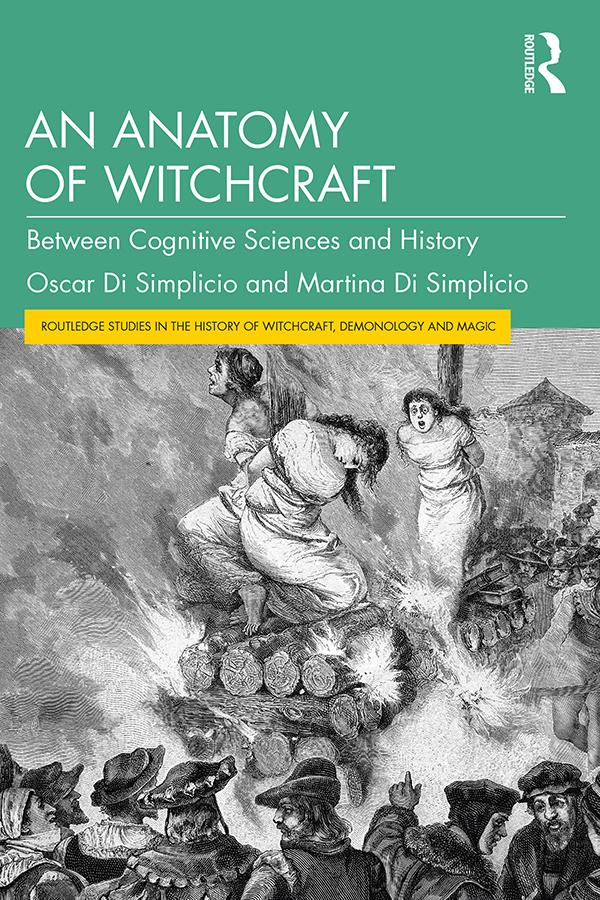
Much has been written on witchcraft by historians, theologians, philosophers, and anthropologists, but nothing by scientists. This book aims to reappraise witchcraft by applying to it the advances in cognitive sciences.
The book is divided into four parts. Part I ("Deep History") deals with human emotions and the drive to represent witches as evil female agents. Part II ("Historical Times") focuses on those rare state and church repressions of malefice, which, surprisingly, did not feature in Islamic lands. Modern urbanization dealt a blow to the rural civilizations where accusations of witchcraft were rife. Part III ("In the Laboratory") applies neuroscience to specific case studies to investigate the personification of misfortune, the millenary stereotype witch = woman, the reality of evil, and the phenomenon of treasure hunting. Part IV ("Millenials") wonders whether intentional malefic hatred in a closed chapter in the history of humanity.
An Anatomy of Witchcraft is ideal reading for students and scholars. Given its interdisciplinary nature, the book will be of interest to scholars from many fields including evolutionary psychology, anthropology, women’s history, and cognitive sciences.
Betal enkelt med kort, Klarna, Apple Pay eller Google Pay. Ikke fornøyd? Du har alltid 14 dagers angrerett. Les mer i våre vilkår. Har du spørsmål, send oss en e-post på hello@memmo.org.
Memmo gjør det enklere å studere – uansett hvor du er i verden. Hos oss samler du pensumbøker og smarte studieverktøy på ett og samme sted: sammendrag, quizer, podkaster og flashcards. Og så Ted, din studiekompis som svarer på alt du lurer på. Over 50 000 studenter studerer allerede her – bygget for at du skal lære raskere og stresse mindre.