
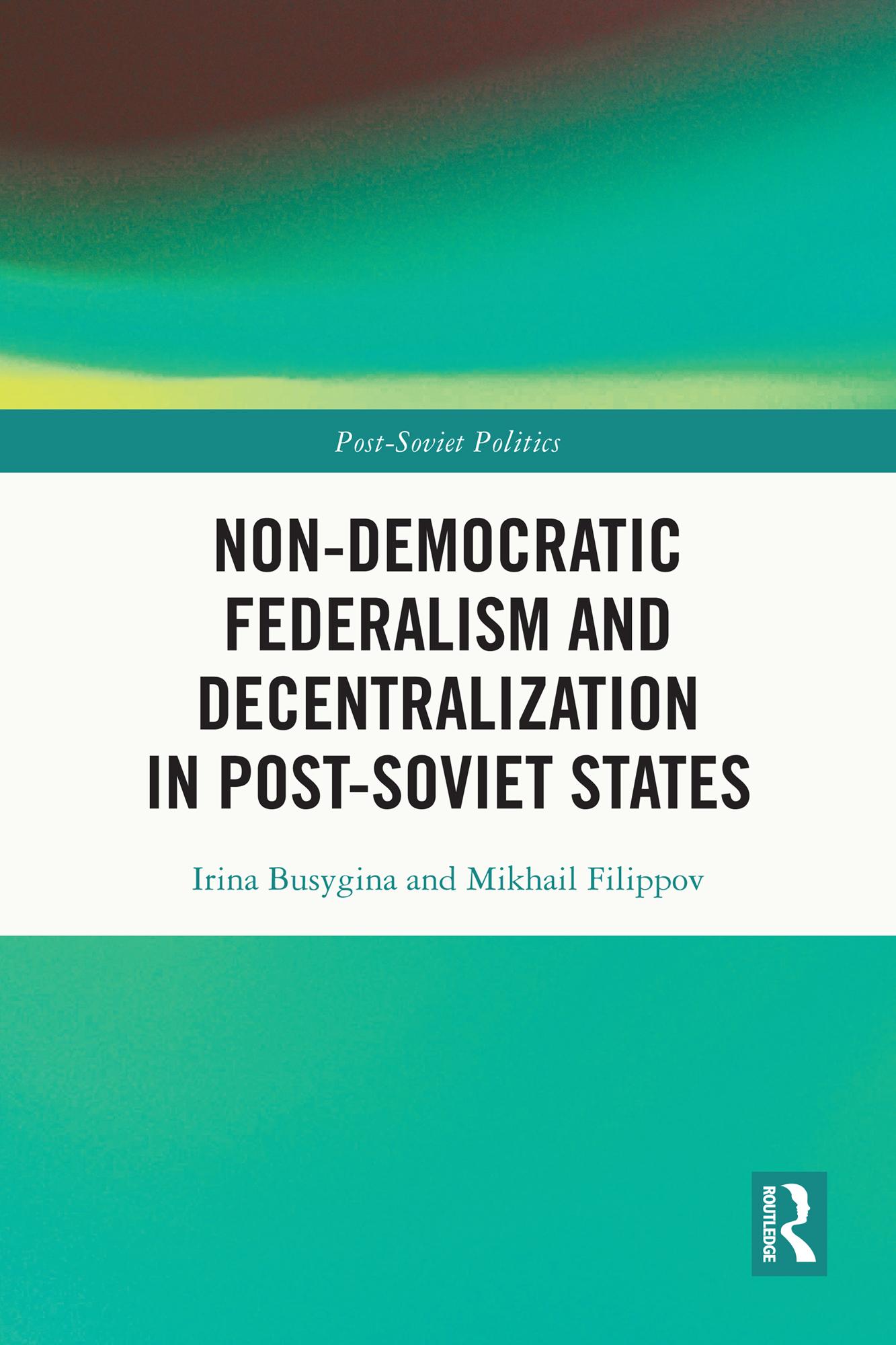
This book challenges the common perception of authoritarian regimes as incompatible with federalism and decentralization. It examines how the leaders of Russia, Ukraine, and Kazakhstan have managed to exploit federalism and decentralization as useful instruments to help them preserve control, avoid political instability, and to shift blame to the regional authorities in times of crises and policy failures. The authors explain how post-Soviet authoritarian regimes balance the advantages and risks and emphasize the contradictory role of external influences and threats to the institutional design of federalism and decentralization. Advancing our understanding of how the institutions of federalism and decentralization are skillfully constrained, but at the same time used by authoritarian incumbents, they show that federalism and decentralization matter in non-democracies, though the nondemocratic character of the political systems greatly modifies their effects. The authors show the implication of the COVID-19 crisis and current Russian war against Ukraine for the center-regional relations in Russia, Ukraine, and Kazakhstan. This book will be of interest to scholars and students of post-Soviet politics, decentralization, federalism, and modern authoritarianism.
Betal enkelt med kort, Klarna, Apple Pay eller Google Pay. Ikke fornøyd? Du har alltid 14 dagers angrerett. Les mer i våre vilkår. Har du spørsmål, send oss en e-post på hello@memmo.org.
Memmo gjør det enklere å studere – uansett hvor du er i verden. Hos oss samler du pensumbøker og smarte studieverktøy på ett og samme sted: sammendrag, quizer, podkaster og flashcards. Og så Ted, din studiekompis som svarer på alt du lurer på. Over 50 000 studenter studerer allerede her – bygget for at du skal lære raskere og stresse mindre.