
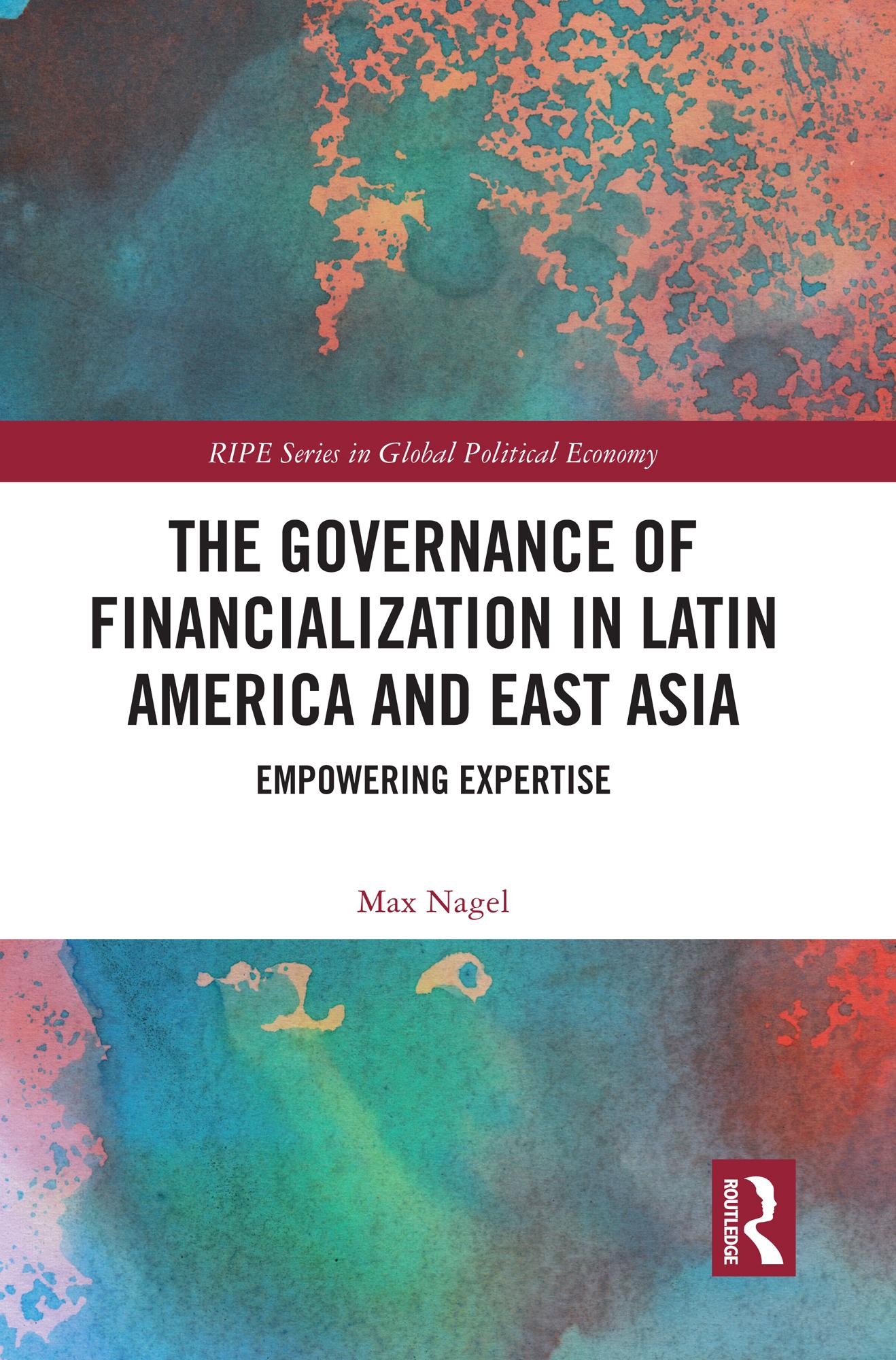
The Governance of Financialization in Latin America and East Asia analyses how states in these areas have adopted different monetary, financial, and foreign exchange policies to govern financialization, which have induced varying levels of state control over financial markets.
The book analyzes the puzzling observation of policy divergence by investigating how countries have reacted differently to major financial crises since the 1970s. It shows how Argentina and Japan selected a governance approach to financialization that followed Western prescriptions by propelling unregulated financialization; but also how Chile and South Korea, by contrast, crafted policies to reduce the negative effects of financialization on economic development and financial stability. The book identifies variegated expertise in central banks, ministries of finance, expert commissions, and research institutions that has informed policymaking across Argentina, Chile, Japan, and South Korea since the 1970s. It then demonstrates how governments have used experts to achieve diverse political objectives and explains how governments can use experts to enhance state agency to counter globalization pressures.
This book will appeal to scholars of International Political Economy, comparative politics, economics, sociology, development studies, and Latin American and East Asian history. It will also be of interest to economists and policymakers who want to safeguard financial stability and promote economic growth.
Betal enkelt med kort, Klarna, Apple Pay eller Google Pay. Ikke fornøyd? Du har alltid 14 dagers angrerett. Les mer i våre vilkår. Har du spørsmål, send oss en e-post på hello@memmo.org.
Memmo gjør det enklere å studere – uansett hvor du er i verden. Hos oss samler du pensumbøker og smarte studieverktøy på ett og samme sted: sammendrag, quizer, podkaster og flashcards. Og så Ted, din studiekompis som svarer på alt du lurer på. Over 50 000 studenter studerer allerede her – bygget for at du skal lære raskere og stresse mindre.