
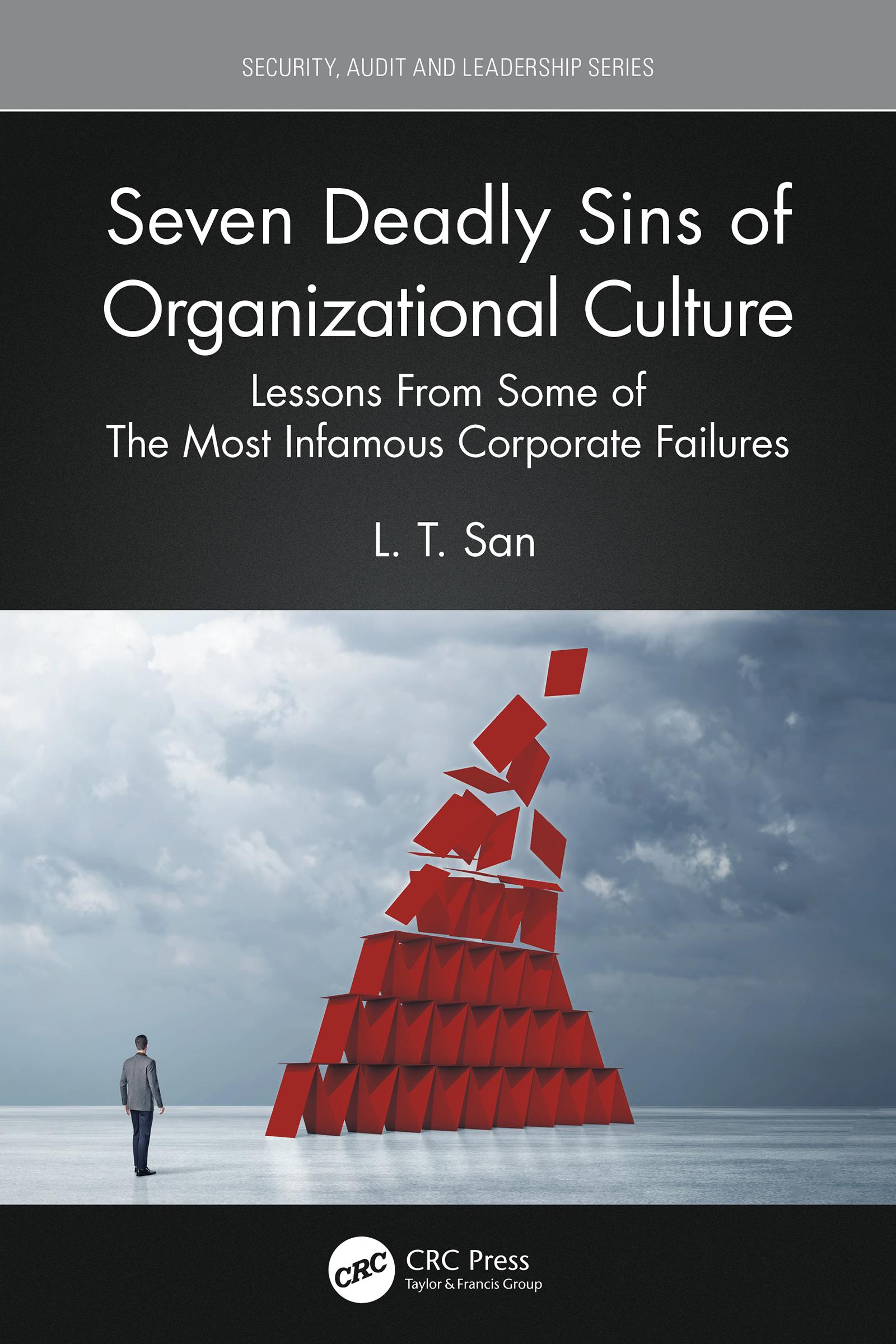
This book is about the primary symptoms present in a dysfunctional culture that could have devastating outcomes for any organization. The book outlines each of the seven sins in each chapter.
Each of the first seven chapters (Chapters 1–7) starts with a famous quote related to each of the sins and then immediately recounts stories ripped from the headlines describing well-known corporate failures but with a personal touch from former employees who experienced those stories from inside the company. (The sources for these stories are all cited in their Bibliographies).
The seven sins of organizational culture are linked with seven different corporate scandals that serve as a "lesson learned" as well as seven stories of organizations that have been successful with each respective organizational attribute as follows:
- Flawed Mission and Misaligned Values uses WorldCom as the lesson learned and Patagonia as the success case
- Flawed Incentives uses Wells Fargo as the lesson learned and Bridgeport Financial as the success case
- Lack of Accountability uses HSBC as the lesson learned and McDonald’s as the success case
- Ineffective Talent Management uses Enron as the lesson learned and Southwest Airlines as the success case
- Lack of Transparency uses Theranos as the lesson learned and Zappos as the success case
- Ineffective Risk Management uses the 2008 mortgage industry collapse as the lesson learned and Michael Burry as the success case
- Ineffective Leadership summarizes all of the foregoing sins as failures of Leadership
In each chapter and for each organizational sin, the author offers seven attributes of a healthy culture to counter the cultural dysfunction. The seven healthy attributes for each of the seven sins are all original content.
In Chapter 8, the author offers an approach for assessing an organization’s culture by providing seven ways to measure the different drivers of organizational culture. The ideas for how to measure corporate culture is original content, with some references to existing frameworks (all cited in the Bibliography),
Finally, in Chapter 9, the author offers a step-by-step outline for transforming the culture. The chapter starts with a story about how Korean Air suffered multiple crashes due to their corporate culture but were able to successfully transform their culture. (The source for the Korean Air story is cited in the Bibliography).
There are seven appendices, most of which are by the author except for the maturity of risk management, which references an OECD (government entity) risk management maturity framework.
Betal enkelt med kort, Klarna, Apple Pay eller Google Pay. Ikke fornøyd? Du har alltid 14 dagers angrerett. Les mer i våre vilkår. Har du spørsmål, send oss en e-post på hello@memmo.org.
Memmo gjør det enklere å studere – uansett hvor du er i verden. Hos oss samler du pensumbøker og smarte studieverktøy på ett og samme sted: sammendrag, quizer, podkaster og flashcards. Og så Ted, din studiekompis som svarer på alt du lurer på. Over 50 000 studenter studerer allerede her – bygget for at du skal lære raskere og stresse mindre.