
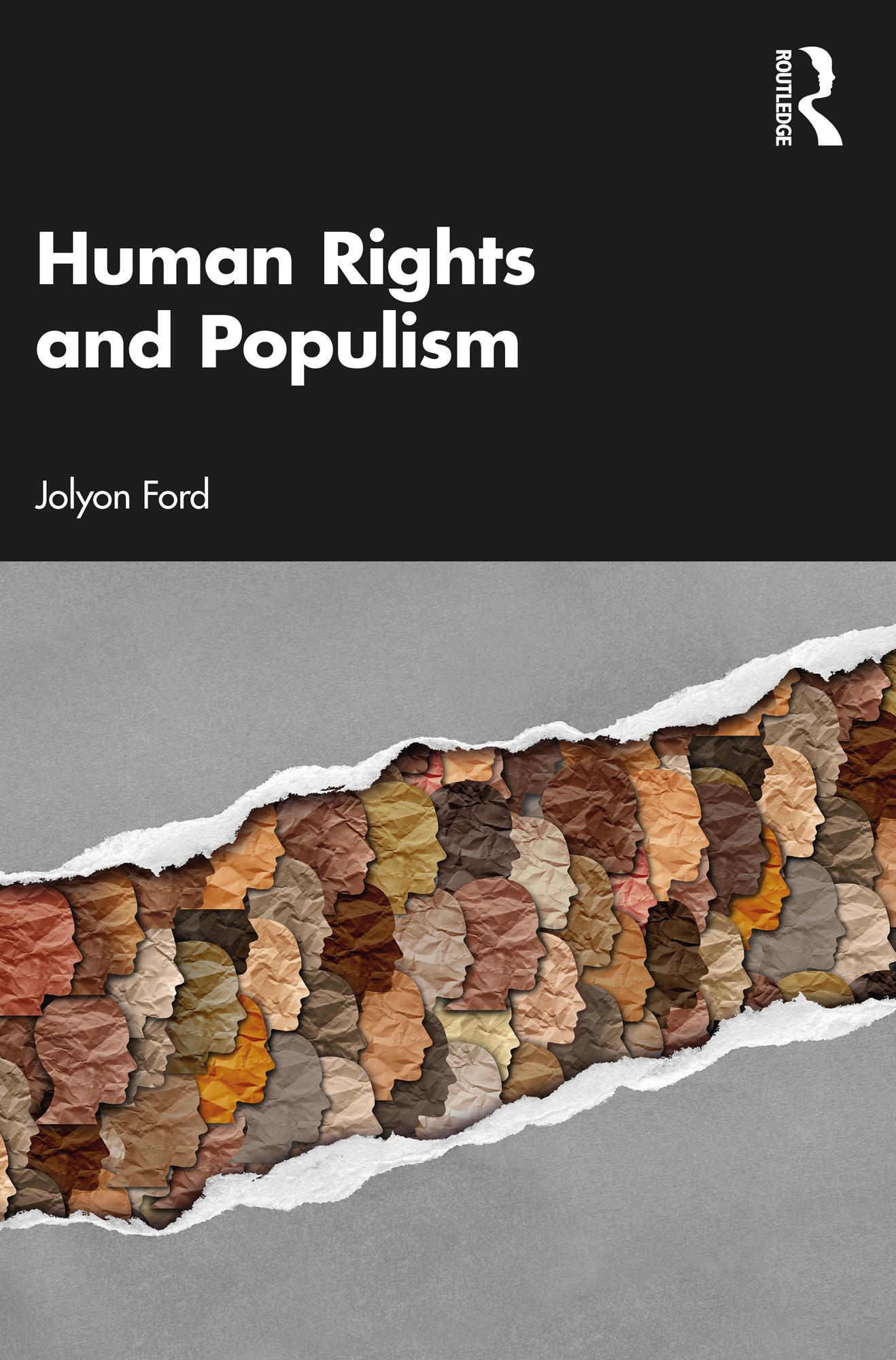
For decades, framing an issue as a ‘human rights’ issue carried certain power and effect in politics and international relations, one that has been challenged by the recent rise of populist political forces. Ford explores the recent impact of populist politics on the universalist human rights project, in particular, how scholars have framed and responded to this challenge.
Ford offers a provocation to the human rights movement. Rather than ‘what have populists done to human rights?’, it asks ‘how did we, the human rights movement, do this to ourselves?’ How did fundamental protections for all become so easily scapegoated as ‘us and them,’ as claims of small, often foreign, minorities? Did human rights lose some vital connection to ordinary people’s interests, their value taken as obvious and self-explanatory?
Looking forward, the book asks how – in a post-truth ‘fake news’ world – we might reimagine human rights as underpinning human flourishing as well as important constraints on public and private concentrations of power. Traversing relevant scholarly literature on the future of human rights and zooming out to look at wider patterns of political and diplomatic discourse, this book will speak to policymakers, diplomats, journalists, and human rights advocates – and all interested in the crisis of liberal democracies.
Betal enkelt med kort, Klarna, Apple Pay eller Google Pay. Ikke fornøyd? Du har alltid 14 dagers angrerett. Les mer i våre vilkår. Har du spørsmål, send oss en e-post på hello@memmo.org.
Memmo gjør det enklere å studere – uansett hvor du er i verden. Hos oss samler du pensumbøker og smarte studieverktøy på ett og samme sted: sammendrag, quizer, podkaster og flashcards. Og så Ted, din studiekompis som svarer på alt du lurer på. Over 50 000 studenter studerer allerede her – bygget for at du skal lære raskere og stresse mindre.