
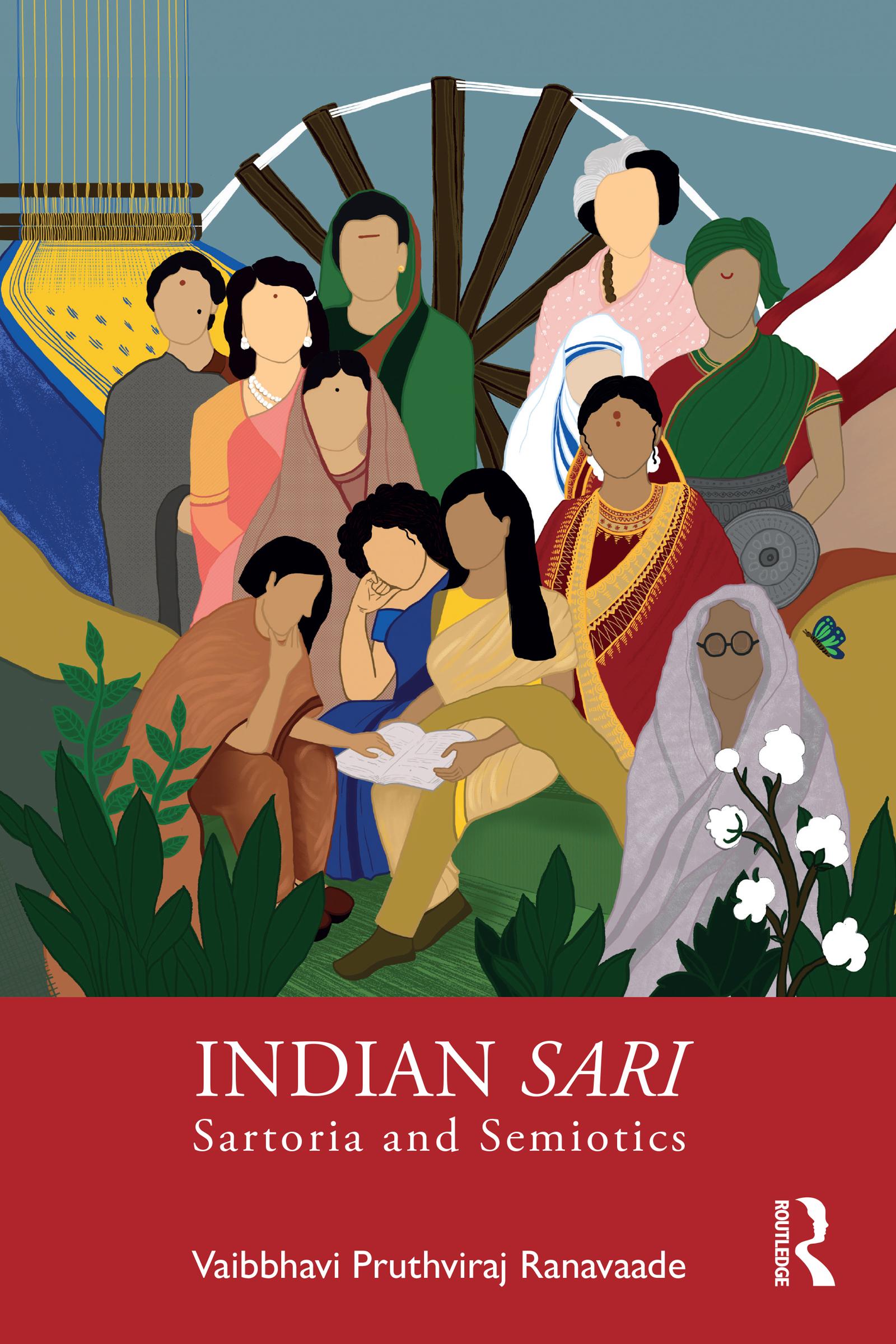
The sari has remained an essential part of culture, tradition and fashion in South Asia and India through many centuries. This book examines the variety of meanings which it carries as a symbol of Indian femininity and tradition as well as a means of creative fashion expression for modern India.
It discusses the semiotic interpretations of the sari today by understanding its significance for traditional weavers, designers and people who wear saris at home, work or for religious or cultural occasions. Through surveys, interactions and interviews, the author explores the shared experience of wearing saris in different social and cultural settings across economic groups in farms and boardrooms as well as a means of creative expression for young Indians. It also looks at the processes involved in making traditional saris today, draping and weaving styles, buying behaviour, saris in pop-culture, pride parades and Bollywood and interpretations of what the sari signifies in different socio-economic circles in India.
This book will be of interest to students of fashion, design, fashion business, history and cultural studies. It will also be useful for professionals working in the fashion industry and designers.
Betal enkelt med kort, Klarna, Apple Pay eller Google Pay. Ikke fornøyd? Du har alltid 14 dagers angrerett. Les mer i våre vilkår. Har du spørsmål, send oss en e-post på hello@memmo.org.
Memmo gjør det enklere å studere – uansett hvor du er i verden. Hos oss samler du pensumbøker og smarte studieverktøy på ett og samme sted: sammendrag, quizer, podkaster og flashcards. Og så Ted, din studiekompis som svarer på alt du lurer på. Over 50 000 studenter studerer allerede her – bygget for at du skal lære raskere og stresse mindre.